Trump announces voluntary AI safety accord with four audit layers
The White House accord asks frontier AI companies to adopt audits and board oversight, but sets no penalties or testing rules.
By Renata Fuchs · Policy Reporter
· 3 min read
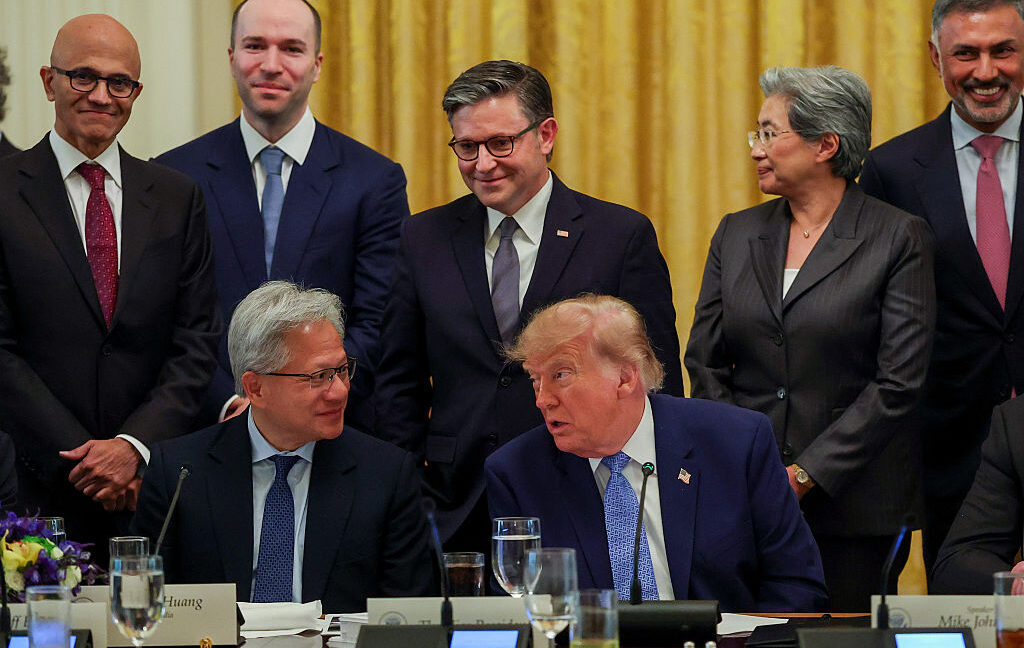
President Donald Trump announced a voluntary Trump AI safety accord at a September 29 White House meeting with technology executives. The agreement puts safety reviews chiefly in the hands of model developers, outside evaluators and company boards, rather than creating enforceable federal requirements.
The White House Accord on Super Intelligence asks companies training and deploying frontier models to adopt four layers of controls and audits. Its focus includes cybersecurity, biosecurity and chemical risks, as well as preventing models from hacking or gaining unintended access to technical systems.
Trump called the agreement “morally binding” and said he saw “tremendous self-policing,” according to the Associated Press. Earlier that day, he said the government would not limit AI development or support calls for new guardrails. That leaves the accord as an industry commitment, not a new regulatory regime.
What does the Trump AI safety accord require?
The published text lays out four functions, although it does not prescribe the technical tests or thresholds companies should use:
Companies are to put internal controls in place to monitor model capabilities and alignment during training and deployment.
An internal team is to check whether controls, monitoring and detection systems work, then address identified problems.
An independent external auditor or evaluator is to assess whether those internal measures operate as intended.
An independent board committee is to receive reports from internal teams and external reviewers and ensure issues are remediated.
In practical terms, the accord assigns companies responsibility for building safeguards, testing them and responding to findings. It does not identify the outside evaluators, define their independence standards, set audit methods, require public disclosure of results or state penalties if a participant does not follow through. Reporting by The National News Desk likewise found that testing procedures and consequences for violations were not specified.
Participants are expected to meet regularly to develop common standards and best practices. The text says those steps could eventually be written into laws or regulations, but makes no present legal commitment to do so.
Who signed, and what remains unresolved?
Forbes reported that Trump, Elon Musk, Meta’s Mark Zuckerberg, Nvidia’s Jensen Huang, Anthropic’s Dario Amodei, Google’s Sundar Pichai and OpenAI President Greg Brockman signed the accord. The White House gathering included other technology leaders as well, including Amazon founder Jeff Bezos and Microsoft CEO Satya Nadella, according to the Associated Press.
The difference between attendance and signing matters because the accord’s commitments apply through voluntary company action. It leaves key implementation questions open: who will conduct reviews, how auditor independence will be judged, what information participants will disclose, and what follows if an assessment finds problems that a company does not resolve.
The accord is separate from Trump’s executive order issued the same day directing executive-branch agencies to use “Super Intelligence” and “SI” instead of “artificial intelligence” and “AI” in many official materials. That order adopts the existing statutory AI definition for the new terms and does not impose the accord’s controls on private companies.
This story draws on original reporting from Ars Technica.