Nvidia H200 China exports face scrutiny over Huang’s Trump influence
A U.S. rule opened a conditional licensing path for Nvidia H200 exports to China, drawing criticism and questions about Jensen Huang’s sway.
By Dominic Okoye · Staff Writer
· 3 min read
Nvidia H200 China exports moved into a conditional licensing regime on January 15, when the Commerce Department replaced a presumption of denial with case-by-case reviews for qualifying shipments to China and Macau. The rule may create a route to sales, but it does not grant blanket permission, and Chinese authorities’ willingness to admit the chips remains a separate unresolved issue.
The change covers Nvidia’s H200, AMD’s MI325X and comparable chips that meet the rule’s performance limits and are commercially available in the United States. The Bureau of Industry and Security said the policy is intended to permit controlled sales while protecting U.S. national-security interests.
What does the Nvidia H200 China export rule allow?
Each export license remains discretionary. Under the final rule, an applicant must show that U.S. supply will be sufficient and that producing exports will not divert global foundry capacity from similar or more advanced chips needed by U.S. end users.
- Aggregate shipments of a covered product to China and Macau cannot exceed 50% of total shipments of that product to U.S. end users.
- Chinese recipients must have customer-screening and export-compliance procedures.
- Each shipment must undergo independent third-party testing in the United States before export.
- Existing end-user and end-use restrictions still apply, including restrictions related to military use.
The rule retains a presumption of denial for certain reexports, in-country transfers and companies headquartered in Macau or countries in the Commerce Department’s D:5 group. BIS said controlled H200 sales would strengthen the American technology ecosystem, while the administration has argued that allowing sales of regulated U.S. chips could reduce the incentive for Chinese competitors, including Huawei, to accelerate their own chip development.
Why are critics opposed to H200 sales?
Critics say the safeguards do not resolve the strategic risk. Reuters reported that former Trump White House Asia adviser Matt Pottinger told Congress that H200 sales could aid China’s military modernization. Jon Finer, a former deputy national security adviser, questioned whether Commerce could administer the rules effectively and whether Chinese buyers’ representations about their customers could be relied on. Lawmakers and former officials cited by Reuters also argued the policy could weaken the U.S. advantage in AI.
China’s own import policy is distinct from U.S. export licensing. Reuters reported on January 14 that Chinese customs authorities had told agents that H200 chips were not permitted to enter the country. Later reporting that Beijing might ease restrictions on Nvidia RTX Pro 5500 chips was based on unnamed sources and does not establish a Chinese policy change.
The H200 rule also differs from a 2025 arrangement involving Nvidia and AMD. A White House official told ABC News that the companies agreed to pay the U.S. 15% of revenue from China sales in exchange for export licenses. Nvidia’s part of that arrangement involved H20 licensing, while AMD’s involved its MI308 chip. It was separate from the 2026 H200 licensing rule.
What is known about Jensen Huang’s role?
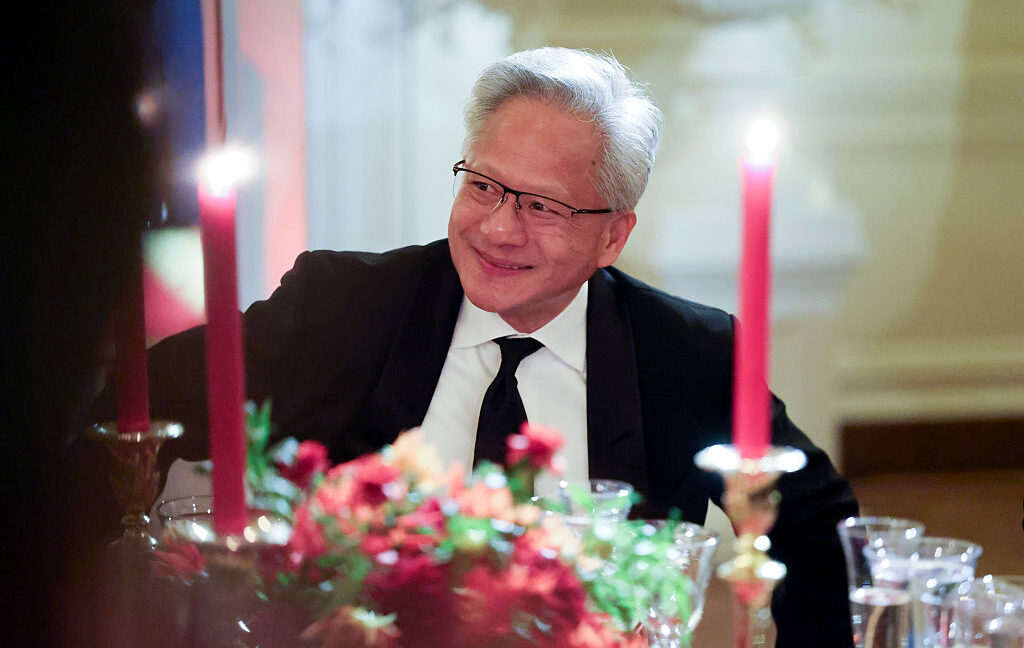
Questions about the policy have broadened into questions about Nvidia CEO Jensen Huang’s access to President Donald Trump. Ars Technica reported that author Stephen Witt described Huang to NPR as Trump’s most influential adviser on technology issues, while Treasury Secretary Scott Bessent said Trump was “completely aligned” with Huang.
Those accounts indicate a close relationship and shared views, but the available evidence does not establish that Huang holds a formal government position, has decision-making authority, or caused the H200 rule. Nvidia has argued that U.S. firms should be able to compete for approved commercial business under government rules.
This story draws on original reporting from Ars Technica.