Databricks acquires Row Zero for planned Genie spreadsheet integration
Databricks bought Row Zero to add a governed spreadsheet interface to Genie, but did not disclose deal terms or an integration timeline.
By Colin Brandt · Enterprise Reporter
· 3 min read
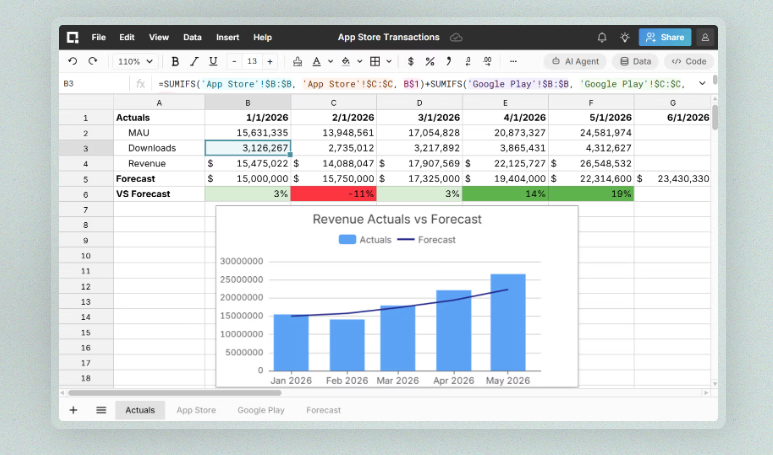
Databricks has acquired cloud-spreadsheet startup Row Zero, announcing the deal on September 24. Financial terms were not disclosed. In the planned Databricks acquires Row Zero integration, the company says Row Zero will bring a native spreadsheet interface to its Genie AI product, giving business teams a way to work with live enterprise data without leaving the governed Databricks environment.
The announcement is about an interface and data-access expansion around Genie, not a new AI model or a demonstrated improvement in model performance. Databricks says the feature is intended for finance, operations, sales and marketing users who want to explore data, build scenarios and collaborate in a spreadsheet format.
What will Row Zero add to Databricks Genie?
Databricks says Row Zero will let users move from a Genie chat interaction into hands-on spreadsheet work, including pivots, modeling and visualization. The company plans to underpin that experience with Genie Ontology, Unity Catalog and Unity Gateway.
In practical terms, the acquisition is meant to bring a familiar grid-based workspace closer to the data and AI tooling already in Databricks. Row Zero is designed to complement Excel and Google Sheets, according to Databricks, with familiar formulas, pivot tables and keyboard shortcuts.
Row Zero also markets itself as a cloud spreadsheet that can handle data at billion-row scale, with connected data sources that can refresh automatically. Those performance and product claims come from Row Zero and Databricks; neither company disclosed benchmarks, customer usage figures or details of how the combined product will perform after integration.
Why is governance central to the deal?
Databricks argues that spreadsheet exports create a governance problem when business data is copied into files outside centrally managed systems. Its stated approach with Row Zero is to keep spreadsheets connected to live data while preserving permission checks, audit records, export restrictions and the ability to write results back to a data source.
Databricks says queries in Row Zero will honor each user’s permissions, and that data can refresh from authoritative sources rather than requiring manual updates. It also says interactions will be auditable. Those capabilities remain part of the company’s stated integration plan.
The rationale is straightforward: Genie may generate an answer from enterprise data, but many teams still need spreadsheet workflows to inspect assumptions, adjust models and share results. Databricks is trying to place that workflow within its existing controls rather than in unmanaged files, as the company describes the issue.
What remains unknown?
Databricks said the Row Zero team, founded by former AWS and Tableau engineers, is joining the company. It said Row Zero will be available to Databricks customers across major clouds and will continue supporting data sources beyond Databricks. This could matter for organizations using mixed data estates.
The announcement does not disclose transaction terms and does not state an integration timeline. Databricks also gave no rollout date, pricing or separate packaging details for the planned spreadsheet experience. Independent reports from SiliconANGLE and The Stack said Row Zero had raised $13 million before the acquisition, although the supplied reporting also identifies a $10 million seed round in May 2025 and does not establish a complete funding record.
This story draws on original reporting from SiliconANGLE.