Appeals court upholds Pentagon designation restricting Anthropic’s Claude
A D.C. Circuit panel sustained one basis for Pentagon restrictions on Claude, while separate litigation keeps the practical outcome unsettled.
By Dominic Okoye · Staff Writer
· 3 min read
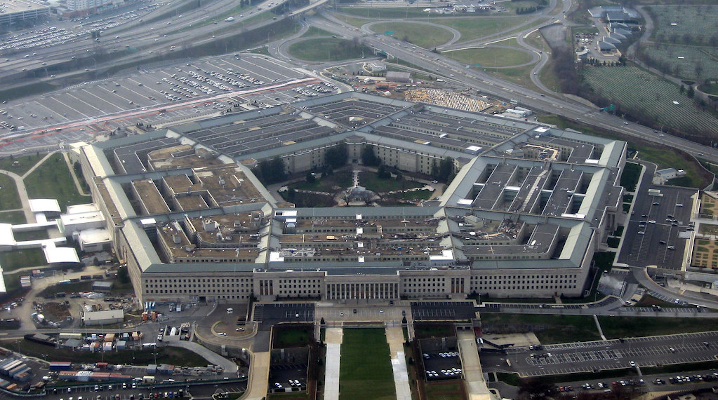
The Pentagon Claude ban appeals court dispute moved in the Pentagon’s favor Friday when a divided federal appellate panel upheld the Defense Department’s designation of Anthropic as a national-security supply-chain risk. The 2-1 ruling sustains one legal basis for barring the U.S. military from using Anthropic’s Claude models and defense contractors from using them in Pentagon work, though the panel delayed the ruling’s immediate effect while Anthropic considers further appeals.
The U.S. Court of Appeals for the D.C. Circuit rejected Anthropic’s challenge to the March designation. Judge Gregory Katsas, joined by Judge Neomi Rao, wrote that the department had sufficient grounds to conclude that continued integration of Claude into Pentagon systems, whether directly or through contractors, could create a national-security risk covered by the statute. Judge Karen LeCraft Henderson dissented.
The decision is not a final resolution of Anthropic’s broader fight with the Trump administration. The Pentagon invoked two separate legal designations, producing cases in different courts. A federal judge in San Francisco invalidated the parallel designation last month and blocked related government-wide and contractor restrictions, according to Reuters and CNBC.
What does the appeals court ruling mean for Claude at the Pentagon?
The D.C. Circuit upheld the designation at issue in its case, rather than declaring a final blanket prohibition on Claude. CNBC reported that the designation prevents military use of Anthropic’s models and prevents contractors from using them for work with the department. In an earlier interim ruling, the appeals court litigation left contractors able to use Claude for work outside Pentagon contracts, CNBC reported.
Its immediate practical effect remains subject to the separate San Francisco case and the D.C. panel’s own pause. The panel gave Anthropic time to request rehearing by the three judges, seek an en banc review by the full D.C. Circuit, or petition the Supreme Court. Anthropic said it disagreed with the decision and was considering further review.
Why did the Pentagon designate Anthropic a supply-chain risk?
The dispute grew out of negotiations over Claude’s military use. Anthropic signed a $200 million Pentagon contract in July 2025, CNBC reported, and the parties later discussed deploying the models through the department’s GenAI.mil platform.
Those talks broke down over permitted uses. Reuters and CNBC reported that Anthropic would not remove restrictions involving fully autonomous weapons and mass domestic surveillance, while the Pentagon sought access for all lawful purposes. The appellate majority accepted the department’s position that model restrictions could create an operational risk, including the possibility that constrained models could fail to perform requested tasks during military operations.
Anthropic had argued that the action was unauthorized, arbitrary and unconstitutional retaliation for its views on AI safety. It has said AI is not reliable enough for safe deployment in autonomous weapons and has opposed domestic mass surveillance. The D.C. Circuit rejected those arguments as to this designation; the separate California ruling addressed the other statutory route used by the Pentagon.
For defense-tech vendors, the result is a continuing procurement constraint rather than a settled policy outcome. The litigation will determine whether the Pentagon can maintain the restrictions under either or both legal theories.
This story draws on original reporting from SiliconANGLE.