Federal Register pulls Qwen search tool after scrutiny of Alibaba model
The National Archives removed Alibaba’s Qwen search option from the Federal Register as U.S. agencies accuse its developer of model distillation.
By Dominic Okoye · Staff Writer
· 3 min read
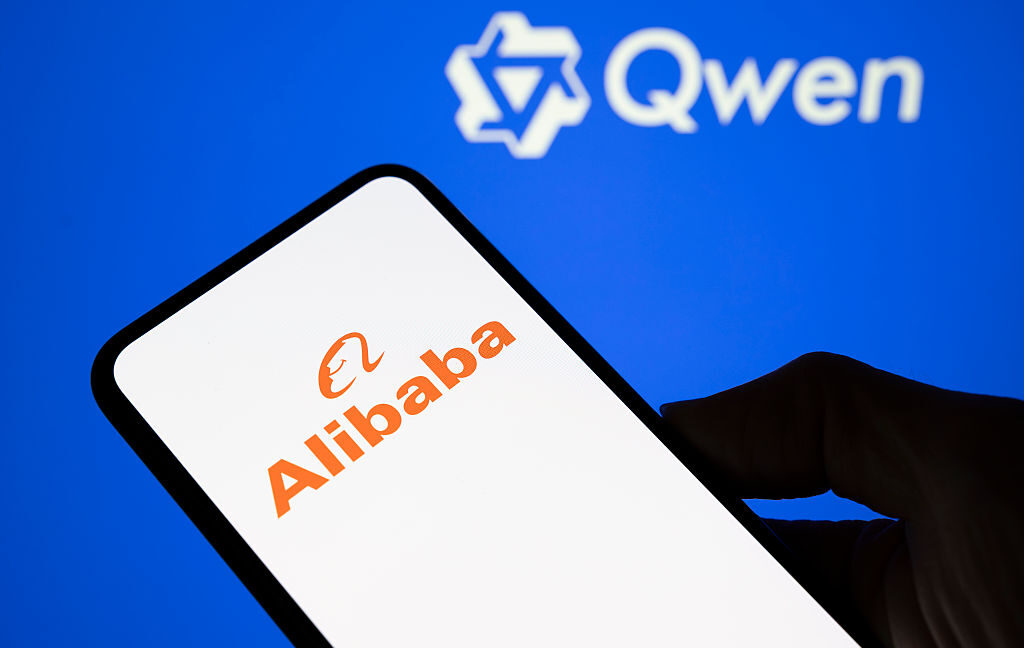
The National Archives removed a Federal Register Qwen search tool on September 17 after the website briefly offered Alibaba’s AI model to help visitors search public comments on proposed federal regulations. Reuters reported that the feature disappeared around the time posts on social media drew attention to it; neither its launch date nor its hosting and data-routing arrangement has been established.
The episode puts a federal site’s use of an open-weight Chinese model alongside a recent U.S. government accusation that Alibaba participated in improper extraction of capabilities from American AI systems. It does not establish that the Federal Register deployment was a cyberattack, that it transferred information to Alibaba, or that Qwen itself was deemed malicious by the FBI.
What was the Federal Register Qwen search tool?
The Federal Register, operated by the National Archives, publishes proposed rules and other government documents. Its Qwen-powered option was used to browse public comments on proposed regulations, Reuters reported. The tool appeared with other search choices on the site.
Qwen is an open-weight model family. That means key parts are available for developers to download and adapt for a particular task, rather than requiring every request to be sent to a provider’s hosted service. Reuters noted that organizations can run open-weight models on their own infrastructure, which can give them more control over potentially sensitive data.
That distinction is central to the unresolved security question. Georgetown Law professor Anupam Chander told Reuters the use did not appear to create an immediate cybersecurity risk because the material being searched was already public. Senator Mark Warner, the Virginia Democrat and vice chair of the Senate Intelligence Committee, said the risk would turn on whether U.S. data crossed the government’s security boundary and was processed by Alibaba-controlled systems. The available reporting does not determine whether that occurred.
What did U.S. agencies allege about Alibaba?
On September 8, the FBI, National Security Agency and Cybersecurity and Infrastructure Security Agency issued a joint cybersecurity advisory accusing Alibaba and five other China-based AI companies of industrial-scale knowledge-distillation campaigns against U.S. AI companies. The advisory characterized the alleged activity as aggressive, targeted and malicious, while distinguishing it from legitimate uses of distillation in AI research.
The agencies alleged Alibaba used such activity to improve the Qwen family of models. China’s embassy in Washington called the copying allegations unfounded, according to Reuters. The advisory is an allegation by the U.S. agencies, not evidence that every deployment of a Qwen model carries the same conduct or security risk.
Why the short deployment still matters
For operators, the case is less about a demonstrated compromise of public regulatory comments than a procurement and governance gap. The National Archives did not respond to Reuters’ request for comment, and the White House also did not respond. It remains unclear who approved the tool, how it was run, and why it was removed.
Representative John Moolenaar, the Michigan Republican who chairs the House China Committee, said no federal entity should use a Chinese AI model. That is a policy position, rather than a stated government-wide ban. The incident shows why the open-weight model debate cannot be settled by a model’s country of origin alone: where the model runs, what information it handles, and who controls the surrounding system determine the practical exposure.
This story draws on original reporting from Ars Technica.