White House official alleges Moonshot AI copied Anthropic model for Kimi K3
Michael Kratsios accused Moonshot AI of using large-scale distillation of Anthropic’s Fable and accessing Nvidia GB300 systems despite U.S. controls.
By Dominic Okoye · Staff Writer
· 3 min read
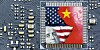
Michael Kratsios, President Donald Trump’s assistant for science and technology, accused China’s Moonshot AI of building its Kimi K3 model by distilling Anthropic’s Fable, escalating U.S. claims that Chinese AI labs are using American frontier systems to close the model gap. No funding, valuation or commercial terms were disclosed, but the claim lands in a market already sensitive to Chinese open-weight models that appear competitive with U.S. systems.
Kimi K3, released by Moonshot AI on July 16, is described as a 2.8-trillion-parameter open-weights model. Its performance drew attention because it suggested Chinese AI researchers remain close to U.S. rivals despite export controls on advanced chips and broad sanctions across China’s technology sector. After the release, U.S. AI stocks fell as investors weighed whether lower-cost Chinese models could pressure American AI businesses.
Kratsios alleged in a post on X that Moonshot AI used distillation rather than original model development. Distillation, in this context, means generating large volumes of outputs from one model and using them to train another. The technique can be routine when used with permission or for smaller, more efficient derivative models, but Kratsios framed the alleged activity as covert industrial copying of proprietary U.S. technology.
Kratsios also claimed Moonshot AI had created an internal system for large-scale distillation against U.S. models and could switch among different access methods to reduce the chance of detection. He did not publish the underlying evidence in the post.
Chip access claims broaden the allegation
The White House official also accused Moonshot AI of obtaining access to servers equipped with Nvidia’s GB300 accelerator, a chip the U.S. does not permit to be sold in China. He further alleged the company used GB300 systems located in Thailand. Those claims point to a broader enforcement problem for Washington: export rules restrict direct sales, but Chinese companies can still seek compute through overseas GPU farms, intermediaries or grey-market channels.
U.S. Treasury Secretary Scott Bessent added that the administration supports open-source AI but views covert, industrial-scale distillation by firms in the People’s Republic of China as potential intellectual property theft. Bessent said sanctions and Entity List designations could be considered in such cases. He did not announce specific measures against Moonshot AI.
The U.S. has already sanctioned many of China’s largest technology companies, yet those restrictions have not stopped China from producing major hardware, software and internet businesses. They also have not eliminated workarounds for restricted technology, including renting compute capacity outside China for AI workloads that require accelerators unavailable domestically.
Anthropic had already made similar accusations
Anthropic accused Moonshot AI of distillation in February 2026 and said Chinese AI companies DeepSeek and MiniMax had also used the method. Moonshot AI’s response was not described. Beijing has routinely denied U.S. and allied claims of Chinese industrial espionage.
The allegation comes as China’s broader technical capacity continues to draw scrutiny. The Australian Strategic Policy Institute’s 2025 Critical Technology Tracker rated China as the leader in 66 of the 74 technologies it monitors. For AI vendors and investors, the Kimi K3 dispute is less about one model release than about whether U.S. controls can slow Chinese AI progress when model access, open weights and overseas compute remain hard to police.
This story draws on original reporting from The Register.