Vintage computer restoration challenges go beyond nostalgia
Earie Salmon’s retro-computing work shows why scarce chips, missing documents and electrical risk can stall old-machine repairs.
By Renata Fuchs · Policy Reporter
· 3 min read
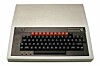
Vintage computer restoration challenges are being documented by repairers and builders including Australian IT professional Earie Salmon, who runs Earie’s 8-Bit Workshop. Salmon’s account, reported by The Register, shows that the work depends less on collecting old machines than on electronics skills, usable documentation, verified replacement parts and safety around aging power systems.
Salmon said nostalgia initially drew him to systems from the early home-computing era, including an Acorn Atom, Commodore 64 and Amiga. He estimated that he now owns between 35 and 40 systems in varying states of disrepair. The collection has led him beyond restoration: in the past year, he said he built the TI-99/22, a notional successor to the TI-99/4A designed by Dan Werner, and an Acorn Atom replica designed by Hackjunk.
The Register reported that restoring and repairing vintage hardware has become increasingly popular, but Salmon’s experience points to a practical constraint on the hobby. Repeatedly repairing the same machines can become routine; the harder work is filling gaps in a collection, diagnosing unfamiliar failures or reconstructing systems that are no longer manufactured.
What makes vintage computer restoration difficult?
Soldering and desoldering are baseline skills, according to Salmon, but they are not enough. He advised newcomers to practise on a Vero board and disposable components before working on older hardware, where a mistake can damage a part that cannot be readily replaced.
Component sourcing is the central problem. Custom integrated circuits, including ULAs made for particular original systems, ceased production long ago. Salmon said repairers may have to salvage parts from nonworking machines, a trade-off when modern replicas are unavailable for rarer computers. He also warned that chips sold as 74LS logic ICs can be relabeled parts from a different logic family. Basic IC testers may confirm that a chip functions without detecting that it is unsuitable for the intended machine.
Documentation can present a separate barrier. Salmon said reading schematics is essential for tracing faults, yet some Japanese systems, including NEC and MSX machines, may lack published designs or English-language material that is easy to find.
A repair can mean undoing an earlier repair
Salmon cited a BBC Model B as one of his most satisfying restorations, despite the condition in which he found it. The machine had incorrectly connected bodge wires, failed ICs and broken traces left by an earlier attempt at repair. That kind of history changes the task from swapping a known-bad component to determining which modifications caused the failure.
Salmon also argued that devices introduced from the mid-2000s became smaller, more integrated and harder to repair. That is his assessment, rather than an established finding about manufacturers’ design intent or product lifetimes. He supports the right-to-repair movement.
For beginners, the safety boundary is clear: Salmon said people should not work with mains voltage without the necessary knowledge and should keep live mains sections covered to avoid accidental contact while probing a machine.
This story draws on original reporting from The Register.