UK electric hydrogen aircraft funding puts £7.3M into airport infrastructure
The DfT will fund eight projects for charging, hydrogen storage and flight trials, a small bet inside a £43M aviation tech package.
By Renata Fuchs · Policy Reporter
· 3 min read
The UK government has put £7.3 million into uk electric hydrogen aircraft funding, backing eight projects that cover airport charging, liquid hydrogen handling and flight demonstrations. The Department for Transport said the awards sit inside a wider £43 million package for next-generation aviation technology, a limited sum for sectors that require new aircraft, airport systems and certification work before commercial scale is plausible.
The money will be spread across projects rather than one national program. The DfT has identified work on high-power charging, hydrogen storage, hydrogen refueling and regional flight trials, but the individual allocations to each project were not disclosed.
What is the UK funding for electric and hydrogen aircraft?
The funding is aimed at the ground systems needed to make low-emission aircraft usable beyond test flights: chargers, cooling equipment, hydrogen supply models and refueling vehicles. Those systems matter because electric and hydrogen aircraft depend on airport infrastructure that most operators do not currently have in place.
One of the electric aviation projects is ECLiPSE, led by Bristol-based Vertical Aerospace with the University of Bath and InnCat. The project, whose full name is electrified charging and liquid-cooling provision for support of e-flights, is intended to develop high-power charging and thermal management systems for electric routes.
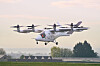
Vertical is developing the Valo electric flying taxi. At the Farnborough International Airshow last week, its VX4 prototype demonstrated a transition between vertical lift and forward airplane-style flight, then back again. The aircraft uses eight propellers, with half swiveling between lift and propulsion positions. Vertical says the aircraft is designed for a pilot and as many as four passengers, with a claimed range of up to 100 miles and a top speed of up to 150 mph under electric power. The Ministry of Defence is said to have shown interest in the vehicle.
Another electric flight program, SEAN, short for the Scottish electric aviation network, will run a three-month demonstration of zero-emission regional flights using Inverness Airport as a hub for routes to other Scottish airports. The aircraft for that program is Beta Technologies' Alia CX300 in its conventional take-off configuration. Beta lists the model with a maximum speed of 176 mph and a range of 387 miles.
Which hydrogen aviation projects are included?
Several of the funded projects focus on how airports could handle liquid hydrogen. The Bristol Airport liquid hydrogen supply assurance and architecture study is intended to produce a practical model that other airports could adopt. Bristol Airport is also involved in CHOSAN, or cryogenic hydrogen optimized systems for aviation, which is expected to support a series of point-to-point regional flights on routes of up to 500 km.
Project HyPRIME also includes Bristol and is working on a mobile hydrogen refueling vehicle that could deliver hydrogen to aircraft. The DfT described these projects as part of the infrastructure needed for hydrogen aviation rather than evidence that commercial hydrogen aircraft are near deployment.
Airbus is among the larger aerospace companies working on hydrogen propulsion through its ZEROe program, an electric propeller aircraft concept powered by hydrogen fuel cells. Airbus has since revised the roadmap for that program, raising uncertainty over whether it will enter service in 2035 as previously targeted.
Transport Secretary Heidi Alexander said the government is working with industry to reduce emissions, support innovation and keep the UK active in building, testing and flying future aircraft. The funding signals policy support for the category, but the disclosed amount is modest against the technical and infrastructure requirements of electric and hydrogen aviation.
This story draws on original reporting from The Register.