Raspberry Pi adds $80 10.1-inch touchscreen for Pi 5 projects
The new Touch Display 2 model brings a larger portrait panel, ten-point touch and a Pi 5 requirement to dashboard and kiosk builds.
By Dominic Okoye · Staff Writer
· 3 min read
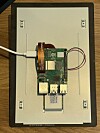
Raspberry Pi has launched a 10.1-inch version of its Touch Display 2, priced at $80, for builders making dashboards, entertainment controls and touch-based information panels. The bigger screen gives the Pi ecosystem a higher-resolution official display option, but buyers will need a Raspberry Pi 5 or Compute Module setup to use it.
The new panel joins the existing 5-inch and 7-inch Touch Display 2 models. Raspberry Pi specifies a native portrait resolution of 1,200 x 1,920 pixels, 24-bit RGB color and support for ten simultaneous touch points. The smaller versions support five touch points, so the larger model is a functional step up rather than a size change alone.
The display uses an in-plane switching TFT LCD panel. Raspberry Pi lists a maximum touch response time of 35 ms, a backlight brightness of 400 cd/m² and an 85-degree viewing angle. Those numbers put it in practical embedded-display territory rather than premium tablet territory, which fits the $80 list price.
The physical design leaves a sizable border around the active display area. The full unit measures 161.8 mm by 247.3 mm, while the active screen area is 135.4 mm by 216.6 mm. That bezel may be useful for integrators mounting the display inside an enclosure, which is the likely route for kiosk, control panel and appliance-style projects.
Compatibility is the main constraint. The display has a rear mounting point for a Raspberry Pi, but Raspberry Pi says it works with the Raspberry Pi 5 and Compute Modules, which are not included. Compute Module users will need an IO Board or equivalent because the screen draws power from a pair of GPIO pins.
Raspberry Pi told The Register the Pi 5 requirement is tied to the resolution: the new screen needs four DSI lanes to connect to the host board, while earlier Touch Displays used two. The newer display connector on the Raspberry Pi 5 and Compute Module IO Boards supports that requirement, according to the company.
That technical explanation does not remove the cost and thermal trade-offs. The Raspberry Pi 5 can run hot under load, and adding even the 2 GB version of the board nearly doubles the display cost for buyers starting from scratch. Raspberry Pi did not position this as a complete tablet kit, and the host computer is a separate purchase.
Setup is meant to be straightforward. The required ribbon cable, power cable, risers and screws are included, and the Pi 5 can be attached to the back of the display. The Register reported that its unit required a Raspberry Pi 5 EEPROM update before it would start, with firmware from February 2026 or later needed. Raspberry Pi documents the requirement with the release.
On the software side, Raspberry Pi says Raspberry Pi OS includes touchscreen drivers, ten-finger touch support and an on-screen keyboard, allowing use without a keyboard or mouse. The Register found the screen bright and reasonably responsive, while noting that Raspberry Pi OS still is not a touch-first interface. The display also needs protection from moisture, so enclosure design will matter in exposed settings.
For buyers already building around Pi 5 or Compute Modules, the 10.1-inch Touch Display 2 is a simple route to a larger official touchscreen. For buyers hoping to reuse older Raspberry Pi boards, the new model adds a hardware requirement that may be the deciding cost factor.
This story draws on original reporting from The Register.