Nvidia pitches Vera Rubin as a higher-yield AI factory platform
Nvidia says Vera Rubin can produce 10 times more tokens per watt than GB200 NVL72 in early CoreWeave tests, with pricing and rollout details undisclosed.
By Renata Fuchs · Policy Reporter
· 3 min read
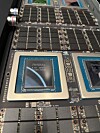
Nvidia used a recent AI infrastructure briefing and lab tour in Sunnyvale to show how its Vera Rubin platform is being packaged for data centers chasing more inference output per watt. The company said the system can deliver 10 times more tokens per watt than GB200 NVL72 in initial CoreWeave results on DeepSeek-R1, a claim aimed at operators trying to turn constrained power budgets into more billable AI usage.
The event centered on Nvidia’s “AI Factory” pitch: purpose-built data center infrastructure for training and inference, with a particular focus on agentic workloads. Nvidia has positioned agents as requiring sustained inference, low latency across multiple reasoning steps, higher decoding throughput, more key-value cache capacity and the ability to scale models across linked GPU domains. Those are company claims, and Nvidia did not disclose system pricing, customer commitments or a full production deployment schedule.
Vera Rubin was announced at Computex 2024 and described in more detail at CES in January. The platform includes six silicon components: the Vera CPU, Rubin GPU, NVLink 6 switch, ConnectX-9 network interface, BlueField-4 data processing unit and Spectrum-6 Ethernet switch.
Nvidia said those parts are being used across rack-mountable data center systems, including the Vera Rubin NVL72 compute tray, the Vera Rubin NVL72 NVLink switch tray, the Groq 3 LPX inference accelerator tray, the Vera CPU tray, the BlueField-4 STX storage tray and the Spectrum-6 SPX switch tray.
Automation is part of the pitch
During the lab tour, Andrew Bell, Nvidia’s senior vice president of hardware engineering, said automated assembly can build the compute tray inside the Vera Rubin NVL72 in one minute. He compared that with a typical 90-minute assembly process for the GB200 compute tray, describing it as a 90-fold improvement.
That operational detail matters because Nvidia’s customers are not only buying accelerators. They are buying dense systems that must be installed, serviced and cooled inside facilities where power, space and uptime are binding constraints. The company’s message is that faster assembly and a more integrated rack architecture can reduce human intervention compared with older hardware.
Ian Buck, general manager of Nvidia’s hyperscale and high-performance computing business, framed the business case around performance per watt. He said every AI factory is constrained by power and argued that revenue depends on the number of tokens generated in a fixed-watt data center. That is Nvidia’s preferred metric for the current buildout: more inference output from the same power envelope.
The economics are less settled than the hardware story. If more efficient systems increase token supply across competing providers, token prices could fall. Nvidia’s argument depends on demand rising enough to offset that pressure and support the capital spending behind new data center capacity.
Buck also argued that AI tools are increasing developer productivity. He estimated there are 30 million to 40 million active software developers globally and tied that workforce to roughly $3 trillion in salaries, then suggested AI-driven output could imply far higher productivity. He also said Nvidia’s own code check-ins and developer productivity have tripled with AI coding tools, and that the company uses agents across software development and chip development, including review of its chip bug database. Nvidia did not provide audited productivity data for those claims.
The physical footprint of AI infrastructure remains a live issue. One day after Nvidia’s briefing, Dutch activists targeted a data center serving Microsoft workloads with balloons filled with chemicals, citing climate and political concerns. Nvidia’s Sunnyvale lab is one of four such facilities, according to the company, and attendees were asked not to disclose its location.
This story draws on original reporting from The Register.