Mars honeycomb textures appear in new Curiosity rover images
NASA’s Curiosity rover photographed a large field of honeycomb-like Martian textures while climbing a valley called Valle Grande.
By Dominic Okoye · Staff Writer
· 2 min read
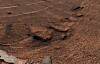
NASA has released new images of Mars honeycomb textures captured by the Curiosity rover, showing a broad field of polygonal patterns in a valley mission scientists have nicknamed Valle Grande. The find matters because Curiosity, on Mars since 2012, is still returning fresh geological observations during its fifth extended mission.
The rover photographed the feature on June 19 and 20, corresponding to the 4,930th and 4,931st Martian days of its mission. NASA said Curiosity had recorded small patches of similar geometric shapes several times before, but not at the scale now seen in Valle Grande.
What are the Mars honeycomb textures?
The visible features are polygonal patterns, with each element measuring about four to eight centimeters across, according to NASA. The agency has not determined exactly how this field formed, but scientists have previously linked comparable shapes to mud that dried and cracked during an ancient Martian event.
That interpretation fits Curiosity’s broader role on Mars: the rover has spent years examining terrain that can preserve clues about past water activity. During its mission, Curiosity has made observations that suggest Mars once had intermittent oases or even a large lake, though the honeycomb field is being treated as a geological feature rather than evidence of anything living.
How long has Curiosity been operating on Mars?
Curiosity reached the Martian surface on August 5, 2012. It was the first probe to land using a sky crane, a hovering descent system that lowers a rover onto the ground. Earlier Mars landings had used bouncing airbags intended to protect spacecraft hitting the surface at speeds above 70 kilometers per hour.
Since landing, Curiosity has traveled about 35 kilometers. The rover has kept working despite damaged wheels, a recurring operational concern, and a drill that became stuck in Martian rock. NASA later found a way to shake the drill free, according to the agency’s account, and has continued to modify the rover’s capabilities remotely.
NASA has also reprogrammed Curiosity from Earth to run different experiments and has sent major software upgrades to keep the rover operating. The agency generally extends robotic missions as long as the data returned justifies the cost of running them. Curiosity is still meeting that bar, which is why a 2012 rover is now sending back close-up views from a new section of Martian terrain.
This story draws on original reporting from The Register.