Audio Cassette Simulation GitHub project adds tape hiss with FFmpeg
The GitHub project uses FFmpeg filters to make digital audio resemble specific cassette tapes, including BASF, Maxell, Sony, TDK and Soviet models.
By Renata Fuchs · Policy Reporter
· 3 min read
The Audio Cassette Simulation GitHub project gives digital audio a cassette-style finish using FFmpeg, turning clean files or live streams into outputs modeled on older tape media. The repository matters less as a product launch than as a small example of how open-source audio tooling can reproduce a format’s imperfections without requiring the original hardware.
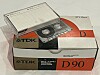
The project is built around shell scripts and cassette-specific folders. Users choose a tape profile, run the conversion command in bash, and receive the processed audio in an ./out directory, according to the project description. The available profiles include BASF LH Extra C90, Maxell UD C90, Sony CHF60 Type I Normal, Sony CHF90, TDK D90 and Soviet MK-60 tape.
How does Audio Cassette Simulation work?
According to the README, the project uses FFmpeg to apply cassette-like audio characteristics, including tape noise, wow and flutter pitch movement, bandwidth limits and equalizer changes. The implementation is not described as a new audio engine; the work appears to be in choosing FFmpeg filter settings that approximate the behavior of particular tapes.
That distinction is useful for developers and audio tool builders. FFmpeg is already a common backend for transcoding and media processing, so this repository shows how far a familiar command-line stack can be pushed with carefully tuned filters. It also means the project is accessible to users who are comfortable with bash rather than tied to a dedicated plug-in, digital audio workstation or commercial app.
The processed files are saved as MP3s. That may be an odd choice for listeners focused on high-fidelity preservation, but the goal here is the opposite of transparent conversion. The project is designed to introduce constraints and artifacts associated with compact cassettes, including hiss and tonal coloration, rather than preserve a pristine master.
Compact cassettes date back to the 1960s. They store magnetic tape on two reels inside a plastic shell, with the tape moving from one reel to the other during playback or recording. The same medium was used for music and for data storage, including software on some home computers.
Different cassette brands and playback equipment could produce different levels of noise, distortion and frequency response, which is why a tape model can be treated as a recognizable audio profile. The repository’s tape list reflects that approach by separating simulations by model rather than offering one generic “cassette” setting.
The project does not recreate the physical parts of the cassette experience: handling the shell, using a deck, or dealing with tape damage from a faulty mechanism. It targets the sound signature only. That makes it a practical tool for retro audio experiments, sample processing, online streams or software projects that need cassette texture without sourcing old media and equipment.
Cassettes lost mainstream ground as digital formats took over, while later gaining some renewed interest in the same broad nostalgia cycle that helped vinyl. Audio Cassette Simulation fits into that pattern from the software side: it treats analog degradation as an effect that can be selected, scripted and repeated.
This story draws on original reporting from The Register.