Airport sign EFI Shell screen appears at Phoenix car rental building
A digital sign at a Phoenix airport car rental building dropped to an EFI Shell prompt, suggesting its signage PC failed to boot.
By Dominic Okoye · Staff Writer
· 2 min read
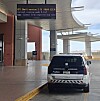
An airport sign EFI Shell screen was spotted at a Phoenix airport car rental building, where a digital display appeared to have failed before loading its signage software. The Register reported that a reader saw the screen showing the EFI Shell prompt, the kind of low-level interface that usually appears when a PC cannot start as expected.
The incident is a small but familiar failure mode for digital signage: a display meant to show instructions or wayfinding information instead exposes the embedded computer behind it. The Register did not identify the airport operator, the signage vendor, the hardware supplier or the software running the display.
The scene also included police officers nearby, according to The Register’s account. No link was established between the officers and the failed display, and the report did not say whether airport staff, a contractor or IT support had been called to repair it.
What does EFI Shell on an airport sign mean?
EFI Shell is a command-line environment tied to a system’s firmware. The Register said it can be used by experienced technicians to load drivers or boot loaders manually, but most users see it only when the machine has not booted normally.
On a public display, that usually points to a problem before the signage application starts. The system may be unable to find the expected boot device, the drive or filesystem mapping may no longer be available, or a startup script may be looking for something that is missing, according to The Register’s explanation of the screen.
For operators, the failure is less about the prompt itself than about what it reveals. Digital signage systems are often treated as appliances, but many are ordinary PCs or PC-like devices connected to displays. When boot configuration, storage or startup automation breaks, the public can see the underlying system rather than the intended customer-facing message.
The Register did not report whether the display was later restored or what caused the boot failure. It also did not say whether the system had remote management, local monitoring or any fallback content that could have hidden the failure from passengers.
The episode is routine in technical terms, but it underlines a recurring operational issue for public infrastructure technology. A failed kiosk, gate screen or wayfinding display may not stop an airport from functioning, but it becomes a visible reliability problem in a place where passengers are already dependent on clear information.
This story draws on original reporting from The Register.