Airbus A350-1000ULR flight sets 24-hour distance record
Airbus's ultra-long-range A350 flew 23,076 km from Melbourne to Toulouse, testing Qantas's plan for nonstop Sydney-London and Sydney-New York routes.
By Dominic Okoye · Staff Writer
· 3 min read
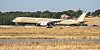
Airbus kept an A350-1000ULR flight airborne for 24 hours and 24 minutes from Melbourne to Toulouse, covering 23,076 km, according to flight-tracking data from Flightradar24. The company says the aircraft is being developed for Qantas, which plans to use the jet for daily nonstop services from Sydney to London and New York starting in 2027.
The flight is notable because it marks a distance record for a commercial airliner and gives Airbus and Qantas another data point for ultra-long-haul routes that push close to a full day in the cabin. Qantas plans to buy 12 of the aircraft. Pricing was not disclosed.
The aircraft is the A350-1000ULR, with ULR standing for Ultra-Long Range. Airbus has extended the range of the A350-1000 variant by adding a rear center fuel tank with capacity for 20,900 liters of fuel. The company says that gives the jet a range of almost 10,000 nautical miles, equal to about 18,500 km or 11,500 miles.
How far can the A350-1000ULR fly?
Airbus says the A350-1000ULR can fly almost 10,000 nautical miles. The Melbourne-to-Toulouse test covered 23,076 km, a longer tracked distance than the aircraft's stated point-to-point range figure, and lasted just over 24 hours.
Airbus brought the first A350-1000ULR out of the factory and onto the runway in June, then conducted a series of test flights. One of those was a 19-hour Toulouse-to-Melbourne trip across July 23 and 24, which Airbus and Qantas presented as evidence that direct Australia-Europe service is technically within reach.
There is some context around that claim. A week before the Toulouse-to-Melbourne run, one of Qantas's A380 aircraft flew nonstop from Dresden, Germany, to Sydney after maintenance work, according to the reported itinerary. That aircraft carried no passengers. The A350-1000ULR test aircraft, by contrast, carried hardware designed to simulate passenger load, making the test more representative of commercial operation than an empty ferry flight.
What will Qantas use the A350-1000ULR for?
Qantas is the launch customer for the aircraft and plans to deploy it on nonstop flights between Sydney and London, and between Sydney and New York. The Australia-Europe services are expected to take up to 22 hours, only two or three hours shorter than trips with an intermediate stop, but Qantas is betting some travelers will pay more to avoid a connection.
The airline plans a cabin skewed toward premium seating. Even the economy cabin is expected to be split into three products: premium economy, extra-legroom economy and standard economy. Qantas also plans a dedicated standing and stretching area, special menus and lighting intended to reduce the discomfort of ultra-long-haul travel.
The commercial question is whether enough passengers value nonstop service over the ability to break the trip. For Airbus, the test gives the A350 program a high-visibility role in a narrow but profitable segment of long-range flying. For Qantas, the aircraft is the hardware behind a route strategy that depends on premium demand holding up on some of the longest scheduled flights in the world.
This story draws on original reporting from The Register.