ZuriQ seed funding reaches $25.5M for 2D trapped-ion chips
ZuriQ raised $25.5 million to scale a 2D trapped-ion quantum processor, but has so far shown a nine-ion prototype.
By Wei-Lin Zhao · AI Correspondent
· 3 min read
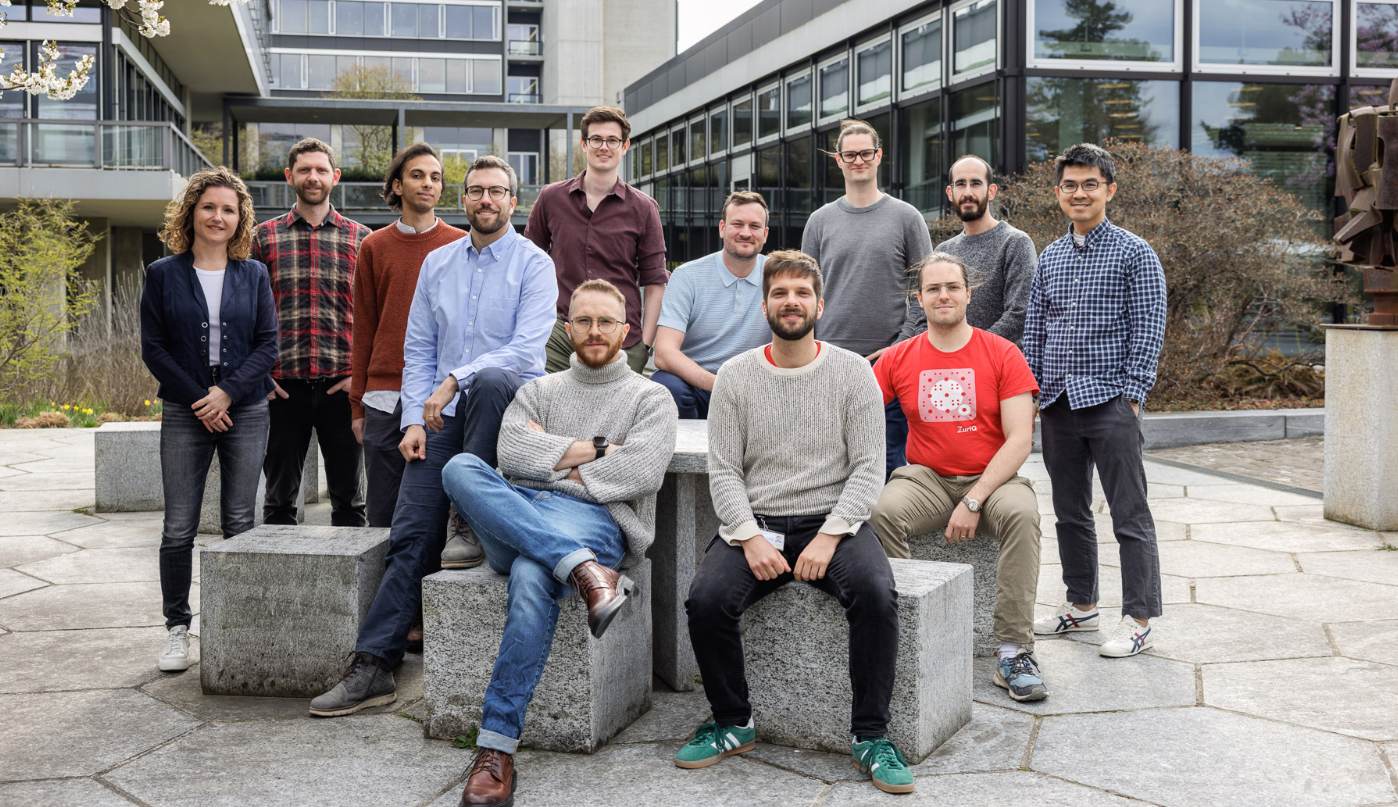
Swiss quantum computing startup ZuriQ raised $25.5 million in seed funding to scale a two-dimensional trapped-ion processor design, a bet that chip geometry can address one of the category’s central hardware bottlenecks. The ZuriQ seed funding was led by Quantonation, with participation from Forward.one, Extantia, Firgun Ventures and all existing backers; the company did not disclose valuation, revenue or customer figures.
The round follows a previously undisclosed $4.2 million pre-seed financing that closed when ZuriQ spun out of ETH Zürich last year. The company is trying to build trapped-ion quantum processors that can expand from small demonstrations to chips with hundreds and eventually thousands of qubits, according to the company.
What is ZuriQ building with the seed funding?
ZuriQ is developing quantum processors based on two-dimensional arrays of trapped ions. In a trapped-ion system, charged atoms serve as qubits, but the practical challenge is controlling enough of them with low error rates to perform useful calculations.
The company argues that much of the trapped-ion field has been constrained by one-dimensional architectures, where ions are arranged in single-file chains and connected into larger structures through complex junctions. ZuriQ co-founder and Chief Executive Dr. Pavel Hrmo has said those designs were useful early steps, but become harder to scale as companies try to move beyond adding qubits incrementally.
ZuriQ’s alternative uses Penning micro-traps and a static magnetic field rather than the rapidly oscillating fields used in conventional systems, according to the company. The design is intended to let trapped ions move across a chip surface rather than only along a line, which ZuriQ says should make it easier to increase qubit counts across the area of a chip.
The company has not proven that claim at commercial scale. Its disclosed prototype is a three-by-three array of nine individually controlled ions, built with Infineon AG using established chipmaking processes. That is a meaningful engineering milestone for a seed-stage company, but it is still far from the hundreds or thousands of qubits ZuriQ says it wants to host on future processors.
Why investors are backing another quantum hardware startup
Quantum hardware remains an unsettled market despite years of funding for superconducting, photonic, neutral-atom and trapped-ion approaches. ZuriQ’s pitch is that the winning architecture has not been decided and that a geometry change could matter as much as improvements in control electronics or fabrication.
Professor Jonathan Home of ETH Zürich, a scientific adviser to ZuriQ, has described the company’s advantage as a question of layout: holding ions in two dimensions could let qubit count rise with chip area, while also allowing more flexible connections among ions. That remains an adviser’s technical assessment, not a market outcome.
ZuriQ said the new capital will go into research, expanding chip fabrication operations and hiring specialists from other quantum computing companies. The hiring plan is notable because trapped-ion expertise is concentrated, and the company is competing for talent against better-funded quantum hardware players.
Quantonation founding partner Christophe Jurczak said the investment reflects the firm’s view that quantum architecture remains open to major physics breakthroughs. For ZuriQ, the next test is narrower and more measurable: moving from a nine-ion demonstration to dense, controllable arrays that show its two-dimensional design scales in practice.
This story draws on original reporting from SiliconANGLE.