Water Watch Center launches cybersecurity services for small utilities
DEF CON Franklin and NRWA have enlisted five MDR providers to offer free monitoring and response support to small U.S. water utilities.
By Dominic Okoye · Staff Writer
· 3 min read
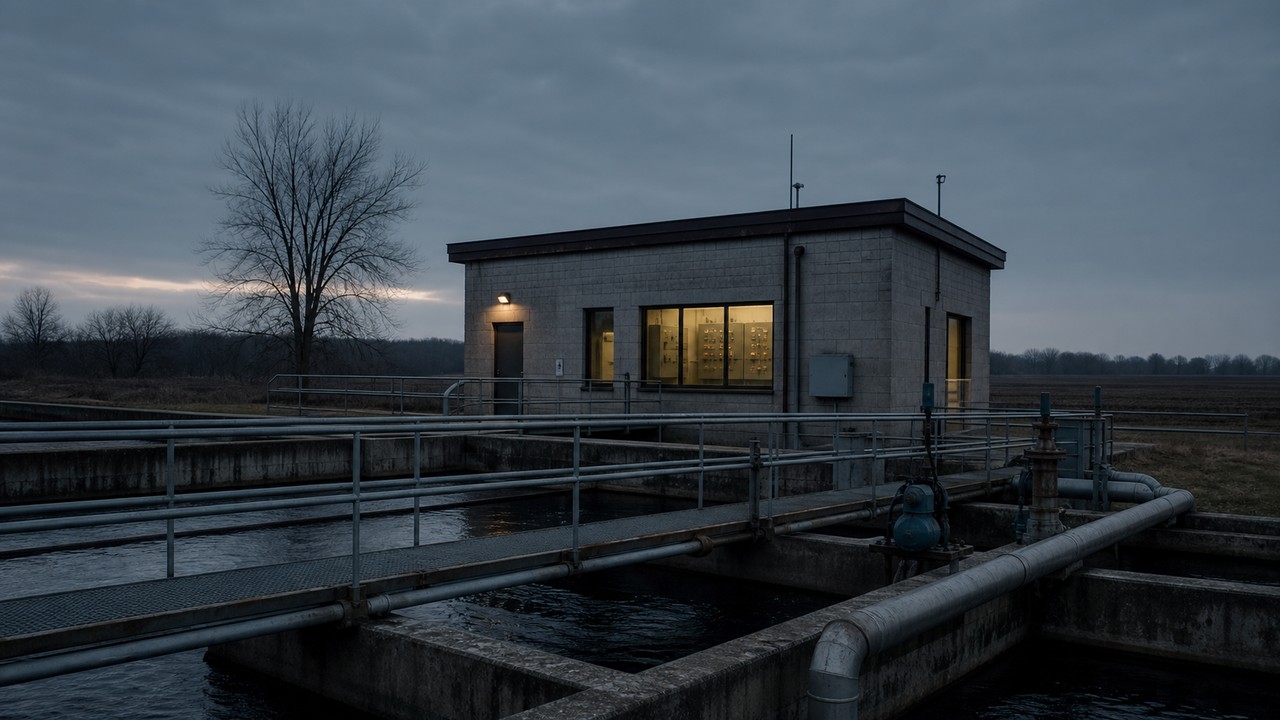
DEF CON Franklin and the National Rural Water Association have launched Water Watch Center cybersecurity services for U.S. water utilities serving fewer than 10,000 people. Announced Aug. 7 at the DEF CON conference in Las Vegas, the initiative pairs five managed detection and response providers with a volunteer network in an attempt to extend security support across a fragmented, underfunded sector.
No price, round size or commercial contract value was disclosed. Cybersecurity Dive reported that DEF CON Franklin plans to pay the participating vendors so eligible utilities can receive monitoring and protection products at no cost, but available reporting does not state how many utilities have enrolled, how long that funding will last or the service levels each provider will deliver.
How will Water Watch Center cybersecurity services work?
Defendify, Legato Security, L1 Secure, Rapid7 and Sentinel Technologies are the initial providers. Their managed detection and response services are intended to monitor participating utility networks for potential attacks or vulnerabilities. When a vendor identifies a problem, it alerts the utility and supplies a report, according to Cybersecurity Dive. The utility can address the issue itself or ask a DEF CON Franklin volunteer for help.
The providers will also exchange threat intelligence and information on vulnerability patches through a dedicated mechanism, with NRWA operating as the national hub, The Record reported. That shared layer is central to the design: the program is trying to make specialist monitoring and incident assistance available to operators too small to procure and run it on their own.
The target market is broad. Utilities below the 10,000-person threshold account for 91% of the roughly 50,000 U.S. community water systems, according to the organizations and reporting by The Record. SiliconANGLE reported that many such systems have no security staff, security operations center or budget to hire either.
Why DEF CON Franklin is adding vendors
The center is an expansion of DEF CON Franklin's earlier volunteer model. Over two years, the group recruited nearly 450 cybersecurity volunteers and paired many with water and wastewater utilities in Arizona, Indiana, Oregon, Utah, Vermont, Washington and Wyoming. Organizers said the work improved defenses at individual systems while showing how hard it would be to extend volunteer-led work across roughly 150,000 water and wastewater utilities.
Using commercial MDR providers changes the service chain, but it does not by itself establish that the model can reach that population. The five firms were selected in part because they already served water-utility customers, Cybersecurity Dive reported. The program's eventual scale and durability cannot be assessed from available reporting because enrollment, funding duration, detailed service commitments and outcomes have not been disclosed.
The launch followed reported cyber incidents affecting water systems in multiple states. Officials have publicly suspected Iranian involvement in the broader campaign, but that attribution has not been confirmed, according to SiliconANGLE.
Water Watch Center has started work with Cyber Maryland to identify rural systems needing assistance, including civilian utilities supporting military and intelligence assets, organizers said. Separately, it is working with Vanderbilt University on a research effort applying DARPA CASTLE work to digital twins of a select few water and wastewater environments. That is a testing project for automated defenses, not a deployed nationwide AI security system.
This story draws on original reporting from SiliconANGLE.