Samsung operating profit jumps as AI memory demand lifts stock
Samsung reported 89.5 trillion won in operating profit, beating forecasts as AI server demand drove record memory chip sales.
By Wei-Lin Zhao · AI Correspondent
· 3 min read
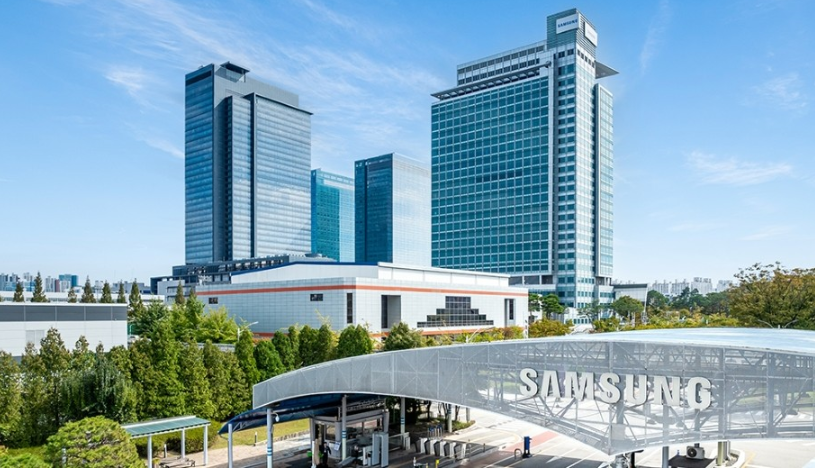
Samsung operating profit rose 1,814% from a year earlier to 89.5 trillion won, about $118.56 billion in revenue and a profit beat that sent the company’s shares up more than 5% in early South Korea trading Thursday. Samsung Electronics Co. Ltd. said demand for memory used in AI servers drove the quarter, confirming an earlier expectation that higher chip prices would sharply improve profitability.
The company reported total revenue of 171.5 trillion won, up 130% year over year. That missed the analyst consensus estimate of 172.65 trillion won. Operating profit came in ahead of the 88.13 trillion won forecast, making the earnings story less about sales growth and more about memory pricing and mix.
Why did Samsung operating profit rise?
Samsung said its semiconductor unit produced 89.2 trillion won in operating profit, almost all of the company’s profit for the quarter. The company attributed the result to AI server demand, which lifted sales of DRAM and NAND flash memory to record levels.
DRAM is the working memory used by servers, PCs and smartphones. NAND flash is persistent storage, used in solid-state drives and other devices. In AI infrastructure, both are tied to the buildout of GPU-heavy clusters, where compute capacity is constrained by memory bandwidth, storage performance and power efficiency as much as by processors.
Samsung also said sales of its HBM4 products increased during the quarter. High-bandwidth memory is a more specialized category of DRAM packaged for high-performance processors, including GPUs from Nvidia Corp. Samsung described HBM4 as its sixth-generation product in that line.
The company said it has shipped initial samples of HBM4E, an upgraded version of HBM4, to major customers. Samsung said HBM4E is designed to be faster and more energy efficient than HBM4, with roughly 20% higher throughput and support for denser configurations in larger AI chip clusters. Samsung did not name the customers receiving samples.
For the second half of the year, Samsung said it expects HBM demand from AI server makers to keep rising. It pointed to enterprise adoption of agentic AI workloads and continued capital spending by large cloud infrastructure companies. Those forecasts depend on hyperscaler spending plans that can shift quickly, but the current results show memory suppliers are capturing a large share of AI infrastructure budgets.
The benefit was uneven across Samsung’s own portfolio. The company’s smartphone and home appliance businesses recorded modest operating losses during the quarter, which Samsung linked to higher chip prices. That is the other side of the memory cycle: Samsung sells into stronger pricing in semiconductors while its device units absorb higher component costs.
Samsung last week introduced new devices, including foldable smartphones, as it tries to improve the mobile division’s performance. It also announced a broader strategic collaboration with Broadcom Inc. covering memory and foundry technologies.
The results keep Samsung in a three-way contest with SK hynix Inc. and Micron Technology Inc. in memory. SK hynix also reported record profit this week while slightly missing analyst estimates, according to SiliconANGLE, and recently debuted on U.S. stock markets.
This story draws on original reporting from SiliconANGLE.