Perplexity Portable Computer brings its AI agent to Nvidia desktops
Perplexity’s Portable Computer runs agent workflows locally on DGX Spark, with cloud use gated by user permission.
By Colin Brandt · Enterprise Reporter
· 3 min read
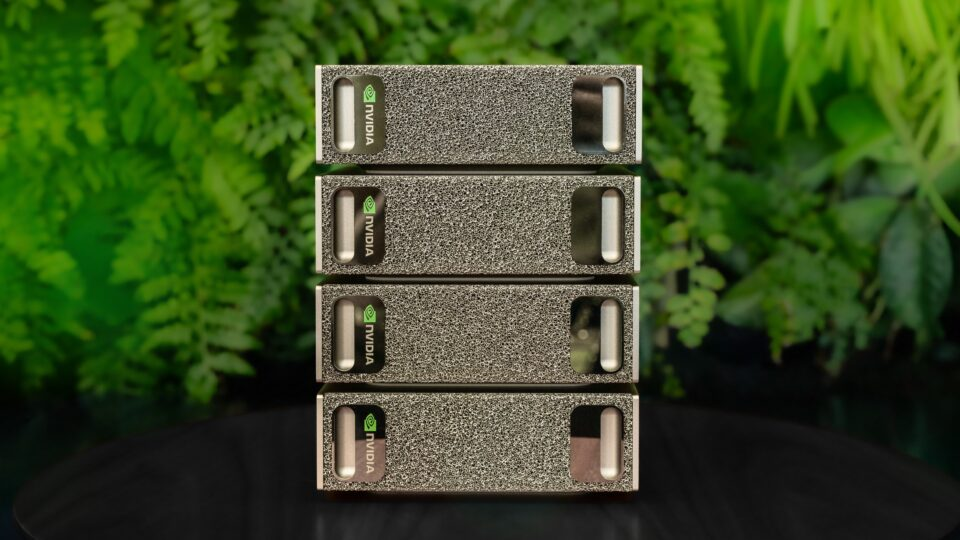
Perplexity has launched Perplexity Portable Computer, a local-first edition of its AI agent for Nvidia’s DGX Spark desktop system. The product puts local inference, file work and agent orchestration on the machine, a practical option for teams that want to use private documents without routinely sending them to a cloud model.
Portable Computer is a variant of Perplexity Computer, the company’s existing general-purpose agent that can research, browse, create and connect to software tools. Perplexity says its new product can analyze data, synthesize files and carry out multistep workflows locally, while retaining an optional path to cloud models for work that needs current web information or more advanced reasoning.
What hardware and subscription are required for Perplexity Portable Computer?
At launch, Portable Computer is available to Perplexity Pro and Max subscribers using an Nvidia DGX Spark, with the first release on Linux. The DGX Spark uses Nvidia’s Grace Blackwell GB10 platform, which Perplexity describes as combining a 20-core Arm CPU, an Nvidia GPU and 128GB of unified memory.
Windows support and availability on Nvidia RTX GPU PCs are “coming soon,” according to Perplexity, which did not provide a date in its launch announcement. That matters because some secondary reports described RTX Linux systems as supported at launch, while Perplexity’s own announcement limits launch availability to DGX Spark.
How local is the agent?
Perplexity says the orchestrator, planner, tool router, scheduler, durable task queue and local search index run on-device. The launch models are Qwen 3.8 27B and PPLX 27B, Perplexity’s post-trained version of Qwen. Nvidia’s 30-billion-parameter Nemotron 3.5 Lightning is planned for a later addition to the model picker.
Local execution does not mean the system is permanently offline. Portable Computer can use Perplexity search or research services when it needs information beyond the machine, and it can ask to escalate a task to cloud models. Perplexity says it seeks user permission before sending content from the device to a cloud service. Locally handled work does not consume credits, the company says, but cloud escalation remains part of the product’s design.
The agent can connect with Google Drive, Gmail, Slack and GitHub. Perplexity says those connectors can support workflows such as reviewing material across local files and apps, but controlled access is central to the pitch: code and tool execution run in isolated sandboxes with limited access to files and connected applications. Those are product-design claims rather than an independent security assessment, and operators evaluating the system will still need to assess its permissions and data flows within their own enterprise security program.
For Perplexity, the launch extends an agent product beyond cloud-hosted model access and toward a hardware-bound deployment model. The trade-off at launch is clear: users get a local-by-default workflow, but need DGX Spark hardware and a Pro or Max subscription; broader Windows and RTX PC support has yet to arrive.
This story draws on original reporting from SiliconANGLE.