Nutanix AMD AI stack targets enterprise agents in production
AMD and Nutanix are building a joint enterprise AI stack tied to AMD’s $250M investment, aiming to move agents beyond pilots.
By Wei-Lin Zhao · AI Correspondent
· 3 min read
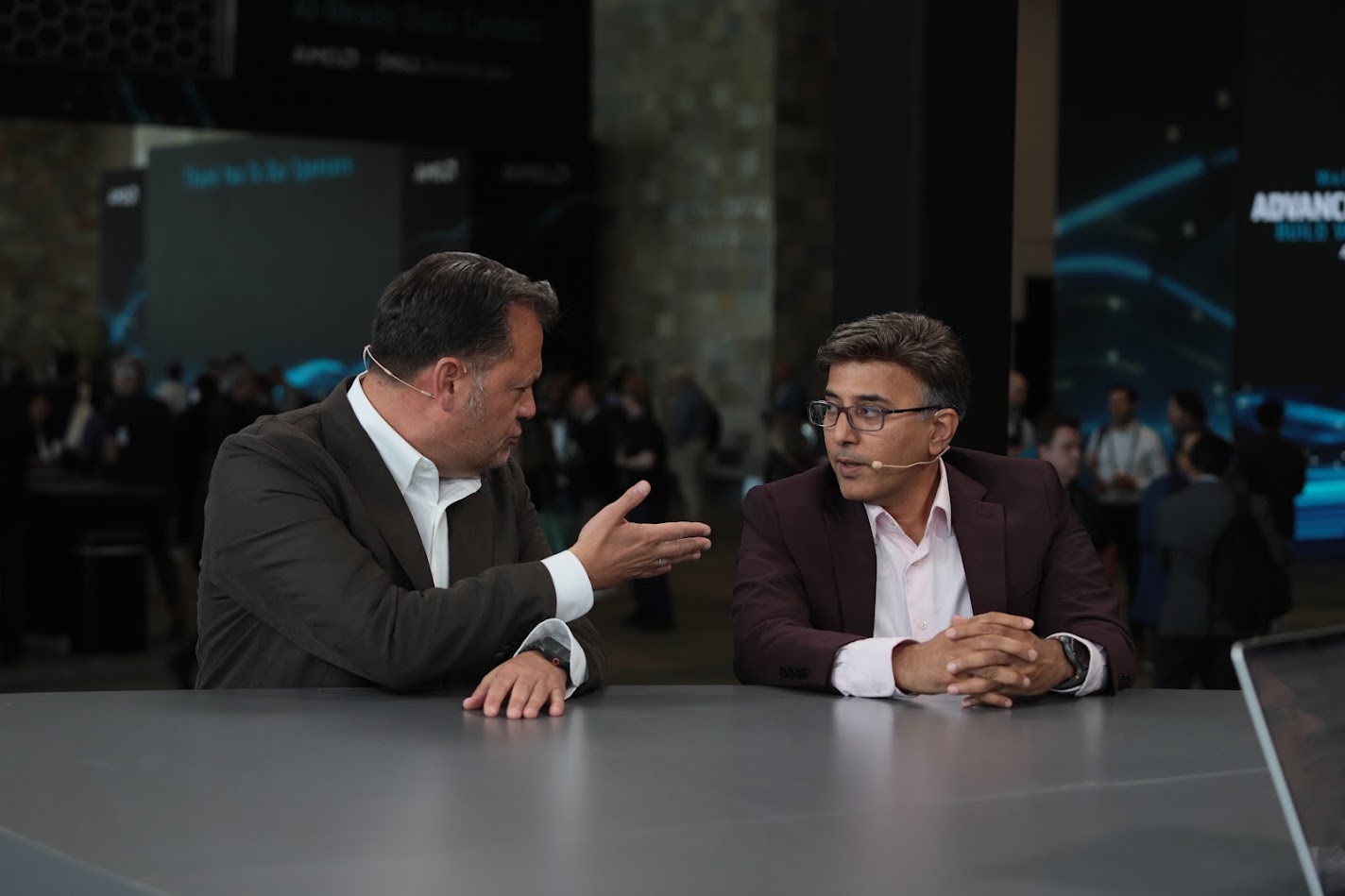
AMD and Nutanix are building a Nutanix AMD AI stack for enterprises, a partnership tied to AMD’s $250 million investment in Nutanix and aimed at taking AI agents from experiments into production use. Suresh Andani, AMD’s chief corporate vice president of compute and enterprise AI, said the effort combines AMD CPUs and GPUs with Nutanix’s software control plane and a joint sales model.
The companies are positioning the stack around a problem that has become familiar inside large IT organizations: pilots are easier to launch than to operate. In an interview with SiliconANGLE’s theCUBE at AMD Advancing AI 2026, Andani and Tarkan Maner, Nutanix’s president and chief commercial officer, said enterprises are running into cost control, governance, data location and staffing issues as agent projects move closer to core business processes.
No pricing, launch timeline, customer count or revenue target was disclosed. The companies also did not name the customers described in the interview.
What is the Nutanix AMD AI stack?
The Nutanix AMD AI stack is described by the companies as a combined hardware and software approach for enterprise AI: AMD supplies compute across CPUs, GPUs and related silicon, while Nutanix provides software for managing infrastructure and agent lifecycle operations. The goal is to give enterprises a more controlled path for deploying agents across edge devices, PCs, data centers and cloud environments.
Andani said AMD depends on partners to deliver the software layer above its silicon, and identified Nutanix as a major partner across CPU, GPU and AI deployments. He said AI workloads now extend from internet-of-things devices and AI PCs to edge systems, on-premises data centers and public cloud, which changes how AMD thinks about compute placement.
One technical point in AMD’s framing is token routing. Andani said decisions can increasingly be made at the PC level about which AI tasks can run locally and which need to be sent to data center infrastructure. For enterprises, that affects latency, cost and data exposure, especially when agents are used against proprietary information.
Why production agents are harder than pilots
Maner said the enterprise challenge is less about running a demo and more about managing agents over time. He pointed to security, availability, provisioning, reliability, manageability and cost controls as requirements that have to be handled together. Nutanix’s claim is that its software can act as a control point for agent lifecycle management.
Maner also described a Fortune 100 logistics company that, according to him, is replacing ERP applications with custom agents trained or built around its own data. He presented that as an example of AI moving beyond IT infrastructure into systems that run business operations. The customer was not identified, and the scale of the replacement was not quantified.
The discussion also showed a less polished side of enterprise AI adoption. Maner cited a regional Pennsylvania bank that had received GPU hardware but had not deployed it because the internal team lacked the skills, plan and operating framework to put it to use. Both executives said AMD and Nutanix intend to use forward-deployed engineers in customer accounts to match infrastructure to industry-specific use cases.
That model puts the partnership closer to services-led enterprise AI work than a standard infrastructure sale. Maner said deployments need to account for vertical context, regulation, use cases and user profiles. For buyers, the pitch is operational control. For AMD and Nutanix, the opportunity is to capture enterprise AI spending before agent projects settle into cloud-only or point-solution architectures.
SiliconANGLE disclosed that theCUBE was a paid media partner for AMD Advancing AI 2026, while saying AMD and other sponsors did not have editorial control over the coverage.
This story draws on original reporting from SiliconANGLE.