Neo4j GraphTalk 2026 insights center on knowledge layers and GraphRAG
theCUBE’s GraphTalk interview with Neo4j CTO Philip Rathle focused on externalized enterprise knowledge, claimed GraphRAG results and data modeling speed.
By Wei-Lin Zhao · AI Correspondent
· 3 min read
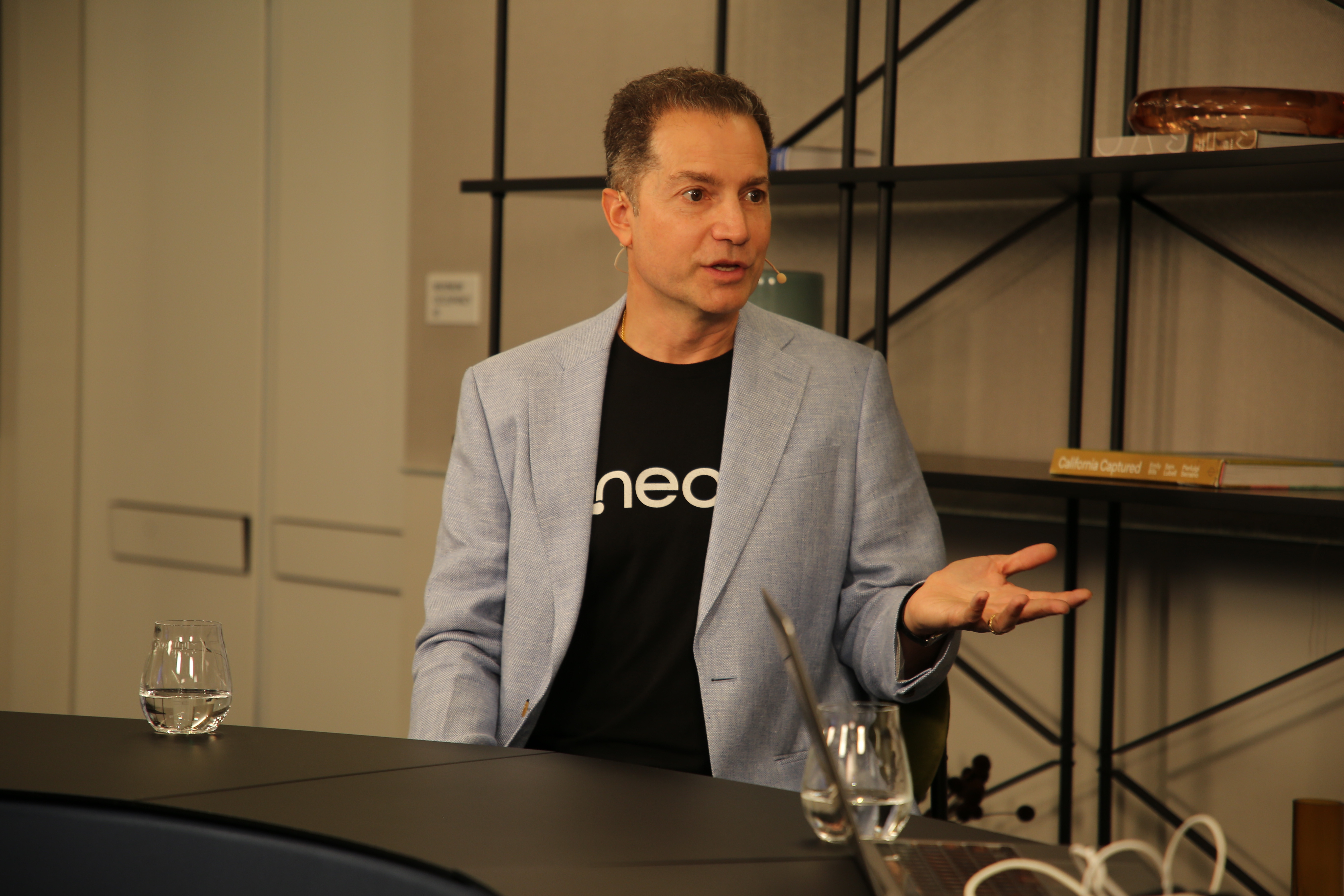
Neo4j GraphTalk 2026 insights from theCUBE’s interview with Chief Technology Officer Philip Rathle centered on putting enterprise knowledge outside large language models, measuring graph-based retrieval carefully and reducing the work of connecting fragmented data. The July 29 interview came from GraphTalk San Francisco, where Rathle said Neo4j had shifted from one global conference to gatherings in roughly 30 cities to put more customers on stage.
SiliconANGLE disclosed that theCUBE was a paid media partner for the event and said Neo4j and other sponsors did not have editorial control over its coverage. The discussion was therefore a useful view of Neo4j’s product thesis and its supporting claims, rather than an independent product benchmark.
What were the main Neo4j GraphTalk 2026 insights?
1. Neo4j is pitching an enterprise knowledge layer as an AI architecture. Rathle described this layer as the place where an organization’s ontology, data and agent memory reside outside the model. In his framing, GraphRAG is the pattern in which an LLM calls a knowledge graph to obtain context rather than relying solely on information embedded in the model.
A knowledge graph models entities and their relationships, making it suited to questions that require tracing connections across systems. Rathle said keeping this knowledge external can improve accuracy, explainability and governance. Those benefits remain claims from Neo4j’s CTO, rather than conclusions established by the interview.
2. The evidence being cited needs scrutiny. SiliconANGLE reported that the UK National Innovation Centre for Data compared GraphRAG with vector-only retrieval and found agents were 80% more “truthful,” answered more than twice as many questions and used tokens more efficiently. The available material does not include the underlying study or its methodology, so the figures cannot establish how broadly those results apply across models, datasets or enterprise deployments.
Rathle also offered a customer anecdote: he said a graph-based proof of concept at an unnamed national tax agency identified more than $100 million in fraud within 48 hours. That is a reported interview claim, not independently verified outcome data.
3. Implementation speed is part of the sales argument. The hard part of an enterprise knowledge layer is often reconciling data and modeling the relationships among it. Rathle said Neo4j’s AI-assisted schema-conversion tooling had reduced that work from about a week to about two minutes. The interview description does not specify the workload, starting conditions or validation process, so it should not be treated as a general migration benchmark.
For operators, the practical question is less whether a graph can enrich an agent and more whether the organization can identify the relevant entities, reconcile them across systems and maintain a governed model of their relationships. GraphTalk’s message was that this work is becoming a core component of production AI. The disclosed evidence supports that as Neo4j’s strategic position, while leaving performance and deployment outcomes to be tested in specific environments.
This story draws on original reporting from SiliconANGLE.