Neo4j enterprise knowledge layer pitch puts graphs in AI stack
Neo4j CTO Philip Rathle says graph-based retrieval is moving into production AI, citing research and a tax-agency fraud pilot.
By Colin Brandt · Enterprise Reporter
· 3 min read
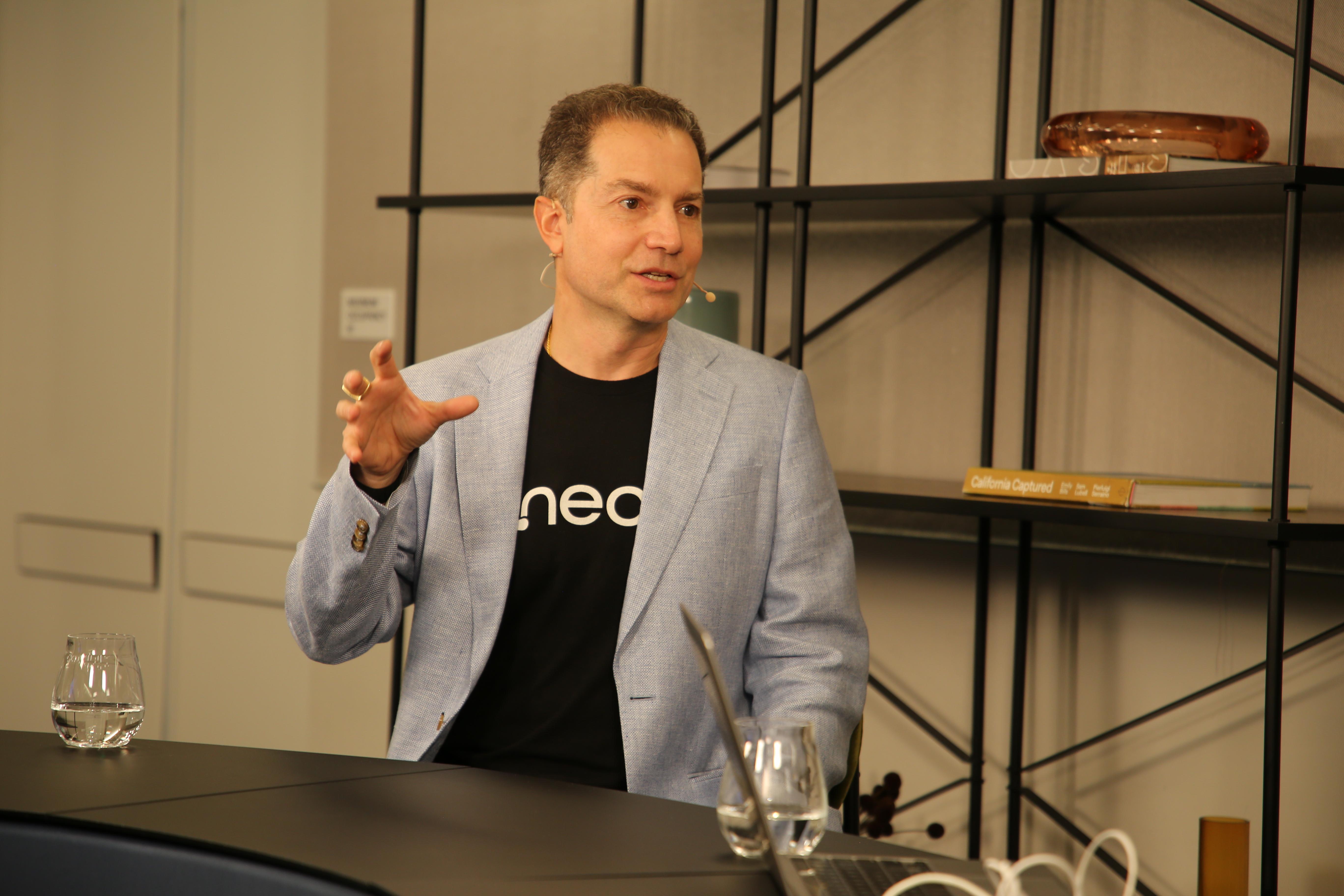
Neo4j is pushing the neo4j enterprise knowledge layer as a core part of production AI systems, arguing that graphs have moved beyond specialized databases into infrastructure for grounding large language models. Philip Rathle, Neo4j’s chief technology officer, said at the Neo4j GraphTalk event that enterprises are settling on common patterns for AI systems after years of experimentation following ChatGPT’s release.
The company did not announce a financing round, valuation, revenue figure or customer contract value. The news is a positioning shift around Neo4j’s graph intelligence platform: the company wants buyers to see graph databases as a control layer for AI agents and decision systems, not only as a database category.
What is an enterprise knowledge layer?
An enterprise knowledge layer is a system outside the AI model where a company keeps structured business context, including ontology, enterprise data and agent memory. Rathle said that keeping this knowledge outside the model is meant to improve accuracy, explainability and governance when large language models are used in enterprise workflows.
Rathle tied that architecture to GraphRAG, a retrieval pattern in which an LLM consults a knowledge graph rather than relying only on model weights or vector search. In that setup, the graph carries relationships among entities, policies, transactions or other business objects, giving the model a structured reference point when generating answers or taking actions.
Neo4j cites research against vector-only retrieval
Neo4j is using third-party research to support the argument. Rathle cited work from the UK’s National Innovation Centre for Data, which compared graph-based retrieval with vector-only retrieval for agent reliability. According to that research, GraphRAG made agents 80% more “truthful,” enabled them to answer more than twice as many questions and used tokens more efficiently.
Those claims matter because many enterprise AI pilots stall at the point where accuracy, auditability and cost become board-level issues. Vector retrieval has been an easy default for early deployments, but it can struggle when relationships between records are the point of the query. Neo4j’s argument is that a graph structure gives AI systems a better representation of how enterprise facts connect.
The company’s evidence is still framed through its own platform strategy. Rathle said Neo4j has seen customer evidence that GraphRAG improves accuracy, governance and explainability, but the details disclosed publicly were limited. The National Innovation Centre for Data numbers give the company stronger support than customer anecdotes, though the specific benchmark design was not detailed in Rathle’s remarks.
Fraud detection is the clearest example disclosed
Rathle also pointed to a pilot with a national tax agency as an example of graph modeling producing business results. He said the agency identified more than $100 million in tax fraud within 48 hours of starting a proof of concept after viewing the data as a graph rather than as flattened tables.
That is the kind of use case where graph databases have long been strongest: fraud, identity, cybersecurity, recommendations and other problems defined by relationships rather than isolated records. The AI angle changes the buyer conversation. If agents are expected to act on enterprise data, vendors such as Neo4j want the graph to become the place where those agents retrieve context and leave memory.
Rathle discussed the topic in an interview with theCUBE at Neo4j GraphTalk. SiliconANGLE disclosed that theCUBE was a paid media partner for the event and said sponsors did not have editorial control over the coverage.
This story draws on original reporting from SiliconANGLE.