Microsoft Project Perception brings AI agents to Defender security work
Microsoft's MAI-Cyber-1-Flash model will power Project Perception agents for vulnerability management, with preview access starting Aug. 3.
By Dominic Okoye · Staff Writer
· 3 min read
Microsoft Project Perception is the company’s new agentic security system, powered by its first in-house cybersecurity model, MAI-Cyber-1-Flash, and aimed first at software vulnerability management. The launch matters because Microsoft is trying to move more of the expensive, repetitive work in vulnerability discovery, triage and remediation onto its own smaller model rather than relying only on frontier general-purpose systems.
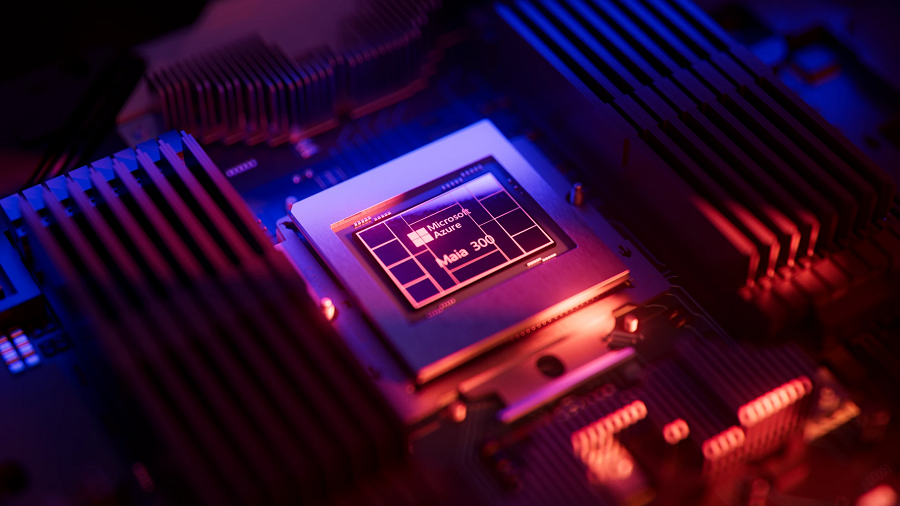
Microsoft said MAI-Cyber-1-Flash is a compact, code-tuned model derived from its MAI-Thinking-1 family and trained internally on the company’s exploit and remediation data. The model will also be available through Azure AI Foundry on Aug. 3, under Microsoft’s existing customer vetting process.
The company did not disclose model size, training cost or pricing for Azure AI Foundry access. For Project Perception, Microsoft said it will charge based on usage through a meter it calls Security Compute Units.
What is Microsoft Project Perception?
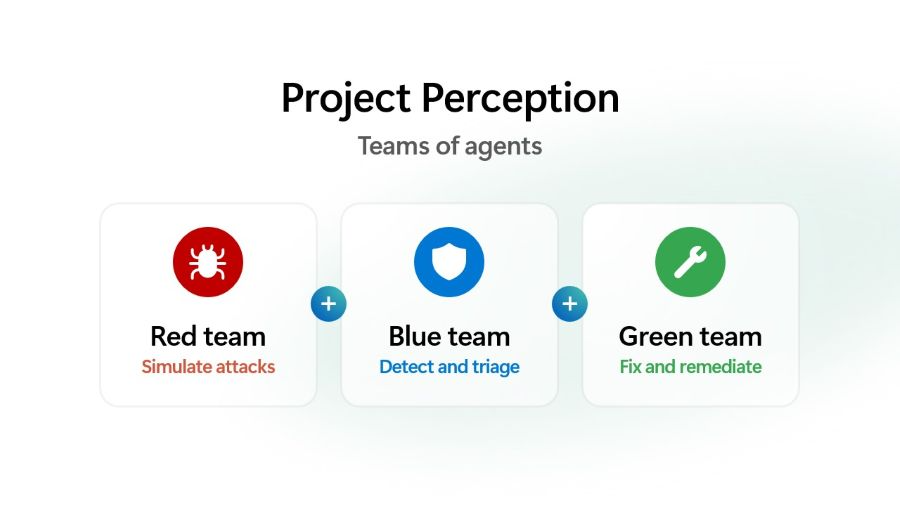
Project Perception is an AI-agent system that coordinates separate groups of security agents for offensive testing, threat investigation and remediation. In Microsoft’s description, the system uses red agents to look for weaknesses, blue agents to analyze and prioritize signals, and green agents to produce and apply fixes.
Microsoft said actions with higher impact still require human approval. That qualifier is material: security vendors are pushing agentic workflows, but production autonomy remains constrained by the risk of broken patches, false positives and unintended changes in live environments.
Hayete Gallot, executive vice president of Microsoft Security, said in Microsoft’s announcement that Project Perception combines signals, context, models and specialized agents into a defensive system that can learn over time while keeping people in control. Satya Nadella, Microsoft’s chief executive, said the MAI-Cyber-1-Flash model with MDASH delivers strong performance at half the cost of leading models.
Microsoft’s cost claim is tied to MDASH, the multi-model agentic scanning harness it described in May. The company said MAI-Cyber-1-Flash handles about 90% of MDASH workloads, while the most difficult 10% are routed to OpenAI’s GPT-5.4. Microsoft said that split reduces operating cost by about 50%.
How Microsoft says the model performed
On CyberGym, a public benchmark with 1,507 vulnerability reproduction tasks, Microsoft said MDASH running on MAI-Cyber-1-Flash reached 95.95%. The company said Anthropic’s Mythos scored about 84% on the same benchmark. When Microsoft first disclosed MDASH, it reported an 88.45% score.
The earlier MDASH system found 16 previously unknown vulnerabilities in Windows networking and authentication components, according to Microsoft. Four were critical remote code execution flaws, and all were addressed in Microsoft’s May Patch Tuesday release.
The competitive context is crowded. Anthropic previewed Mythos in April, Google launched Gemini 3.5 Flash Cyber last week, and Cisco has released its own security model for finding code vulnerabilities. Microsoft’s advantage is distribution: Project Perception starts inside Microsoft Defender and can later move across the company’s broader security portfolio.
David Weston, Microsoft’s corporate vice president of enterprise and OS security, told Axios that Microsoft does not want attackers to capture all of AI’s productivity gains. He also said the company still needs to earn the right to give agents more autonomy, a restrained position given the way agentic security products are being marketed across the sector.
Project Perception enters public preview on Aug. 3 inside Microsoft Defender. Microsoft said it plans to extend the system to more of its security products over time, but did not give a schedule for broader availability.
This story draws on original reporting from SiliconANGLE.