Ludo Robotics releases Ludi 0.2 robot intelligence model
Krafton subsidiary Ludo Robotics says Ludi 0.2 improves how robots interpret speech, gestures and feedback, without disclosing benchmarks or deployments.
By Wei-Lin Zhao · AI Correspondent
· 3 min read
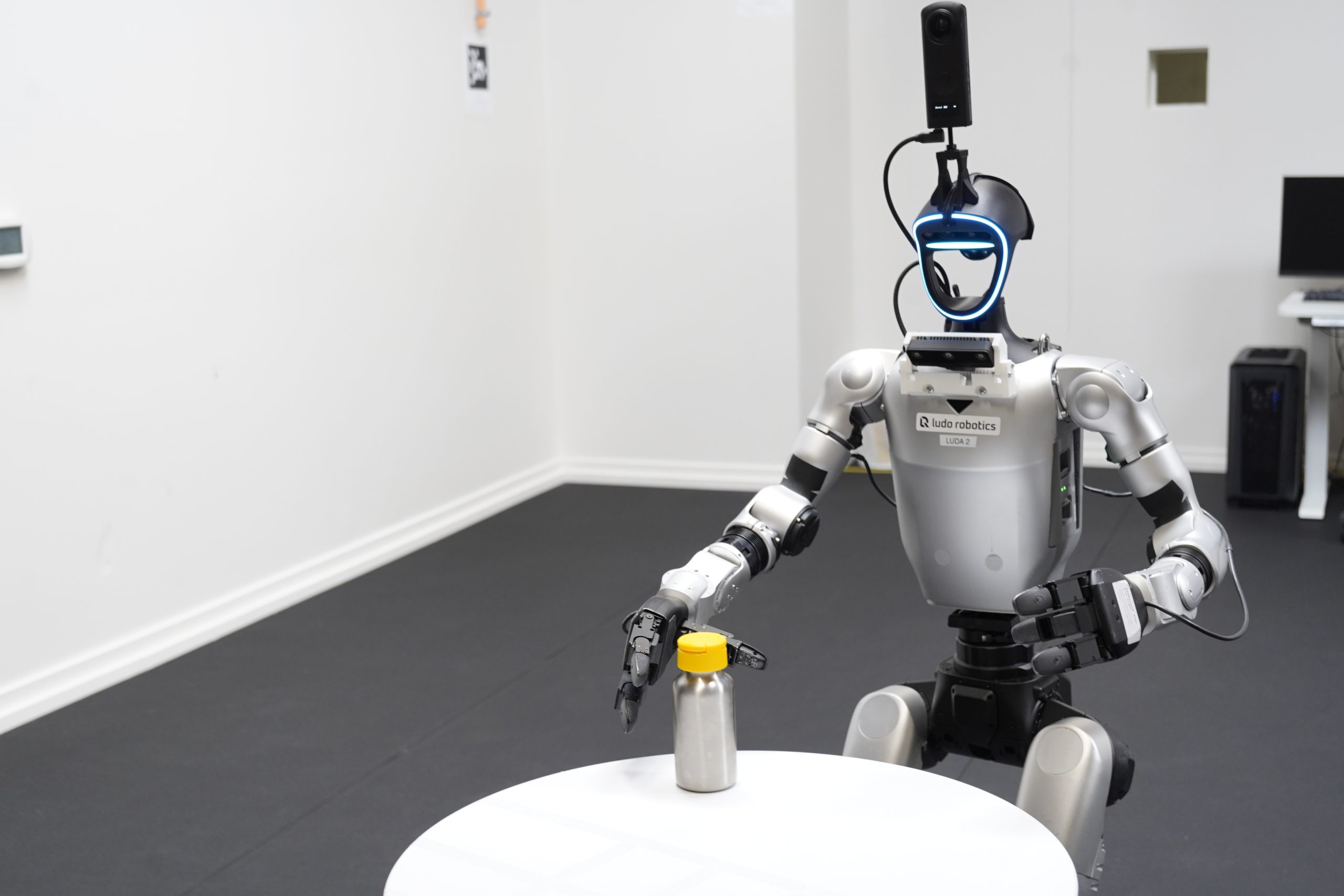
Ludo Robotics Ludi 0.2, a new robot-intelligence system from the Krafton subsidiary, was presented on Oct. 30 at the Bay Area Robotics Symposium at UC Berkeley. The company says the release improves a robot's ability to interpret human intent through speech, gestures and feedback, but it disclosed no performance benchmarks, customer deployments, hardware partners, pricing or commercial availability.
Ludo, which is headquartered in Palo Alto and operates an R&D lab in Seoul, is led by Krafton CEO CH Kim. Krafton Chief AI Officer Kangwook Lee is Ludo's CTO. The gaming company says its experience developing interactive virtual worlds and AI teammates has informed the robotics effort.
What does Ludi 0.2 do?
Krafton describes Ludi 0.2 as an incremental research release for human-robot interaction. The company says it advances five areas: social intelligence, memory and reasoning, coordination between tools for navigation and manipulation, gesture interpretation, and smoother physical movement in supported environments.
In practical terms, Ludo's stated goal is a system that can keep track of a task, read verbal and nonverbal cues, and adjust its actions as a situation changes. That remains an objective rather than a validated result. The announcement did not provide comparative results showing how Ludi 0.2 performs on those tasks or how it compares with other robot models.
For operators assessing such claims, capability lists are not a substitute for task-specific testing, failure reporting and defined metrics. Those are core elements of AI model evaluation, particularly for systems intended to act around people.
How does Ludi 0.2 differ from Ludi 0.1?
The predecessor, Ludi 0.1, was introduced in August 2026. Krafton said that version paired a vision-language model for reasoning and dialogue with specialized navigation and manipulation functions. Ludi 0.2 adds the company's stated focus on social cues, sustained context, gesture handling and coordination of those functions during physical interactions.
SiliconANGLE reported that recognizing a person's intent and responding to social signals remains difficult for robotics systems. The report described Ludo's plan as bringing communication, reasoning and physical action into a unified robot system, while noting that the account of Ludi's capabilities largely reflects company statements.
What is Ludo building next?
Ludo is developing Ludi 1.0, which Krafton says is intended to combine perception, dialogue and physical action in one foundation model. The company has not provided a release date or said whether the future system will be offered as a product.
Krafton says Ludo is using simulated settings, AI-generated social interactions and data on real human behavior in its research. It also says it is developing tests for complicated social situations, including scenarios involving differing personalities, preferences and relationships, as well as gesture-driven manipulation. Those planned benchmarks have not been released, and the company has not published results from them.
This story draws on original reporting from SiliconANGLE.