IBM lowers 2026 growth target after software and mainframe miss
IBM said AI infrastructure spending delayed mainframe-linked deals, cutting revenue growth guidance after missing Q2 estimates.
By Dominic Okoye · Staff Writer
· 3 min read
IBM cut its 2026 revenue growth outlook after second-quarter revenue and adjusted profit both came in below Wall Street estimates. The company said customers moved spending toward AI infrastructure and away from mainframe-linked software deals, a shift that exposes how uneven enterprise AI budgets are becoming for incumbent IT vendors.
IBM now expects 2026 revenue to rise 4% to 5% at constant currency, down from its earlier target of more than 5%. The company said currency effects could reduce reported growth to around zero, while leaving unchanged its forecast for about $1 billion of additional free cash flow this year.
For the quarter, IBM reported revenue of $17.16 billion, up 1% from a year earlier but below analysts’ consensus estimate of $17.58 billion. Adjusted earnings were $2.93 a share, short of the $2.97 consensus. Net income slipped slightly to $2.17 billion.
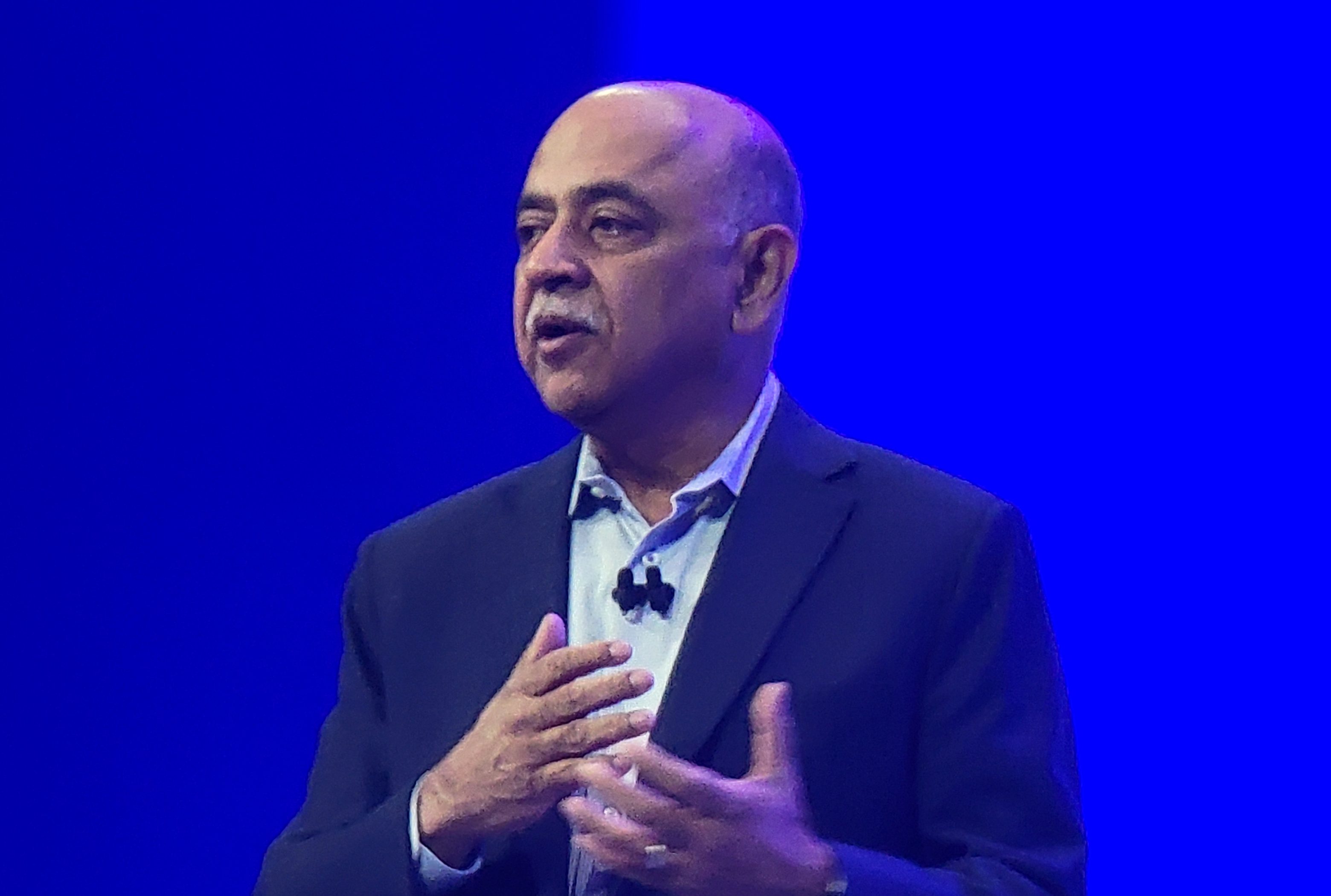
The update follows a preliminary warning a week earlier, when Chief Executive Arvind Krishna said IBM had missed a sudden change in customer spending patterns. IBM shares fell 25% after that warning, described as the company’s steepest one-day drop in a century. After the full results, shares declined about three-quarters of a point in after-hours trading, following a 2.25% fall during the regular session. IBM closed at $205.77, down from more than $306 on July 7.
AI hardware budgets hit software timing
IBM executives said enterprise customers redirected capital toward servers, storage and memory, seeking to secure scarce systems before expected price increases. Krishna said tens of large deals moved past the end of June, though about one-third had closed in the first weeks of the third quarter. The company’s position is that demand has been delayed rather than lost.
Software revenue rose 5% to $7.76 billion, with hybrid cloud up 11%. IBM said software growth was flat when acquisitions were excluded, a detail that weakens the headline growth number. Transaction processing revenue fell 9% at constant currency, which IBM tied to delayed enterprise license agreements that often package mainframe software with data and automation products.
Within software, IBM reported 18% constant-currency growth in data revenue and 3% growth in automation software. Annual recurring software revenue rose 8% to $24.6 billion.
The sharper pressure came from infrastructure, where revenue fell 7% to $3.84 billion. IBM Z mainframe sales dropped 42%, against a comparison period that benefited from the prior-year launch of the z17. Chief Financial Officer James Kavanaugh told Reuters that the mainframe hardware and transaction-processing software stack cut IBM’s quarterly growth by more than five percentage points, versus the one to two points the company had expected.
IBM said distributed infrastructure, including Power servers and storage, rose 37% and built a backlog of nearly $500 million. Kavanaugh attributed the mainframe decline to buying cycles rather than customers leaving the platform, saying revenue from the first five quarters of the z17 cycle is still nearly 30% ahead of the comparable z16 period.
Mainframe questions remain central
Kavanaugh said IBM sees no sign that clients are moving off mainframes, and said customers are adding capacity for AI, analytics and Linux workloads. That is IBM’s claim, and the quarter still showed how much its financial model can be affected when mainframe hardware and related software purchases slip.
Consulting revenue increased 1% at constant currency to $5.3 billion. Signings rose 6%, with generative AI accounting for about half of quarterly signings and more than 30% of the consulting backlog, according to IBM.
Bola Rotibi, chief of enterprise research at CCS Insight, said IBM executives had to spend unusual time explaining mainframe demand and usage patterns to analysts. She said CCS Insight research shows enterprises are becoming more selective about workload placement while still increasing mainframe processing.
IBM generated $2.5 billion in second-quarter free cash flow, down $300 million from a year earlier. First-half free cash flow was flat at $4.8 billion. The company ended June with $8.2 billion in cash and securities and $62 billion in debt, after spending $10.5 billion on acquisitions this year.
This story draws on original reporting from SiliconANGLE.