HPE HPC AI infrastructure push ties supercomputers to enterprise AI
HPE says supercomputing systems built with AMD now map to enterprise AI needs, with liquid cooling and sovereignty shaping demand.
By Wei-Lin Zhao · AI Correspondent
· 3 min read
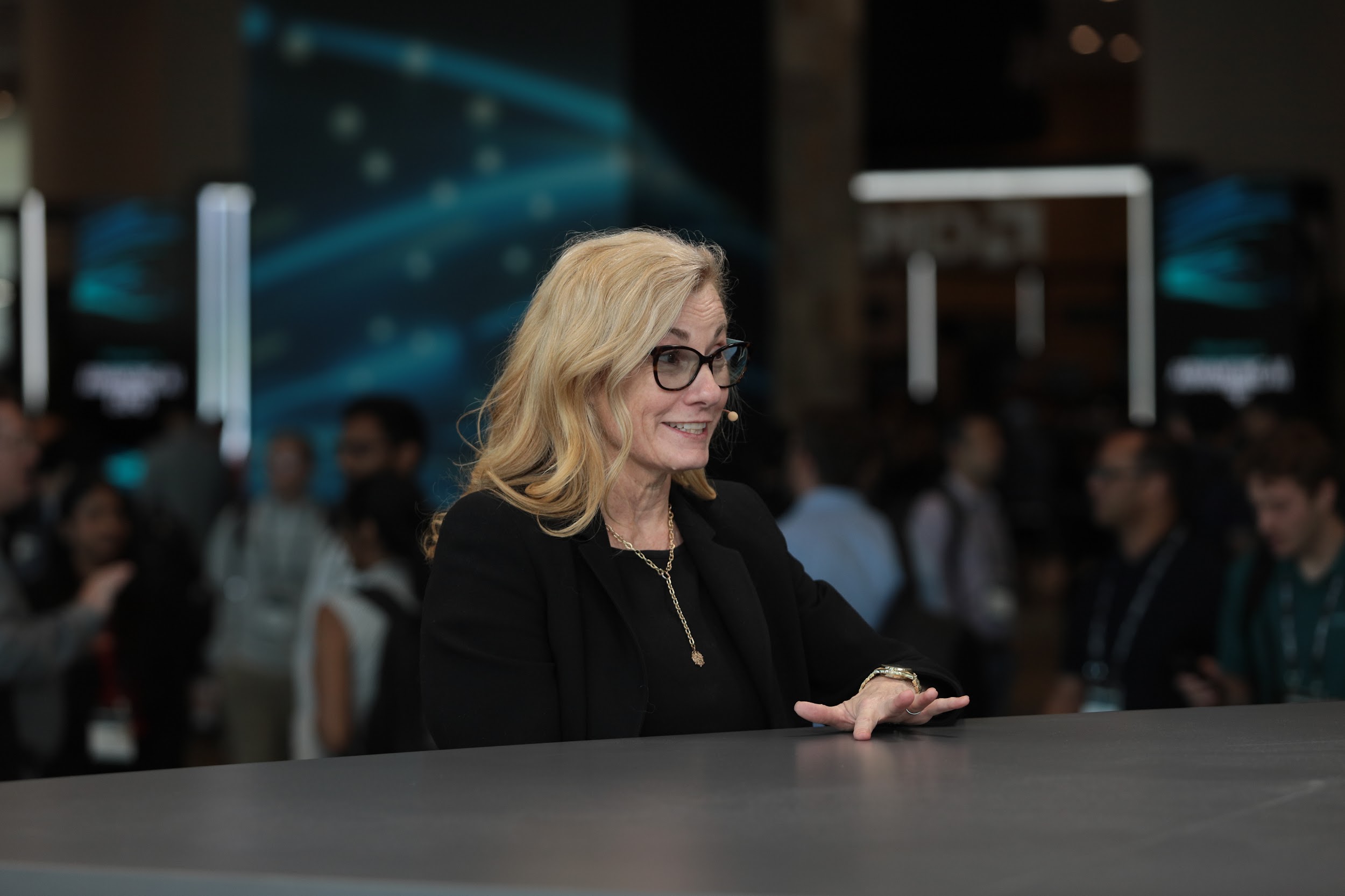
Hewlett Packard Enterprise is positioning its HPE HPC AI infrastructure portfolio as a common platform for supercomputing workloads and enterprise AI factories, according to Trish Damkroger, senior vice president and general manager for HPC and AI infrastructure solutions at HPE. The company did not disclose new revenue, contract value or customer counts in the interview, but the shift is relevant for infrastructure buyers because HPE is arguing that national-lab scale systems are becoming the template for regulated commercial AI deployments.
Speaking with theCUBE’s Dave Vellante at AMD Advancing AI 2026, Damkroger said the hardware used for modeling and simulation in supercomputing is increasingly the same class of infrastructure enterprises need for AI. She also said AI is beginning to direct HPC workflows, including agent-driven scientific simulations.
The comments put HPE’s AI infrastructure strategy in the same frame as its long-running supercomputing business. HPE and AMD are already paired on Frontier at Oak Ridge National Laboratory, described in the discussion as the first system to reach hyperscale. HPE is also under contract to deliver Oak Ridge’s next Discovery system, which is also based on AMD technology.
What is HPE HPC AI infrastructure convergence?
HPC AI infrastructure convergence means the systems built for high-performance computing, such as large-scale simulation, are being adapted for AI training, inference and automated workflows. For enterprise operators, the practical question is whether their data centers can support the power density, cooling and governance requirements that came first in supercomputing.
AMD used the same event to introduce its EPYC 6 processor and AMD Instinct MI430X accelerator, according to the coverage. Damkroger said HPE’s relationship with AMD spans national laboratories and regulated commercial enterprises. She also cited El Capitan at Lawrence Livermore National Laboratory as the number two system on the TOP500 and an AMD-based system.
Why liquid cooling is becoming part of the AI infrastructure sale
Power density is turning cooling from a facilities issue into a purchasing constraint. Damkroger said HPE’s Cray background gives the company experience in liquid-cooled systems, and pointed to the GX5000 platform, part of the Discovery system, as designed for high thermal design power components.
The GX5000 is also intended to meet European requirements for warm-water cooling at up to 45 degrees Celsius, according to Damkroger. That detail matters for data center teams because cooling design affects rack density, operating cost and the ability to deploy next-generation accelerators without rebuilding facilities around air cooling limits.
Damkroger argued that enterprises that wait too long to adopt liquid cooling will face density and cost penalties as AI silicon power requirements rise. She said air-cooled configurations could become impractical, with racks supporting far fewer servers as component power climbs.
HPE’s broader pitch also includes sovereign AI, a term vendors use for systems that keep data, models or compute under local or organizational control. Damkroger said that demand is expanding beyond national laboratories into regulated commercial sectors, although no specific enterprise customers or deployments were disclosed.
SiliconANGLE said theCUBE was a paid media partner for the AMD Advancing AI event and that AMD and other sponsors did not have editorial control over its coverage.
This story draws on original reporting from SiliconANGLE.