Grocers push AI into operations as data problems limit payoff
Albertsons, Hy-Vee and others are applying AI to ordering, quality checks and pricing, with adoption still uneven across food retail.
By Colin Brandt · Enterprise Reporter
· 4 min read
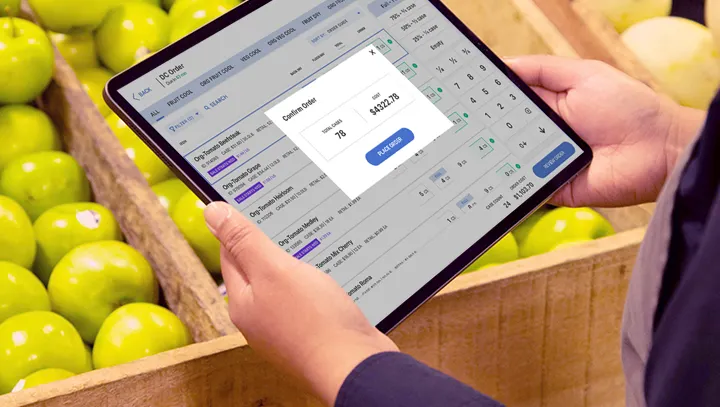
Grocers including Albertsons, Hy-Vee, Heritage Grocers Group, Grocery Outlet and Kroger are putting AI into back-end retail operations, from produce inspections to replenishment and employee scheduling. No investment amounts or ROI figures were disclosed, which leaves the sector’s current AI push easier to track by use case than by financial impact.
The shift matters because the less visible systems address problems that grocery operators have carried for years: shrink, labor pressure, promotion complexity, inventory accuracy and fresh-food waste. Consumer-facing AI tools, such as shopping assistants and personalized offers, remain part of the story, but experts cited by CIO Dive and Grocery Dive said operational deployments are more likely to produce near-term value.
Albertsons illustrates the split. The company introduced an agentic shopping assistant late last year that can turn a broad customer prompt into recipes and an online basket. Five months later, it rolled out an internal AI tool for warehouse workers to assess whether incoming pallets of strawberries meet the grocer’s quality standards. The second system is less marketable, but it attacks a measurable operating problem in fresh supply chains.
Other deployments show where grocery AI is being bought and built. Hy-Vee has partnered with Relex on fresh forecasting, ordering and replenishment. Heritage Grocers Group is using AI to expand pricing promotions. Grocery Outlet has said it is adding Afresh technology to improve ordering across departments. Kroger has introduced Sage, an employee virtual assistant for schedules and store tasks.
Curt Prins, a senior product manager at Albertsons and former Kroger employee, told CIO Dive and Grocery Dive that retailers do not need large internal engineering organizations to benefit from these systems. He said partnerships can work when grocers focus on specific operational pain rather than consumer-facing novelty. He also warned that AI should be treated as a capability, not a company strategy.
Data quality is the constraint
The practical limit is data. Prins said AI systems will underperform when they rely on fragmented or incomplete internal information. That problem extends beyond operations: a personalized promotion can damage loyalty if the promoted item is out of stock.
Tom Furphy, CEO and managing director of Consumer Equity Partners and a former Amazon and Wegmans executive, said grocers should improve their data foundations while experimenting with AI, rather than waiting for perfect systems. His caution was that putting AI on top of poor data can produce bad signals.
Gary Hawkins, founder and CEO of the Center for Advancing Retail & Technology, framed the issue as an operating model change rather than a software upgrade. He said retailers need a connected data layer across the business so AI systems can draw from multiple functions instead of isolated datasets.
Agentic retail remains early
Walmart and Amazon are further along in applying agentic systems to operations. Walmart uses agentic AI tools to create a unified view of inventory across stores and supply facilities, according to Supply Chain Dive reporting cited by CIO Dive and Grocery Dive.
Consultants expect category management to be one of the roles most affected. Bobby Gibbs, a principal at Oliver Wyman, said agentic tools could help category managers negotiate with vendors by pulling enterprise data and testing multiple scenarios. Hawkins said more advanced systems could automate assortment planning and price optimization within manager-set limits.
The organizational work may be harder than the technical procurement. Capri Brixey, a partner at The Partnering Group, said companies getting better outcomes are investing in enablement and process redesign as well as technology. Dollar General and Ahold Delhaize have recently added AI-specific leadership roles, while Hawkins said AI adoption needs backing from CEOs, boards and owners.
Adoption is still uneven. A 2025 FMI, The Food Industry Association survey found that 47% of grocers reported using AI in operations, compared with 93% of suppliers. Among large grocers, 77% said they use AI and 74% said they use generative AI. Steve Markenson, FMI’s vice president of research and insights, said food retailers operate on an average profit margin of 1.7%, making them selective about technology spending.
This story draws on original reporting from CIO Dive.