Fortinet network security convergence pitch centers on AI-era policy control
At Black Hat 2026, Fortinet outlined a strategy to link networking, security and endpoint AI governance, though customer results were not provided.
By Dominic Okoye · Staff Writer
· 3 min read
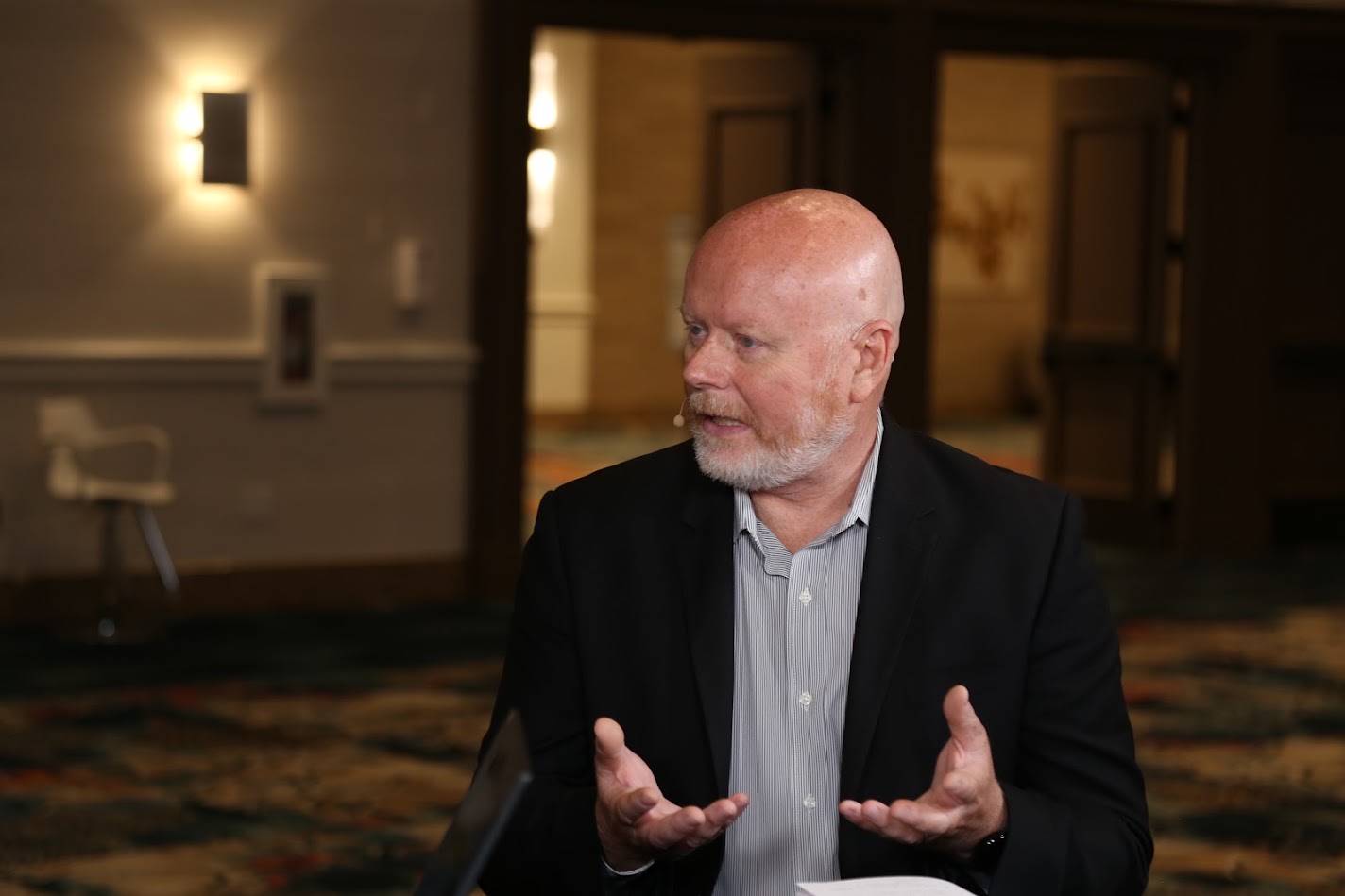
Fortinet used Black Hat 2026 to restate its Fortinet network security convergence strategy, arguing that AI-enabled and distributed environments require security and networking products that work from shared data and policy. Anthony James, Fortinet’s executive vice president of marketing, described the approach in an interview rather than announcing a new all-in-one platform or a financing transaction.
The company’s premise is that security teams are managing fragmented tools across protection, detection and response, secure access and data security. Fortinet says its Security Fabric is meant to address that fragmentation through native integration between products, consistent data and a consistent operator experience. James said the intended result is a single view across the stack, rather than separate consoles and data models that practitioners must reconcile.
What is Fortinet’s network security convergence strategy?
In Fortinet’s description, it is a product architecture that joins networking and security functions so they can use consistent data and management experiences. The company calls the next stage its SASE Firewall approach: a combination of secure access service edge, or SASE, and next-generation firewall functions under the same policy across on-premises and cloud deployments.
That is a strategic claim, not independent evidence that customers are reducing risk or operating costs. The supplied reports do not include deployment data, comparative testing, pricing or customer outcome figures for the approach.
The company has recently attached more concrete endpoint functions to the same consolidation narrative. On July 14, Fortinet announced planned FortiEndpoint additions spanning AI-use visibility and governance, endpoint protection, detection and response, secure remote access, data security and FortiAI-assisted operations. Fortinet said those functions would be delivered through one agent, one console and one license.
For security operators, the announced features include visibility into sanctioned and unsanctioned AI applications and agents on managed devices. Fortinet said administrators would be able to allow, restrict, monitor or block applications under security, compliance and data-security policies. It also described endpoint data-loss prevention that inspects sensitive information exchanged with AI tools, agents and web services, along with real-time guidance for users.
Fortinet said its FortiAI-Assist feature can support natural-language investigations, event summaries, identification of high-risk devices, troubleshooting and policy recommendations. Its adaptive zero-trust functions are intended to assess endpoint health, compliance and risk posture continuously, then adjust access decisions using that context. Security infrastructure remains only one part of an enterprise security program, which also depends on policy, operations and user practices.
The FortiEndpoint enhancements were expected to be available in the third quarter of 2026, according to Fortinet. The company has not, in the material reviewed, provided independently verified results for the planned features.
Why the positioning matters
Fortinet is not alone in selling consolidation as the response to AI-era security complexity. Investment-research commentary published by Zacks through TradingView said Cisco, Palo Alto Networks and Fortinet are all positioning integrated security offerings for AI-era requirements; Palo Alto calls its own approach “platformization.” Fortinet’s distinction is its emphasis on combining networking, firewalling, secure access and endpoint controls under a shared fabric. Whether that architecture delivers the claimed operational gains will depend on execution and customer deployment evidence that is not yet in the supplied reports.
This story draws on original reporting from SiliconANGLE.