Container attack surface reduction gains ground alongside scanning
Traefik Labs’ Distro Zero pitch reflects growing interest in hardened images, but minimal containers still require scanning and remediation.
By Dominic Okoye · Staff Writer
· 3 min read
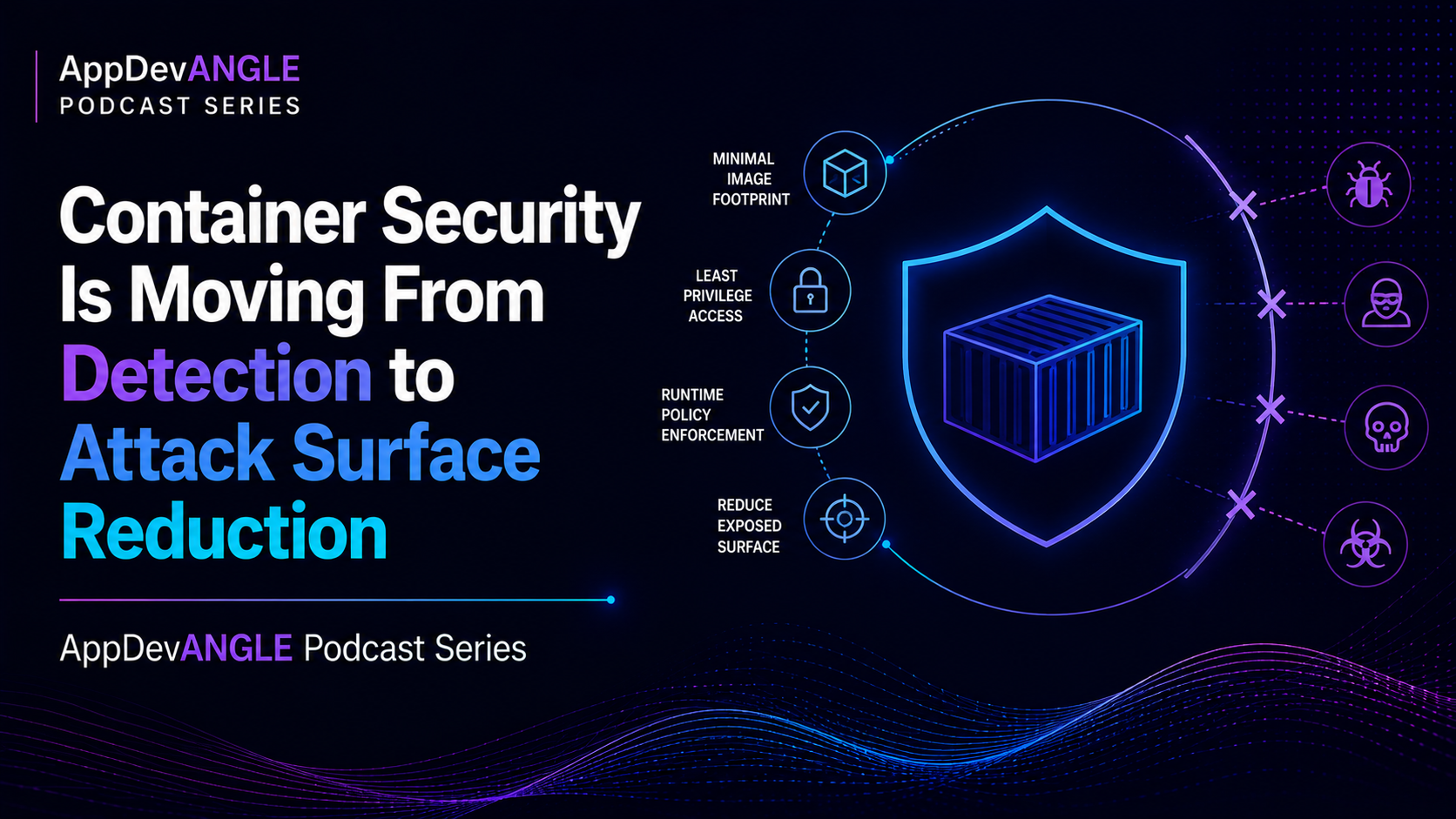
Container attack surface reduction is gaining attention as security teams confront the operational cost of scanning and patching increasingly complex images. The immediate news peg is Traefik Labs’ August discussion of Distro Zero, its approach to removing unneeded operating-system components and dependencies from containers, but the broader shift is toward hardened production images rather than the abandonment of vulnerability management.
Traefik Labs CEO Sudeep Goswami argued in an AppDevANGLE interview that scanners can identify vulnerable components only after they have been included in an artifact. TheCUBE Research, which published the commentary, reported that 58.4% of its respondents use vulnerability scanning as a software supply-chain control and 47.4% rank supply-chain security among their leading investment priorities. The supplied report does not describe that survey’s methodology, and Traefik’s product claims are not independent validation.
The practical point is narrower than the vendor pitch: image composition determines how many packages, libraries and tools a team must inventory, scan, assess and maintain. A container that carries unnecessary software creates more potential exposure and more findings to sort through.
Why does container attack surface reduction matter?
Reducing the attack surface means excluding software that a workload does not need in production. It can lower the number of components exposed to known defects, but it cannot establish that the components left behind are safe. Teams still need vulnerability scanning, a software bill of materials, provenance checks, impact-based prioritization and a process to rebuild or replace images when upstream issues emerge.
That layered approach is receiving market support. TechTarget reported that an Omdia survey found 77% of respondents considered third-party or open-source code and software dependencies the riskiest elements of the cloud-native supply chain. The report said hardened container images were the only security tool for those components that more than half of respondents rated very effective. Vendors in the category include BellSoft, Chainguard, Docker, Minimus, Red Hat, RapidFort and Wiz.
Hardened images are generally designed to cut unneeded packages from a base image and pair that reduction with an SBOM, cryptographic provenance and a commitment to remediate and republish as upstream vulnerabilities appear, according to TechTarget. Those operating practices matter as much as a smaller image: a minimal image without trustworthy component records or an update path can still leave an operator unable to assess exposure.
How are distroless images different from hardened images?
Distroless images are one way to reduce an image’s footprint. They remove common tools such as shells, package managers and Linux utilities. That can limit the tools available to an intruder after a compromise, but distroless images may retain C libraries, dynamic linkers, system libraries and cryptographic dependencies that can themselves contain vulnerabilities, theCUBE Research wrote.
Traefik describes Distro Zero as an attempt, where possible, to reduce a container to the application binary itself. It should be read as one vendor implementation of a wider hardened-image trend, not as proof that a dependency-free or vulnerability-free container is attainable.
For platform and application-security teams, the decision framework is straightforward: reduce the production image to software the service actually requires, retain evidence of what remains, then scan and rank findings by whether they affect the running application. The value is fewer irrelevant findings and less patching work, not a substitute for detection or incident response.
This story draws on original reporting from SiliconANGLE.