China military AI model distillation detailed in Reuters document review
Reuters found military-linked Chinese researchers used U.S. model outputs in domestic systems, while Beijing rejected broader allegations.
By Colin Brandt · Enterprise Reporter
· 3 min read
China military AI model distillation is the focus of a Reuters review that found military-linked Chinese researchers used outputs from OpenAI and Anthropic systems to train domestic models for defence and security work. Reuters examined more than 80 Chinese academic papers and patent filings, with research compiled by the Jamestown Foundation, and said the records describe smaller systems designed for local deployment rather than the creation of new frontier models from scratch.
The finding adds documentation to a dispute that has become entangled with U.S. chip controls and AI policy. Reuters said the White House, Pentagon, China’s foreign ministry, the People’s Liberation Army and OpenAI did not respond to its requests for comment. China’s Commerce Ministry had already rejected U.S. allegations of improper distillation, calling them baseless and arguing that the technique is commonly used across the industry.
What is China military AI model distillation?
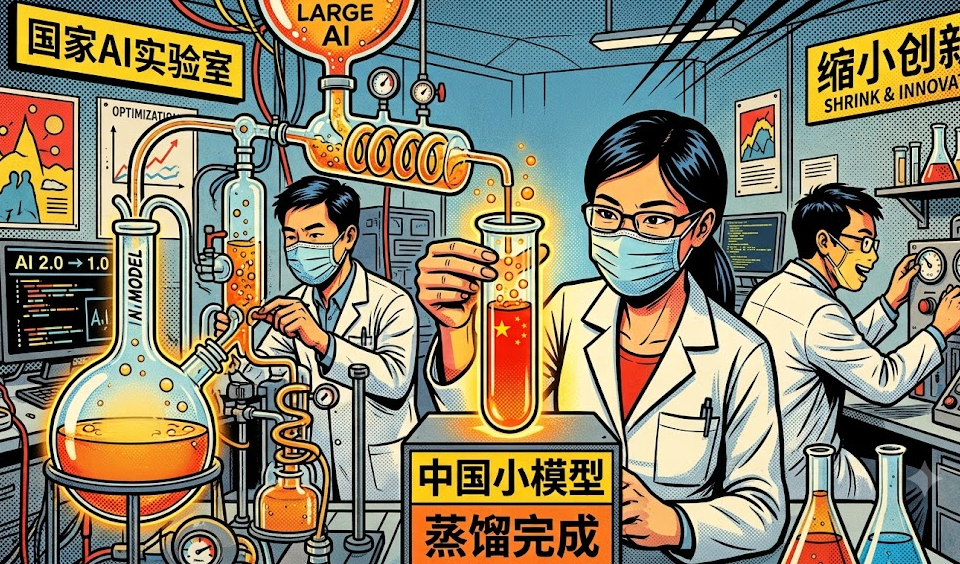
Model distillation trains a smaller, specialised model on outputs from a more capable “teacher” system. It can transfer selected behaviours into a model that requires less computing power and can run within a local network or on hardware with limited processing capacity. Distillation is a routine AI-development technique; Reuters said the contested issue is whether proprietary capabilities were extracted from U.S. systems without authorisation.
That distinction matters. The reported papers indicate a route to deploy particular capabilities closer to the operational setting, but Reuters said experts cautioned that distillation cannot substitute for the computing resources required to develop a frontier model independently.
What the documents reportedly describe
- Researchers at PLA Unit 96941, identified by Reuters as a military intelligence and cyber-warfare unit, described using GPT-3.5 to summarise sensitive military source code. They then trained a domestic model on those summaries for operation inside Chinese military networks.
- A 2024 paper from the PLA’s National University of Defense Technology described shrinking an image-processing model for unmanned aerial vehicles, supporting live-video analysis and navigation and targeting decisions when communications are unavailable.
- An Academy of Military Sciences study published earlier in 2026 described target recognition on tactical hardware during simulated maritime operations involving drones, ships and unmanned submarines.
- At the North University of China, researchers used Anthropic’s Claude 3 Haiku to generate synthetic data for a social-media monitoring and content-moderation classifier.
Anthropic told Reuters it does not provide commercial Claude access in China or to Beijing-controlled companies, and said it uses monitoring systems to detect policy breaches. The company also warned that a distilled model may not retain the original model’s safety controls.
Reuters placed the work in the context of U.S. restrictions on China’s access to advanced chips. It reported that Chinese central and local authorities have promoted model lightweighting and edge computing, including funding aimed at models that operate on drones, satellites and other constrained devices. The papers do not establish that China has matched U.S. frontier-model development, nor do they establish that all Chinese AI companies engaged in the reported conduct.
In its July 27 statement, China’s Commerce Ministry said Chinese companies had invested in their own basic research and technological self-reliance. It also claimed U.S. companies have distilled Chinese models, an assertion not independently verified in the material reviewed here. That response addressed broader U.S. accusations, including separate allegations involving Moonshot AI, which Reuters reported Moonshot has denied.
This story draws on original reporting from SiliconANGLE.