Bluecore Energy raises $10 million for floating nuclear power systems
The pre-seed round backs a Port of Long Beach startup building 10-megawatt nuclear reactors on barges for ports, data centers and offshore users.
By Colin Brandt · Enterprise Reporter
· 3 min read
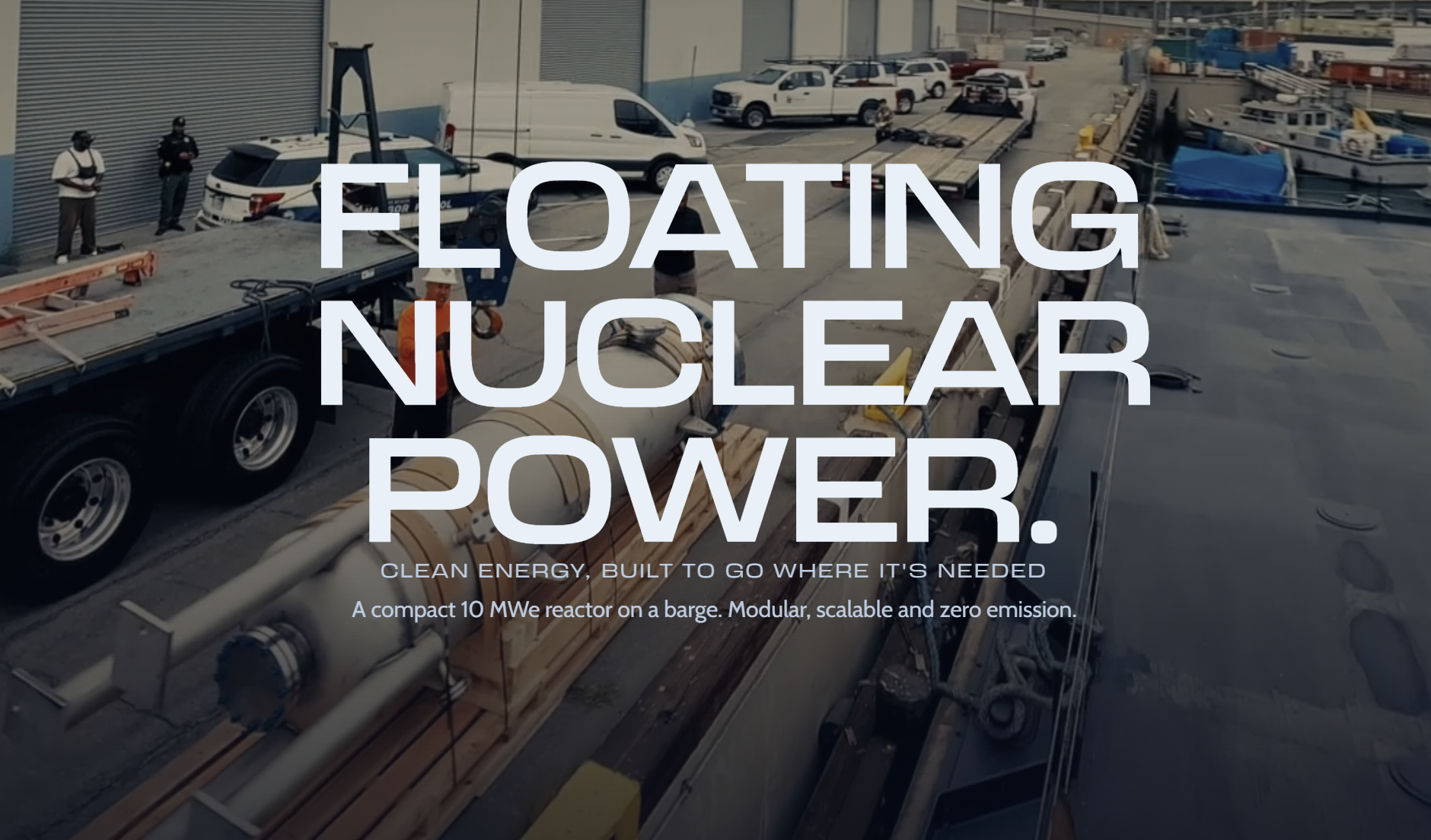
Bluecore Energy has raised $10 million in pre-seed funding to develop small nuclear reactors mounted on barges, with an initial focus on ports and other sites where grid capacity is constrained. The company did not disclose a valuation, revenue, customer contracts or headcount, but said the round is its first outside financing and will support reactor development and commercialization work.
Slauson & Co. led the financing. Bluecore named Harlem Capital Partners Management Company, Precursor Ventures Management, LMNT Ventures, Visible Hands VC, Karman Ventures, Capital Factory, Share VC, X&, Markham Ventures, Ripple co-founder Chris Larsen and Hartbeat Ventures among the backers. The company also said angel investors who previously held leadership roles at Tesla, Uber, Amazon and Google participated, without naming them.
The pitch is a compact, water-cooled reactor installed on a floating energy barge. Bluecore says its first system is designed to produce 10 megawatts of electricity, which the company says is enough for roughly 15,000 homes or one major port. The reactors are intended to be fueled once and operate for years, according to the company. For customers that need more output, Bluecore says multiple units could be linked together.
The near-term market is stationary power, including ports, critical infrastructure, utilities, data centers and offshore operators. Founder and Chief Executive Kofi Asante has described maritime propulsion as a longer-term target, with the company eventually seeking to use the same reactor platform to power cargo vessels. Bluecore has pointed to the scale of ocean shipping, saying ships carry more than 90% of global trade, but it has not announced a propulsion customer or regulatory approval for that use case.
Port-first strategy
Bluecore is based at the Port of Long Beach, a location the company says makes it the first small modular reactor developer headquartered inside a major U.S. port. The company said it has already delivered its first barge and an electric test reactor to the site. Current work includes component construction and testing, along with engineering, regulatory and classification steps.
The port setting is part of the commercial argument. Ports are under pressure to electrify equipment and reduce emissions while handling growing power demand from ships, trucks, cranes and adjacent industrial users. The Port of Long Beach handles more than 9 million container units and about $300 billion in cargo annually, according to the figures cited by Bluecore. Port Chief Executive Noel Hacegaba said the port’s 2050 zero-emission operations target will require hundreds of megawatts of new power.
Long Beach Mayor Rex Richardson also backed the location, calling the city’s port a suitable place to launch zero-emission maritime energy. That endorsement is useful for a nuclear startup selling into infrastructure markets, but it does not remove the larger regulatory and public-acceptance hurdles around deploying commercial reactors in port environments.
Regulatory burden ahead
Bluecore says its team includes engineers from SpaceX, Blue Origin, Northrop Grumman, Toyota and Uber, as well as former U.S. Navy nuclear submarine officers. The company also says it has a licensing adviser who has certified multiple operating reactors with the U.S. Nuclear Regulatory Commission.
On safety, Bluecore cites multiple physical containment barriers, redundant shutdown systems, passive safety mechanisms and water-based cooling. Asante has argued that the concept builds on decades of nuclear propulsion at sea rather than an untested idea. The commercial version still has to clear engineering validation, reactor licensing, maritime classification and customer adoption before the barge model can become more than a funded prototype program.
This story draws on original reporting from SiliconANGLE.