AMD Helios strategy shifts data center GPU race toward full racks
AMD is pitching Helios as a rack-scale AI platform, tying GPUs, CPUs, networking and software into deployable infrastructure.
By Wei-Lin Zhao · AI Correspondent
· 3 min read
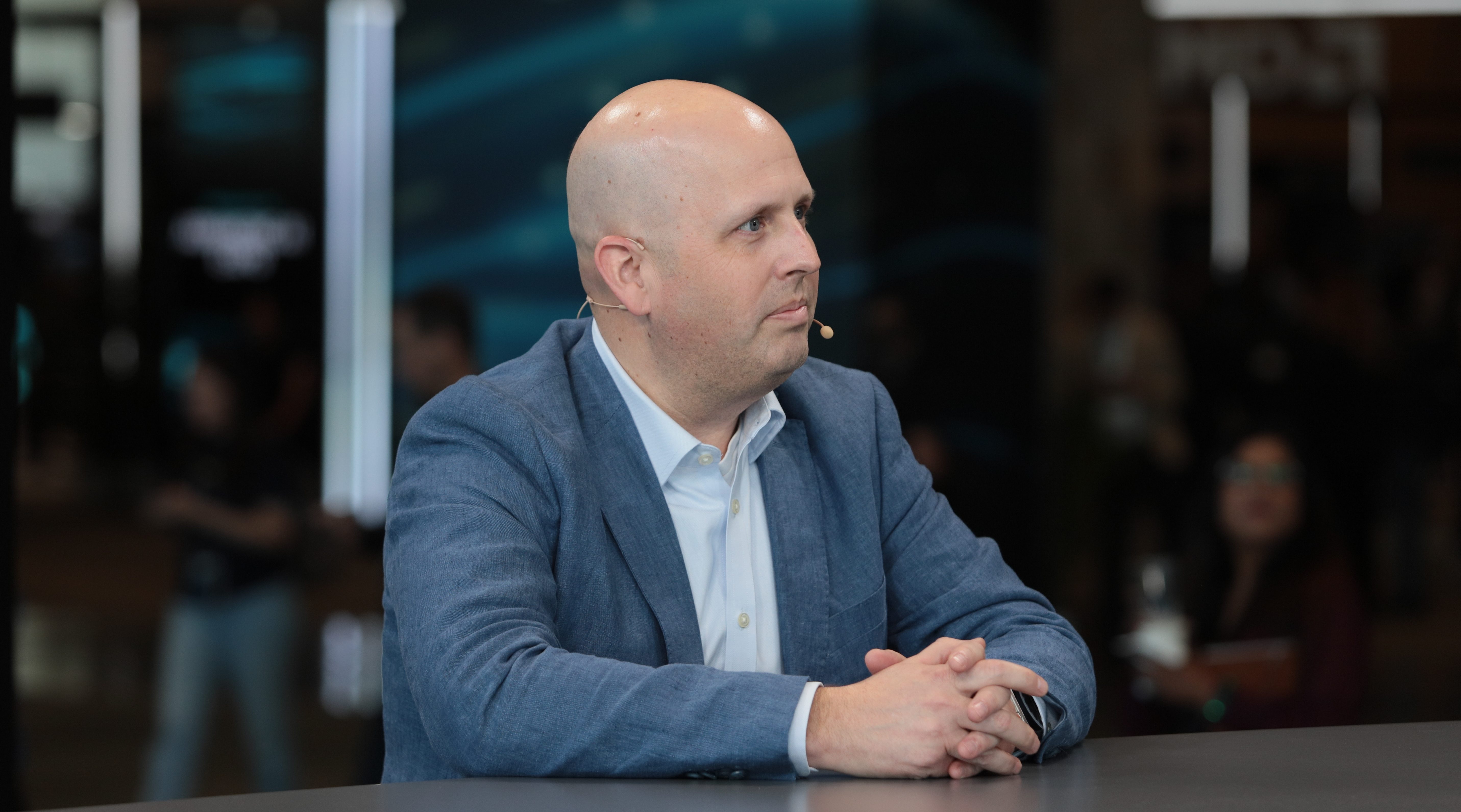
AMD’s Helios strategy is turning its data center GPU push into a rack-scale systems effort, with the company packaging GPUs, CPUs, networking and software into a single AI infrastructure platform. Andrew Dieckmann, corporate vice president and general manager of AMD’s data center GPU business, told SiliconANGLE’s theCUBE that AMD now has to operate as a systems company because customers buying AI infrastructure want validated racks that can be deployed quickly, rather than parts assembled one layer at a time.
The shift reflects how AI infrastructure procurement is changing at the high end of the market. As workloads move toward gigawatt-scale data center builds, buyers are comparing full system designs, supply chain readiness and deployment risk, not only accelerator benchmarks. AMD’s answer is Helios, a rack-scale platform intended to combine its data center silicon, networking and software stack into a more integrated offering.
Dieckmann said AMD remains a hardware and chip company at its base, but Helios requires it to manage rack design, customer co-design and production planning across the supply chain. He also pointed to AMD’s engineering roadmap and acquisitions, including ZT Systems, as part of a faster buildout of the company’s systems capabilities.
What is AMD Helios?
Helios is AMD’s rack-scale AI infrastructure platform for data centers, built around AMD GPUs, CPUs, networking and software. The pitch is that customers can buy a validated system architecture for large AI workloads instead of integrating separate components themselves.
That positioning puts AMD closer to the kind of systems-level competition that has defined the current AI infrastructure cycle. The company is not only trying to sell accelerators against rival chips. It is trying to persuade hyperscalers and frontier AI labs that its whole rack architecture can reduce integration work and improve deployment timelines.
AMD is also using modularity as part of the Helios pitch. Dieckmann said the company builds modular design into chiplets, racks and open-source software so it can absorb customer feedback despite tight development schedules. He described AMD’s customer work as selective, focused on a smaller group of frontier model builders rather than broad parallel engagements across the market.
Memory is a central part of AMD’s GPU argument
Dieckmann said AMD is emphasizing memory capacity as a differentiator for its data center GPUs. His argument is that many AI workloads run into memory constraints, so more high-bandwidth memory can allow customers to place models across fewer GPUs. He acknowledged that memory is more expensive than it was, while saying AMD’s testing shows customers still see value in the extra capacity.
The company did not disclose pricing, deployment volumes, specific rack configurations or comparative performance figures in the interview. Those omissions matter because rack-scale AI systems are bought on total cost, availability, power, networking behavior and software maturity, not memory capacity alone.
AMD is also extending the Helios discussion beyond hyperscale training clusters. Dieckmann pointed to a new data center partnership with Cerebras Systems, saying the combination of Cerebras’ low-latency inference and Helios throughput could expand the market for inference workloads. He said AMD is watching the use cases, but did not provide customer names, volume commitments or revenue expectations for the partnership.
For AMD, the signal is clear: the GPU contest is becoming a systems contest. Helios gives the company a way to sell more than chips, but the burden now moves to execution across rack design, software, supply chain and customer adoption.
This story draws on original reporting from SiliconANGLE.