AMD full-stack AI infrastructure push frames its bid as Nvidia’s second source
AMD’s 2026 Advancing AI event put systems, software and partners at the center of its enterprise AI pitch, according to theCUBE interviews.
By Colin Brandt · Enterprise Reporter
· 3 min read
Advanced Micro Devices used its 2026 Advancing AI event to push an AMD full-stack AI infrastructure strategy built around compute, networking, memory and software, according to SiliconANGLE’s theCUBE coverage. The pitch is that AMD is no longer selling only accelerators, after about $60 billion in M&A, including $49 billion for Xilinx, and is trying to become the default second supplier in AI systems behind Nvidia.
Dave Vellante, co-CEO of SiliconANGLE Media and co-host of theCUBE Research, said AMD has moved “in the systems business” after its acquisitions and investment in software such as ROCm. His view was direct: AMD does not need to displace Nvidia to matter in the current AI buildout, but it does need to become the credible alternative for buyers that want a second source.
No new revenue figures, customer counts or deployment volumes were disclosed in theCUBE’s event interviews. The case presented by AMD executives and partners centered on architecture and ecosystem breadth rather than measurable adoption.
What is AMD’s full-stack AI infrastructure strategy?
AMD’s full-stack AI infrastructure strategy is a move to sell and support AI systems across CPUs, GPUs, networking, memory and software rather than treating the GPU as the whole product. The intended buyer is an enterprise or cloud operator trying to place workloads across different resources based on cost, performance and control requirements.
John Furrier of theCUBE Research said the model depends on software that can steer a workload to the right compute resource, including cases where a CPU is good enough and a more expensive GPU is unnecessary. That framing matters because AI infrastructure budgets are increasingly shaped by inference costs, not only by training capacity.
Bob O’Donnell, president of TECHnalysis, pointed to ROCm as a key part of AMD’s software effort. He said AMD is using AI to help convert GPU programs from Nvidia’s CUDA format into ROCm, while OpenAI’s Triton is also making CUDA less of a lock-in advantage. That is still a claim about direction, not proof that enterprises can switch without friction.
AMD is selling integration, not individual parts
Derek Dicker, corporate vice president of AMD’s Enterprise Business Group, said enterprise customers are asking for business outcomes rather than a standalone CPU purchase. Steve Berg, who leads AMD’s Server CPU Cloud Business Group, said cloud customers want an open ecosystem that lets the same software run in cloud, hybrid and on-premises setups.
Suresh Andani, AMD’s corporate vice president of compute and enterprise AI, said enterprises are weighing frontier AI APIs in the cloud against open-weight models hosted on-premises. That distinction is becoming practical: cloud APIs can be faster to consume, while on-prem deployments may offer more control over cost, governance and data placement.
Partners are central to AMD’s rack-scale AI pitch
The event coverage also showed how much of AMD’s AI infrastructure story depends on partners. Soni Jiandani, AMD senior vice president and general manager, said AMD worked with Meta on networking for Helios, including Ultra Accelerator Link over Ethernet as the fabric connecting GPUs. Jiandani also claimed AMD has 50% more memory than its competitor, while discussing reliability needs when dozens of GPUs act as one system.
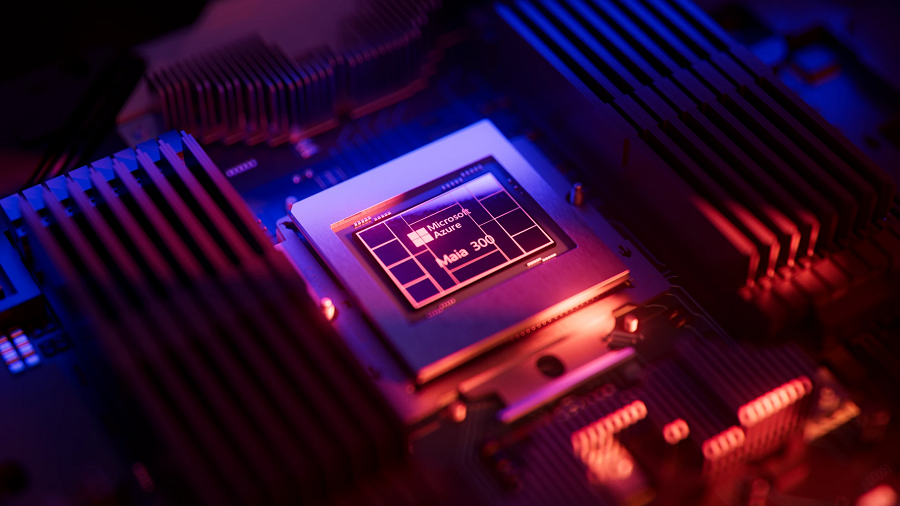
Microsoft’s Alistair Speirs said AMD platform work with Azure spans data centers, facilities, racks, power distribution, networking and software. Cisco’s Jeetu Patel said Cisco Cloud Control can present inference capacity across public cloud, private data centers and endpoint devices in one management plane. Supermicro Chief Business Officer Vik Malyala said the server maker is adapting its systems around CPU, GPU and AMD-related configurations based on customer needs.
SiliconANGLE disclosed that theCUBE was a paid media partner for the AMD Advancing AI event, and said AMD and other sponsors did not have editorial control over theCUBE or SiliconANGLE content.
This story draws on original reporting from SiliconANGLE.