AMD’s AI push is becoming a systems fight with Nvidia
SiliconANGLE’s Dave Vellante said AMD’s M&A and ROCm work are aimed at making the company a second source for rack-scale AI infrastructure.
By Wei-Lin Zhao · AI Correspondent
· 3 min read
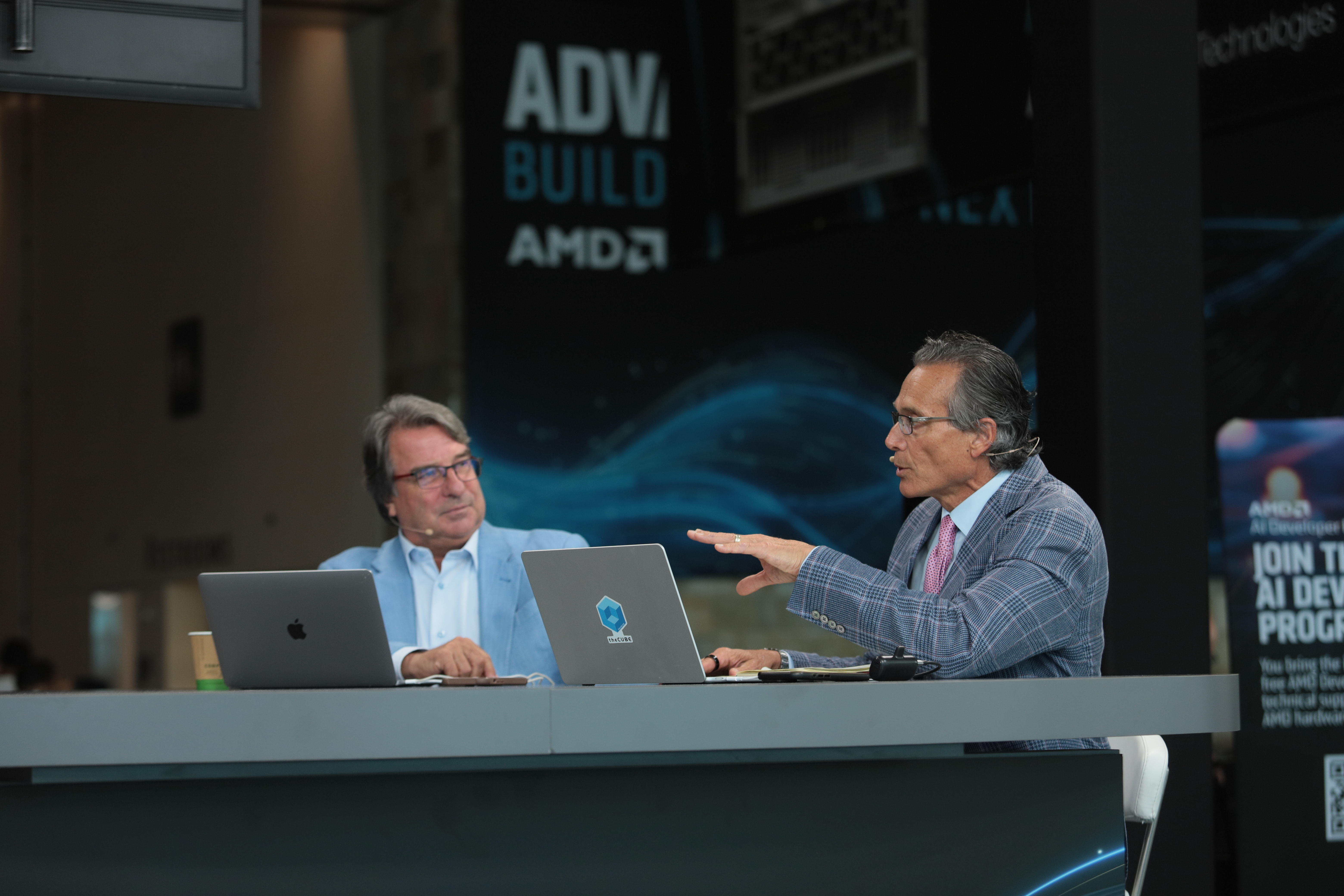
Advanced Micro Devices’ AI strategy is being recast as a race to sell complete infrastructure systems rather than faster standalone GPUs, according to commentary from SiliconANGLE Media’s theCUBE during AMD Advancing AI 2026. No new revenue, customer count or product pricing was disclosed in the discussion, but the shift matters because inference and agentic workloads are changing what buyers need from AI hardware suppliers.
Dave Vellante, co-CEO of SiliconANGLE Media and co-host of theCUBE, said AMD has spent about $60 billion on acquisitions, including $49 billion for Xilinx, while investing in ROCm software. His view is that AMD is no longer competing only at the chip level and is trying to become the default alternative to Nvidia for customers that want a second supplier in the AI buildout.
That is a narrower and more credible target than displacing Nvidia outright. Nvidia’s advantage is not just GPU performance. It has spent years building an integrated stack across accelerators, networking, systems, software and developer adoption. Vellante said AMD is trying to compress into roughly five years a systems position that Nvidia built over a much longer period.
Inference changes the buying criteria
The discussion centered on a practical problem for enterprise AI deployments: not every workload deserves the most expensive accelerator in the rack. John Furrier, co-founder and co-CEO of SiliconANGLE Media and co-host of theCUBE, said AI infrastructure is moving toward software that can route a request to the right compute resource based on cost, priority and required answer quality.
That framing favors vendors that can present a broader platform instead of a benchmark chart. Training frontier models still rewards the highest-end GPU clusters, but inference economics push buyers to consider CPUs, GPUs, adaptive compute, networking and memory as one operating system for AI workloads. The source discussion did not provide deployment metrics showing how far AMD has closed the gap with Nvidia in production environments.
AMD’s systems argument rests partly on acquired pieces. Xilinx added field-programmable gate array technology and adaptive computing capabilities. Pensando added data processing units and networking expertise. The company has also been trying to build software credibility around ROCm, the open-source stack it positions against Nvidia’s mature CUDA ecosystem.
Different approaches to lock-in
Vellante described the AMD-Nvidia split as a difference in design philosophy as much as silicon. Nvidia’s model is tighter vertical integration and proprietary co-design. AMD’s pitch leans more on openness, chiplets and customer concern about being locked into one vendor’s stack.
That openness argument is familiar in infrastructure markets, but it only works when the alternative is good enough operationally. Enterprises buying AI systems tend to care less about architectural purity than availability, utilization, software support and total cost. The discussion did not cite customer wins, volume commitments or comparative performance data to validate AMD’s position.
SiliconANGLE disclosed that theCUBE was a paid media partner for AMD Advancing AI 2026 and said AMD did not have editorial control over the coverage. The useful signal from the event coverage is still clear: AMD’s competitive story is moving away from individual chips and toward rack-scale AI systems, where inference cost and workload orchestration may decide whether a credible second source can emerge.
This story draws on original reporting from SiliconANGLE.