AMD AI platform push reframes Nvidia rivalry at Advancing AI event
AMD used its Advancing AI event to promote a rack-scale AI stack and a $2 trillion 2030 market view as analysts weighed Nvidia's CUDA lead.
By Dominic Okoye · Staff Writer
· 3 min read
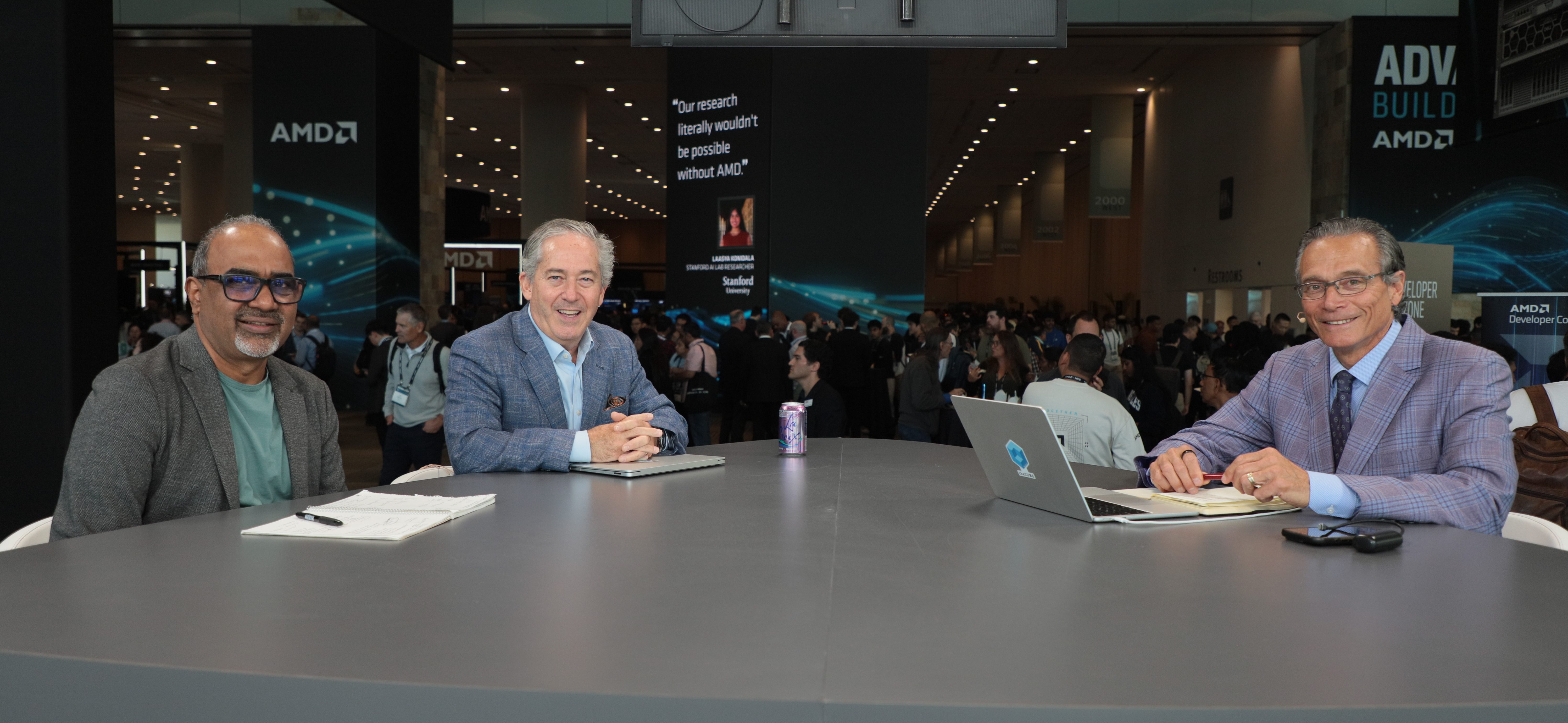
AMD used its Advancing AI event to pitch an AMD AI platform that extends beyond standalone accelerators into a rack-scale system covering CPUs, GPUs, networking and software. The company also pointed to a projected $2 trillion total addressable market by 2030 across data center, PC, edge and embedded silicon, according to SiliconANGLE’s coverage of the event.
The message from Advanced Micro Devices Inc. was that it wants to be judged as a full AI infrastructure vendor, rather than a lower-cost alternative to Nvidia Corp. in GPUs. Sarbjeet Johal, principal at Stackpane, said during a theCUBE interview that AMD’s presentation made the company a “serious, real competitor,” adding that more competition helps customers, partners, the broader ecosystem and regulators.
AMD did not displace Nvidia’s core advantage in one event. The harder question for buyers is whether AMD can turn its silicon breadth into a credible platform at enterprise scale, particularly for organizations that want another supplier for AI infrastructure or already run AMD processors in their data centers.
Can AMD challenge Nvidia in AI hardware?
AMD’s challenge to Nvidia now depends less on whether it can ship a competitive GPU and more on whether it can deliver an integrated system that customers can deploy and support at scale. The rack-level approach described at the event is meant to answer that procurement question by tying compute, networking and software into one architecture.
Bob O’Donnell, president of TECHnalysis, said on theCUBE that AMD is also trying to weaken Nvidia’s software lock-in by using AI tools to help translate CUDA-based GPU programs into AMD’s ROCm format. He pointed to agentic rewriting tools and OpenAI’s Triton as examples of developments that could reduce the friction of moving workloads away from CUDA.
Johal was more cautious about the timeline. He noted that Nvidia has had 18 years to build out its developer libraries and said developers depend heavily on those libraries. That advantage is not erased by a translation tool or a near-term software push.
ROCm is AMD’s open software stack for GPU computing, while CUDA is Nvidia’s long-established programming platform for its GPUs. In enterprise AI buying, that distinction affects more than developer preference: it can shape migration costs, model performance work, support requirements and the pool of engineers available to maintain production systems.
What AMD’s pitch means for enterprise buyers
For CIOs and infrastructure teams, AMD’s platform positioning adds another option to a market where Nvidia has set much of the agenda. A second credible supplier could matter for capacity planning, pricing leverage and regulatory comfort, although the event did not show that AMD has closed the CUDA ecosystem gap.
The near-term opening for AMD may be selective enterprise deployments rather than a broad software conversion away from Nvidia. Customers with AMD server footprints, concern about single-vendor dependence or demand for integrated on-premises AI systems may be the most receptive audience.
SiliconANGLE said Johal and O’Donnell discussed the issues with Dave Vellante during the AMD Advancing AI event on theCUBE, SiliconANGLE Media’s livestreaming studio. SiliconANGLE also disclosed that theCUBE was a paid media partner for the event and said AMD and other sponsors did not have editorial control over the coverage.
This story draws on original reporting from SiliconANGLE.