Amazon Q2 earnings lift stock as AWS growth accelerates
Amazon beat Q2 estimates as AWS revenue rose 37%, while AI infrastructure spending pushed its 2026 capex plan to $220 billion.
By Colin Brandt · Enterprise Reporter
· 3 min read
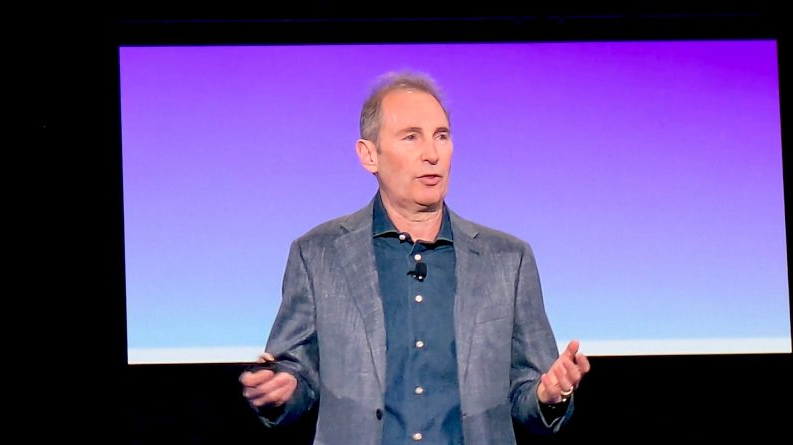
Amazon Q2 earnings beat Wall Street estimates, sending the company’s shares up more than 9% in late trading, after Amazon Web Services posted its fastest growth since 2021. The quarter also showed the cost of chasing AI demand: Amazon raised its 2026 capital expenditure forecast to $220 billion.
Amazon reported revenue of $200.61 billion for the second quarter, up 20% from a year earlier and above the $196.47 billion expected by Wall Street. Profit was $5.75 per share, compared with analysts’ forecast of $1.82 per share, helped by a $53 billion non-operating boost tied to an unrealized gain on Amazon’s stake in Anthropic PBC.
Net income was $62.6 billion, including the pre-tax income from the Anthropic investment. A year earlier, Amazon reported net income of $18.2 billion.
Why did Amazon stock rise after earnings?
Investors reacted to stronger-than-expected growth at AWS, Amazon’s cloud infrastructure unit, and to management’s claim that AI demand is driving a large backlog. AWS generated $42.2 billion in revenue, ahead of the $40.54 billion analysts expected and up 37% year over year.
Chief Executive Andy Jassy told analysts that AWS growth was being pushed by demand for AI services and Amazon-designed chips. He said the company’s AI services and chips had reached a $25 billion annual revenue run rate. Amazon has been promoting its Trainium and Graviton processors as alternatives to Nvidia graphics processing units, while its Bedrock platform has become part of its enterprise AI offering.
Valoir analyst Rebecca Wettemann told SiliconANGLE that Amazon’s investment in its own chips began as a way to reduce dependence on Nvidia and has become a broader move to diversify the cloud business. She said hyperscalers that own more of their AI stack may be better positioned as investor sentiment shifts around infrastructure providers.
The AWS result landed after strong cloud numbers from Amazon’s main infrastructure rivals. Alphabet reported 82% growth for Google Cloud last week, while Microsoft said Azure revenue rose 43% in its fiscal fourth quarter.
AI spending is weighing on cash flow
Amazon’s higher capex plan follows Jassy’s February forecast of roughly $200 billion, which the company maintained in April. Amazon now expects to spend $220 billion this year, with Jassy citing infrastructure demand and the rising cost of components such as memory chips used in AI servers.
Jassy told analysts that even at that spending level, Amazon would lack enough capacity to meet all demand in 2026, and said he expected the same dynamic in 2027. He also said demand already visible for 2028 was “striking.” Amazon reported $496 billion in contracted backlog for AWS work not yet performed at the end of the quarter.
The spending has already changed Amazon’s cash profile. Second-quarter capex was $54.2 billion, up from $32.1 billion a year earlier. Free cash flow for the trailing 12 months was an outflow of $7.6 billion, compared with an inflow of $18.2 billion a year earlier.
Wettemann told SiliconANGLE that investors are becoming less patient with AI spending that consumes cash flow, and that hyperscalers need to show returns from AI capex through measurable growth.
Guidance reflects Prime Day timing
For the current quarter, Amazon forecast revenue of $197 billion to $202 billion, below Wall Street’s $204.1 billion estimate. The company attributed the shortfall to moving Prime Day into June from its usual July timing, which shifted more sales and advertising revenue into the second quarter.
Amazon does not disclose Prime Day revenue. Across U.S. online retailers, sales during the weeklong event rose 9% to $26.4 billion, according to figures cited by SiliconANGLE. Emarketer analyst Sky Canaves said the June timing lifted Amazon’s second-quarter top line and ad revenue, while U.S. shoppers remained cautious by buying more items but spending less per purchase.
Amazon also guided for third-quarter operating income of $22.5 billion to $26.5 billion. The midpoint of that range is slightly below Wall Street’s $24.92 billion forecast.
This story draws on original reporting from SiliconANGLE.