AI proof of concept production shifts focus to operations and controls
A Supermicro summit panel argues that enterprise AI production depends on infrastructure operations, while analysts stress gates and governance.
By Wei-Lin Zhao · AI Correspondent
· 3 min read
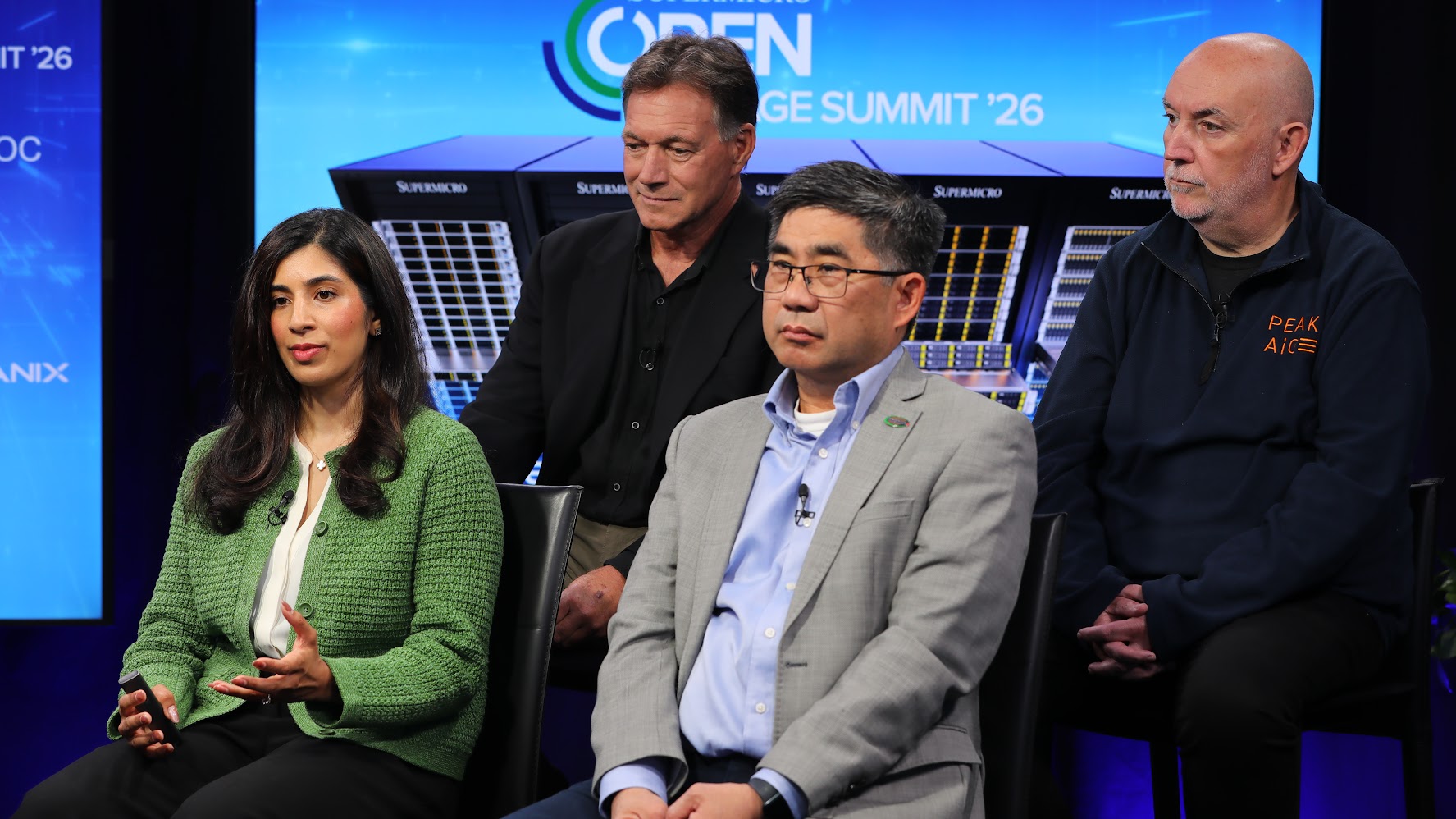
Moving from an AI proof of concept production deployment requires more operational discipline than another model experiment, according to a panel convened by theCUBE and reported by SiliconANGLE at the Supermicro Open Storage Summit. The discussion brought together marketing leaders from Nutanix, Super Micro Computer, MinIO and Peak:AIO, whose companies are collaborating on infrastructure offerings.
Ruhi Sehgal, Nutanix's agentic AI solutions marketing lead, said enterprises are shifting from demonstrations to the work of operating agentic systems with constrained resources shared among more users. She compared the requirements to established infrastructure administration: managing multitenancy, security, performance and resilience.
Wendell Wenjen, senior director of marketing development for storage solutions at Super Micro Computer, said the company's work with Nutanix, MinIO and Peak:AIO is intended to reduce infrastructure complexity through engineered systems validated for interoperability and performance. That is a vendor position, rather than evidence that the combined offering has delivered production outcomes for customers.
What takes an AI proof of concept into production?
Omdia's November 2025 analysis says a proof of concept should be a defined stage in a broader deployment process. In its view, a useful POC tests technical feasibility, produces early signals of business value and builds organizational knowledge, with explicit success criteria and a structured decision point before a broader rollout.
The analyst firm argues that deployment complexity, rather than an inherent limitation of AI, is commonly underestimated. Separately, an Equinix blog identifies AI-ready data, internal expertise, infrastructure, security, scalability and system complexity as areas that pilots can expose before a system is put into live use. Those are analyses from technology-industry participants, not a measured consensus across enterprises.
Available estimates of how often pilots reach production should also be treated carefully. Omdia cites a July 2025 MIT NANDA finding that 5% of generative-AI pilots reach production. Equinix, citing Lenovo's CIO Playbook 2025 with IDC research, reports a different sample in which organizations launched 33 POCs and four reached production. The underlying methodologies are not included, so the figures cannot be compared as a single market-wide rate.
Why does agentic AI need different production controls?
Vendor explainers from WitnessAI and Lumenova describe agentic systems as software that can plan multi-step work, use tools and interact with data sources or enterprise systems. Their recommended governance frameworks include human oversight, logging and auditability, access controls, policy enforcement, continuous monitoring and clear accountability.
Those recommendations are particularly relevant when a company is assessing whether to expand an agent beyond a contained test. A production-readiness review, based on the themes raised by the panel and the published frameworks, should establish measurable success criteria, a formal decision point for the next deployment stage, access boundaries and human oversight. It should also test whether the organization can maintain security, resilience and performance as usage grows.
The central distinction is operational: a POC can establish that a use case is technically possible, while production requires the organization to run it reliably within its existing systems and controls.
This story draws on original reporting from SiliconANGLE.