AI-native software development needs workflow redesign, AWS execs say
AWS and Amazon engineering leaders say AI coding gains depend on specs, context and trust, not just access to better developer tools.
By Dominic Okoye · Staff Writer
· 3 min read
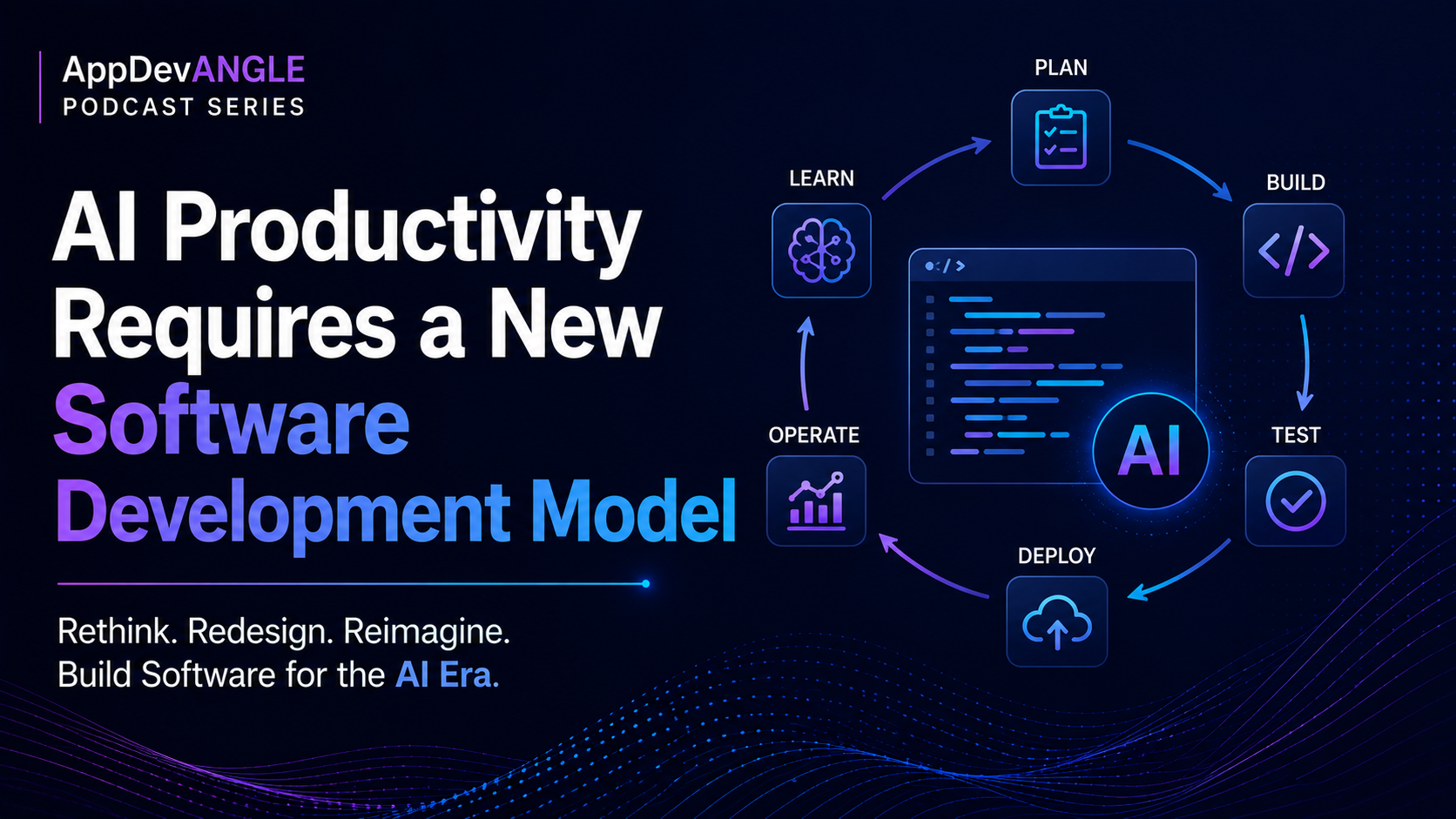
AWS and Amazon engineering leaders said AI-native software development requires redesigned engineering workflows, rather than another layer of coding tools. No funding, headcount, revenue or product launch details were disclosed, but the productivity claims are material for software organizations: Deepak Singh of Amazon Web Services said teams using the same AI tools have reported gains ranging from 15% to 30% at the low end to three to 10 times or more at the high end.
Singh, AWS vice president of developer agents and experiences, and Steve Tarcza, director of software development at Amazon, discussed the shift on SiliconANGLE’s AppDevANGLE podcast. Their argument was that the spread in results comes from operating model differences, not access to a particular model or IDE.
The discussion lands as coding assistants, code completion systems and AI-enabled development environments have become common in engineering orgs. The harder problem remains developer allocation. SiliconANGLE cited a figure that roughly 65% of organizations say their engineering teams spend only 0% to 20% of their time on net-new innovation, with the rest going to maintenance, migrations, reviews, operations work and context switching.
What is AI-native software development?
AI-native software development is an engineering approach that treats AI agents as participants across planning, specification, review and delivery, instead of using AI only to draft code. In that model, teams change the workflow so agents can act on documented intent, constraints and organizational knowledge.
Singh said the teams seeing the strongest results are changing how they plan work, write specifications, review output and pass work between people and systems. That is a more expensive organizational change than buying a tool seat, and it is also harder to benchmark from the outside. The podcast did not disclose the underlying study design, sample size or baseline used for the productivity figures.
Why context is becoming an engineering asset
Tarcza said AI systems may understand programming languages, but they do not automatically understand how a company builds software. That includes architecture, coding rules, operating practices and product priorities.
According to Tarcza, teams that capture that knowledge in steering files, documentation and specifications give agents more useful constraints. The point is less about prompt craft and more about turning engineering intent into reusable context that can be applied repeatedly across tickets and services.
That claim fits a broader shift in enterprise AI adoption: companies are discovering that agents need structured internal knowledge before they can be trusted with larger work units. A model that can generate syntactically valid code still needs the company’s definitions of acceptable design, security posture and deployment readiness.
Trust, specs and automated reasoning
Tarcza framed trust as a gating factor for adoption, saying engineers will not use agents at scale if they do not trust the process or the result. AWS is addressing that through specification-driven development, structured engineering context and automated reasoning methods intended to catch ambiguous requirements before code generation starts, according to the discussion.
The practical claim is that AI should reduce uncertainty before implementation, not just produce more code faster. That distinction matters for operators because faster generation can increase review burden if requirements are loose or system context is missing.
Inside Amazon, the executives said teams are already using agents for work beyond coding, including prioritizing tasks, summarizing Slack discussions, reviewing tickets, drafting specifications and automating parts of daily engineering operations. Tarcza cited Amazon’s “Add to Order” retail feature as an example, saying it shipped two months earlier than expected after the team used a spec-driven process with AI involved in planning and implementation.
The takeaway for engineering leaders is operational rather than promotional. The companies getting more from AI development systems appear to be investing in specs, context and review discipline, while the companies treating AI as a code-generation shortcut may see smaller and harder-to-sustain gains.
This story draws on original reporting from SiliconANGLE.