AI biotech clinical success push shifts attention to patient data
Biotech executives said AI is moving beyond discovery into trial risk, patient selection and infrastructure, with deal terms mostly undisclosed.
By Colin Brandt · Enterprise Reporter
· 4 min read
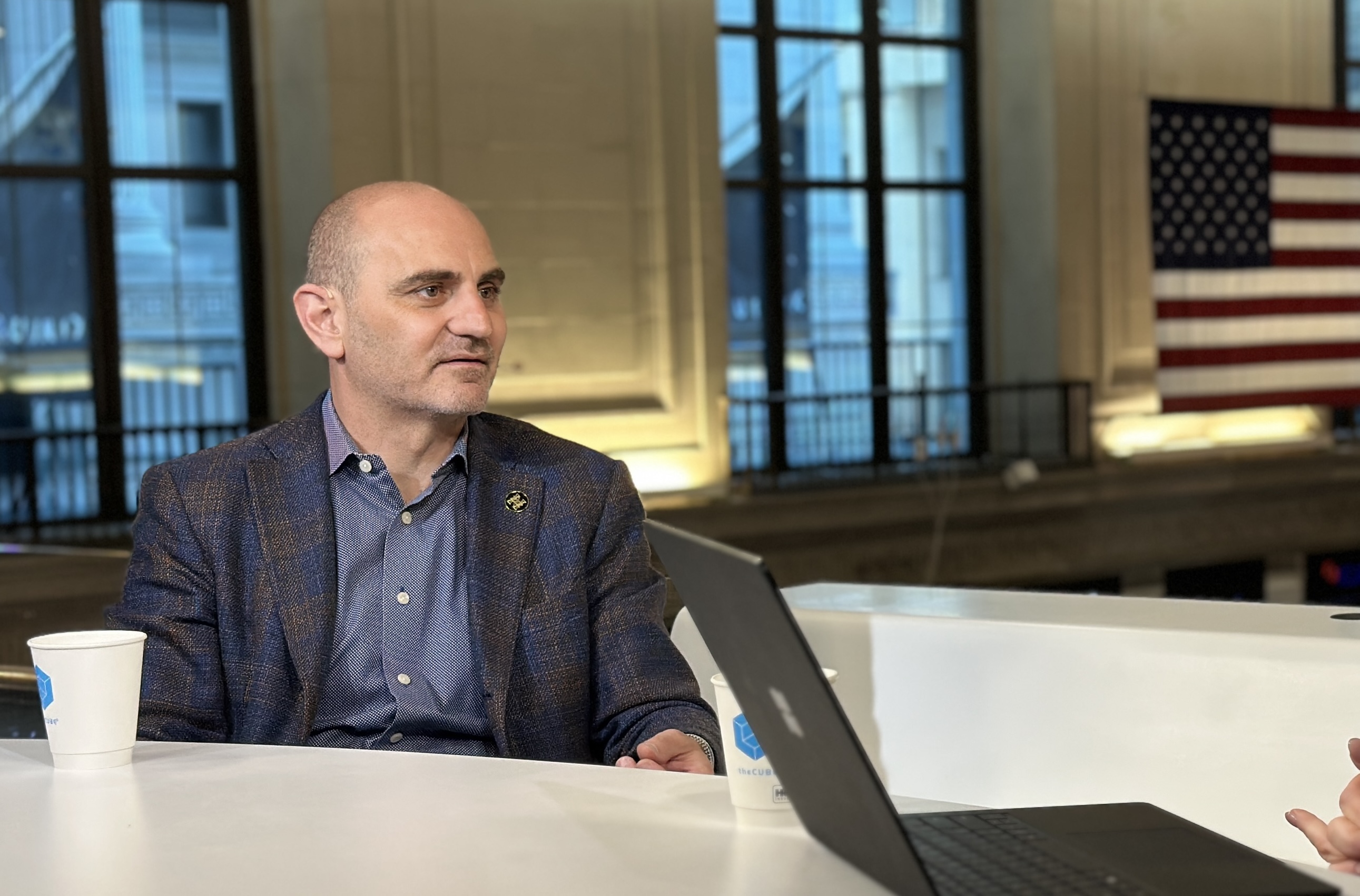
AI biotech clinical success was the central problem for executives speaking at theCUBE and NYSE Wired: AI in Bio event, where companies described systems meant to improve patient selection, target discovery and drug testing. No funding rounds were announced, and where partnerships were discussed, financial terms were generally not disclosed.
The through line was practical rather than speculative: biotech companies are using AI to decide which therapies should enter trials, which patients might respond and which experiments can produce better training data. That is a harder commercial test than faster discovery, because clinical failure remains the cost center investors and pharma partners care about most.
How is AI changing biotech clinical success?
AI is being applied to the parts of drug development that determine whether a therapy has a credible shot in patients, including biological modeling, in vivo testing and target validation. The claim from several executives was that better data and models can raise the probability of success, although most did not disclose enough baseline data to independently assess those projections.
Ron Alfa, co-founder and chief executive of Noetik, said many drugs fail in trials because developers do not know which patients are most likely to benefit. Noetik is training models on thousands of real tumor samples to create digital versions of tumors that predict response to therapy. Alfa said the company recently signed a non-exclusive partnership with GlaxoSmithKline to use the technology across GSK’s pipeline. The value of that arrangement was not disclosed.
ExpressionEdits is applying AI to redesign the genetic instructions cells use to make therapeutic proteins. Kärt Tomberg, its co-founder and chief executive, said the company found during COVID research that widely used DNA instructions still resembled older viral sequences, prompting cells to suppress them. ExpressionEdits says its redesigned instructions can increase protein expression for gene therapies, vaccines and recombinant protein drugs, and Tomberg said the company has multiple large pharma partnerships.
Sen-Jam Pharmaceutical is targeting chronic inflammation tied to aging-related disease. Chief executive Jim Iversen said the company has five assets in Phase 2 and is now using its Galaxy AI platform, with Atlas as the discovery layer. Iversen said trial data indicate the platform can lift the probability of clinical success by 200% to 300%, a claim that was presented without detailed trial baselines in the event coverage.
Other companies described AI systems built around richer experimental data rather than model claims alone:
- Manifold Biotechnologies, led by co-founder and chief executive Gleb Kuznetsov, tests hundreds of thousands of AI-designed drug candidates in a single animal, aiming to generate in vivo data for tissue targeting, including blood-brain barrier work.
- Fauna Bio studies hibernating mammals that naturally repair heart damage, rebuild muscle and reverse neurodegeneration-like pathology. Co-founder and chief technology officer Linda Goodman said the company uses a knowledge graph and graph neural network to combine animal and human patient data, with a heart-failure therapy expected to move toward the clinic next year.
- Concerto Biosciences, an MIT spinout, is developing a once-weekly topical multi-bacterial therapy for eczema flares. Co-founder and chief executive Cheri Ackerman Araromi said the company has completed Phase 1b for its lead eczema program and is looking at additional skin and women’s health uses.
- Insitro uses high-throughput human cell disease models, AI and genetics to build what Mary Rozenman, its chief financial officer and chief business officer, described as a causal model for predicting effects of gene-level interventions. The work is being applied to ALS and other difficult diseases.
RA Capital Management venture partner Jacob Oppenheim offered the investor filter: AI platforms still have to produce differentiated medicines, not just better tooling. He said AI’s near-term value is in widening the set of testable hypotheses, speeding experiment cycles and integrating human genetics data.
Alloy Therapeutics represents the infrastructure side of the same shift. Founder, chief executive and chairman Errik Anderson said the company provides tech-enabled services and discovery-to-commercialization technologies without owning a drug pipeline, using services, milestones and royalties tied to partner programs. That model puts Alloy closer to a platform supplier than a conventional biotech bet.
This story draws on original reporting from SiliconANGLE.