Judge hears challenge to Trump Truth Social API fees, issues no ruling
A federal judge heard a bid to halt paid early access to Trump’s Truth Social posts, leaving the $100,000-a-month API dispute unresolved.
By Dominic Okoye · Staff Writer
· 3 min read
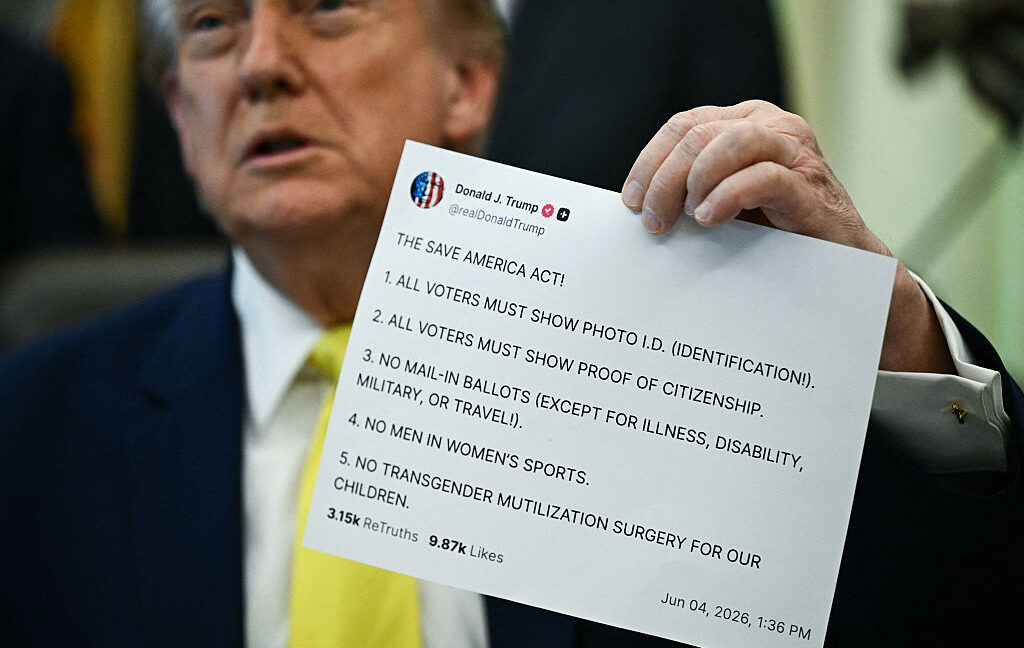
A federal judge heard arguments October 7 over whether President Donald Trump and White House officials can continue using Truth Social for initial official announcements while its parent company sells earlier access through a data feed costing up to $100,000 a month. In the Trump Truth Social API lawsuit, Judge Paul Oetken issued no decision from the bench, leaving a preliminary-injunction request pending.
The case, The Intercept Media, Inc. v. Trump, No. 1:26-cv-06867 in the Southern District of New York, was filed Aug. 12 by The Intercept and the Freedom of the Press Foundation. The plaintiffs are seeking declaratory and injunctive relief, not a final ruling at this stage on whether the paid service is constitutional.
What would the injunction against Truth Social’s API do?
The plaintiffs want the court to bar Trump and White House officials from making initial official announcements on Truth Social as long as paid subscribers receive earlier access through Truth API. The service is a direct, machine-readable feed of posts from high-ranking accounts, including Trump’s. Reports differ on the speed edge: defendants have characterized it as no more than 50 milliseconds, while another account described the feed as instantaneous access.
The plaintiffs argue that charging for an earlier feed burdens equal access to government information and public forums under the First Amendment, while also raising Fifth Amendment claims. They say paying newsrooms or traders can gain an advantage over nonpaying readers and reporters.
Plaintiffs’ counsel also says the product has value beyond speed because it includes a machine-readable feed and a historical archive of Trump’s Truth Social posts, including posts later deleted. Plaintiffs argue the dispute involves more than the time gap between alerts.
What did the Justice Department tell the judge?
Justice Department lawyer Brantley Mayers argued that Truth API is a private commercial decision by Trump Media & Technology Group, rather than government action directed by Trump. The defendants also contend that a federal court cannot issue an injunction that tells a president how to perform official duties.
Mayers compared Trump’s use of Truth Social to earlier presidents’ use of mass media, including Franklin D. Roosevelt’s fireside chats. Oetken quickly pointed to a distinction: Roosevelt did not charge listeners for those broadcasts.
Oetken questioned both sides rather than signaling a conclusion. He asked whether a 50-millisecond delay would materially affect human journalists, describing such a delay as negligible to a person, while also noting that the product’s price suggests buyers see value in it. He also examined whether Trump’s relationship with Trump Media is sufficiently close to support an injunction, an issue the government contests.
Oetken described the dispute as unusual and did not set a ruling date in the hearing accounts. A written decision on the preliminary-injunction motion is expected later. The immediate order sought would govern communications while the case proceeds, rather than resolve the underlying constitutional claims.
This story draws on original reporting from Ars Technica.