SwissDrones U.S. expansion targets long-range infrastructure inspections
SwissDrones and Xplorate plan a U.S. inspection push, but FAA approvals and customer programs remain to be secured.
By Colin Brandt · Enterprise Reporter
· 3 min read
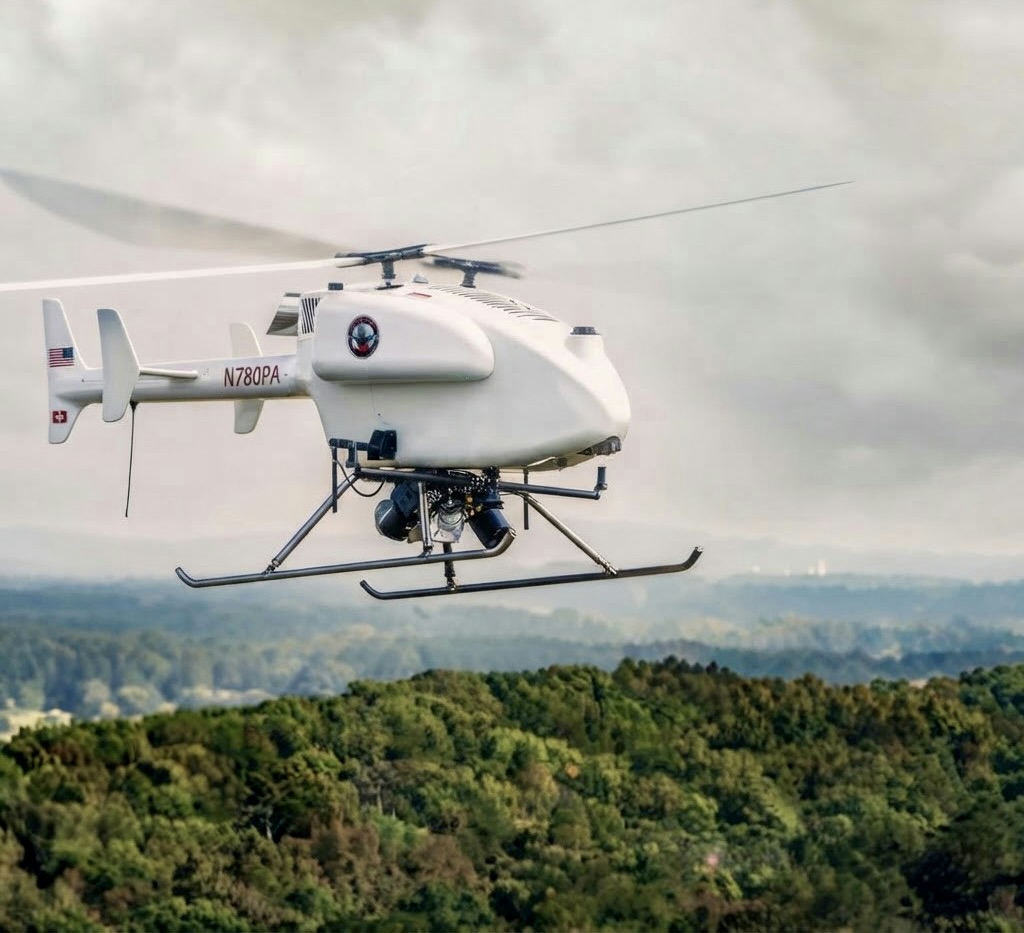
SwissDrones and its subsidiary Xplorate Pacific announced an August 7 plan to bring their long-range uncrewed inspection operation to the United States, aimed at energy, utility and transport infrastructure. The SwissDrones U.S. expansion is an enterprise service proposition combining aircraft, industrial sensors, flight operations, regulatory work and data processing, rather than a standalone drone sale.
The announcement identifies no U.S. customer, contract, deployment location or FAA approval. U.S. work would be pursued program by program under applicable FAA approvals, while the companies establish commercial, regulatory, operational and customer-support capacity for North American operators.
The immediate aircraft is the commercially available SDO 50, a turbine-powered, vertical-takeoff-and-landing uncrewed helicopter built to take mission-specific payloads. Its proposed uses include pipeline and powerline inspection, LiDAR corridor mapping, multispectral environmental monitoring and emissions detection. The companies describe smaller drones as potentially constrained by range, payload, communications and frequent crew repositioning on long linear assets.
What does the SwissDrones U.S. expansion offer infrastructure operators?
The offering bundles the aircraft with LiDAR, RGB and multispectral sensors; trained flight and maintenance personnel; beyond visual line of sight, or BVLOS, operating experience; safety cases; and georeferenced data workflows. Satellite-enabled command and control can be used for remote missions where it is authorized and appropriate, according to the announcement.
For a pipeline or grid operator, the practical proposition is a managed means of collecting sensor data over distributed assets. The terms of each mission still depend on the applicable regulatory authorization, airspace requirements, risk controls and customer conditions.
What is proven in Australia and what remains planned in the U.S.?
Xplorate operates SDO 50 aircraft on recurring commercial BVLOS inspections along a 550-kilometer pipeline corridor in Queensland, Australia. It also holds an authorization covering about 58,000 square kilometers of the Surat Basin, subject to its terms and conditions, for day and night BVLOS flights across defined infrastructure and operating areas.
That Australian record does not establish a U.S. FAA approval. The U.S. entry therefore turns on whether the companies can put their operational model into place through the FAA pathways available for individual programs.
That constraint comes as the FAA has been developing Part 108, a proposed framework intended to make routine BVLOS operations more standardized than a case-by-case waiver process. Industry publication Inside Unmanned Systems reported that the rule was at the Office of Information and Regulatory Affairs for final review in early July 2026 and that no final rule had been issued at that point.
SwissDrones is also developing the SD120, an uncrewed helicopter intended for industrial, public-safety and government work. The company says it is being designed for greater payload, endurance, redundancy and system assurance, but has not disclosed a target certification or commercial-availability date. Its stated SAIL IV objective is an operational-risk target under the European Specific Operations Risk Assessment framework, not an aircraft certification.
The long-range U.S. inspection platform will therefore enter the market with a fielded aircraft and Australian operating history, while its U.S. deployments and next-generation aircraft remain subject to regulatory and commercialization steps.