Pointr and VergeSense launch AI mapping planning demo for hybrid offices
Pointr and VergeSense have unveiled a demo experience pairing indoor maps with occupancy data, though deployment and performance details remain undisclosed.
By Dominic Okoye · Staff Writer
· 3 min read
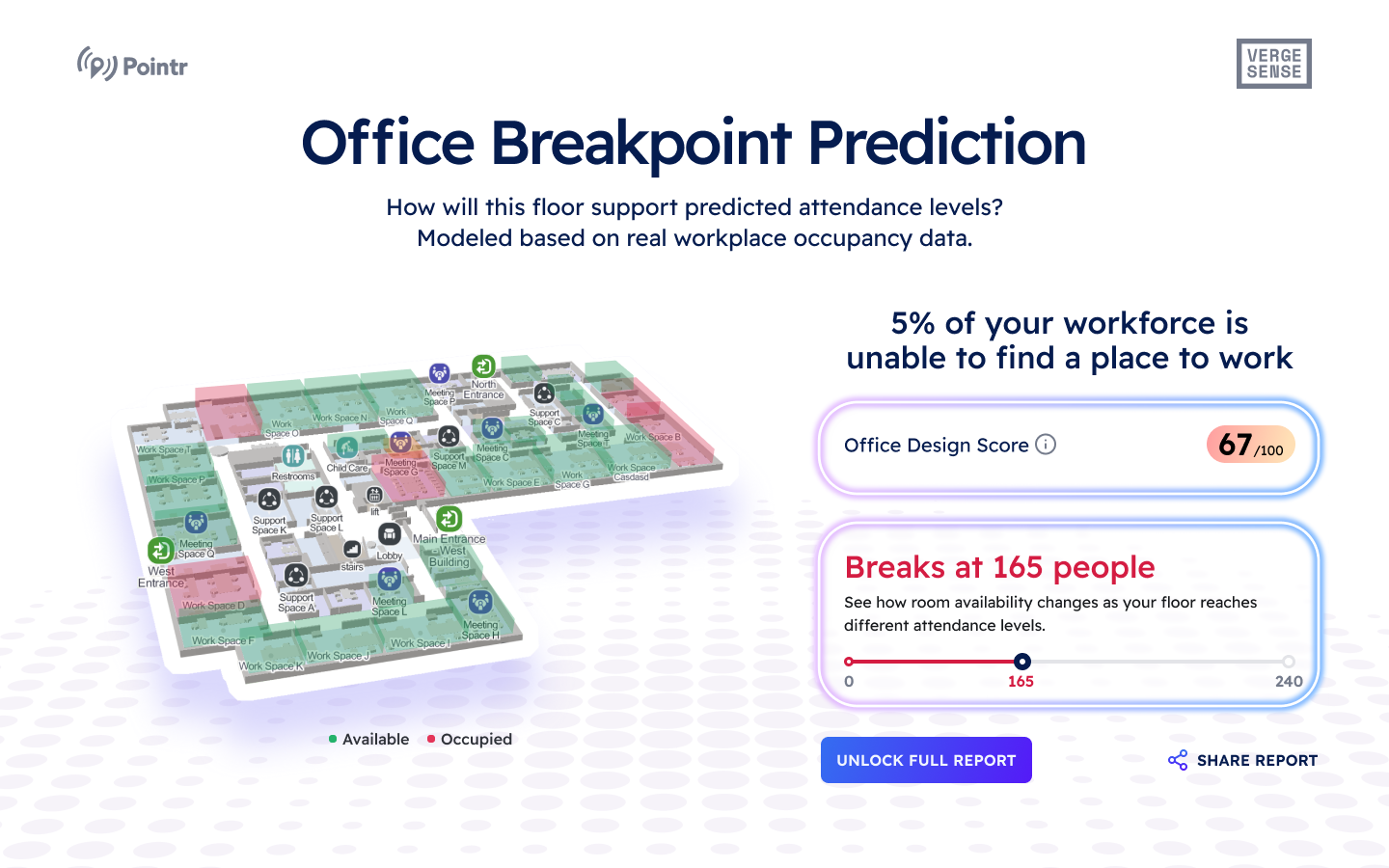
Pointr and VergeSense on Aug. 6 announced an AI Mapping & Predictive Planning experience for hybrid-office teams, presented through an interactive microsite rather than as a disclosed customer deployment. The pointr vergesense ai mapping announcement combines indoor digital maps with occupancy analysis and demand forecasts, targeting corporate real-estate teams weighing space use and office layouts. Neither company disclosed pricing, customers, commercial availability terms, or revenue associated with the announcement.
The proposed workflow is straightforward: turn a floor plan into a geo-referenced map, add current occupancy information, identify crowded or underused areas, and use projected demand to inform future layout and portfolio decisions. Pointr supplies the mapping component, while VergeSense provides occupancy intelligence and predictive planning based on measured workplace use, according to Pointr go-to-market leader Elo Ofodile.
How does Pointr and VergeSense AI mapping work for hybrid offices?
The demonstration is built around three use cases. First, live occupancy data is shown on indoor maps to surface capacity pressure and unused space. Second, the companies say their predictive-planning tools can flag layouts that no longer match demand and produce recommendations for rightsizing or redesign. Third, the experience is intended to support wayfinding, directing workers to open desks, meeting rooms and amenities while accounting for predicted congestion.
For corporate real-estate operators, the value proposition is less about a new map interface than about joining spatial and utilization data in one planning view. Static floor plans and historical reports do not show current usage patterns, the companies argue. Their AI workplace mapping and predictive planning experience is designed to give teams a way to compare office capacity with observed demand as hybrid attendance shifts.
The predictive element remains a claim to be tested in use. The announcement includes no technical integration details, performance benchmarks, implementation timeline or case studies. It also does not describe the privacy and governance controls that would apply to occupancy or movement data. Those omissions leave enterprise buyers without a basis to assess forecast accuracy, operational lift or the trade-offs involved in collecting workplace data.
There is a clear economic problem behind the pitch. Research summarized by the Chicago Booth Review found office occupancy in major U.S. markets had recovered to roughly half of pre-pandemic levels by the end of 2023. The same research associated expected office attendance with markedly different changes in space demand from 2019 through 2023: demand fell about 41% for companies expecting workers in one day a week, declined 9% for those expecting two to three days, and increased 1% for employers expecting four to five days.
That makes better evidence on utilization valuable to portfolio managers, particularly when renewal, consolidation or redesign decisions are costly to reverse. Pointr says it has digitized more than 5 billion square feet, and VergeSense says its workplace model was trained on more than 250 million square feet of data. The companies did not identify whether those figures include deployments using this announced experience.