Zalando joins Sereact Series B, lifting the round to $116 million
The Stuttgart robotics company has now raised more than $145 million as it pushes Cortex into returns, packing and US expansion.
By Marcus Adeyemi · Startups Editor
· 3 min read
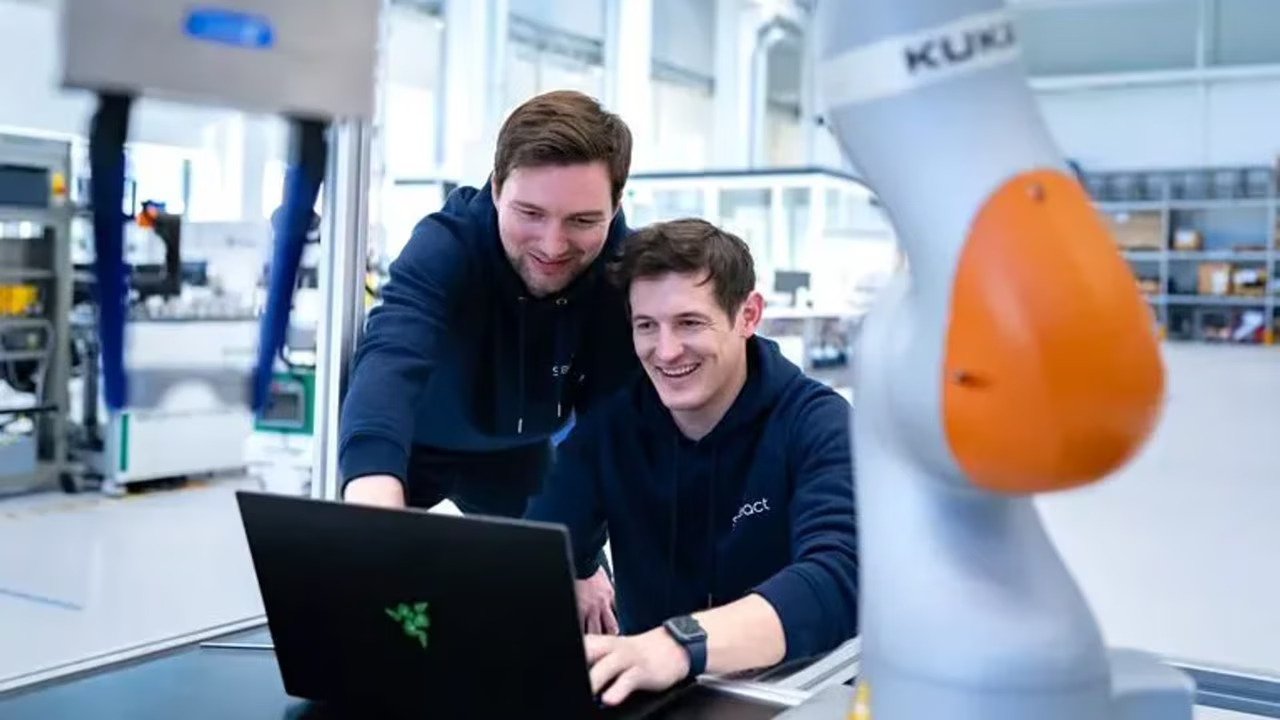
Sereact said Zalando has joined its Series B as a strategic investor, increasing the warehouse robotics company’s round to $116 million. The size of Zalando’s check was not disclosed, but the deal ties one of Europe’s largest fashion e-commerce operators to a startup selling AI systems for picking, packing and returns automation.
The Series B was first led by Headline in April 2026, with Bullhound Capital, Daphni and Felix Capital participating alongside existing backers Air Street Capital, Creandum and Point Nine. With Zalando’s participation, Stuttgart-based Sereact says it has raised more than $145 million since it was founded in 2021.
Sereact builds what it calls physical AI for warehouses and manufacturing. Its Cortex software runs across single-arm picking cells, dual-arm return stations, humanoid robots and Sereact Lens, a 3D perception product for inventory and quality-control work. The company names Daimler Truck, Mercedes-Benz, BMW, MS Direct, Active Ants, DeltiLog, Rohlik Group and Austrian Post as customers.
Why Zalando is interested
Zalando’s involvement is tied to fulfillment, especially packing and returns. The Berlin company, founded in 2008, says it connects 62 million active customers with more than 7,000 brands across 29 markets. It also says its operations rely on an AI-powered data and infrastructure platform.
Returns are a direct cost problem for fashion retail. Zalando says about 50% of ordered items are returned, reflecting a category where shoppers often buy several sizes or styles before deciding what to keep. Returned goods must be opened, checked, folded and routed back into inventory, work that remains largely manual.
According to Sereact, its dual-arm system can open boxes, remove products, fold garments and process returns automatically. Gulde said the company is currently alone in offering that level of automation, a claim Venture Post could not independently verify from the announcement.
Gulde said European retailers also face limits on destroying returned goods, which increases the need to process items efficiently. He also pointed to labor availability as a factor for Central European supply chains. Zalando SVP Fulfilment Masood Choudhry said the investment reflects the company’s support for European technology companies and modern e-commerce standards.
Cortex and the data argument
Sereact says more than 200 systems are live across Europe and that Cortex has completed more than one billion real production picks. The company’s argument is that robotics models improve from live operating data, not only simulation or lab work.
Gulde said transformer-based AI models changed the company’s trajectory, leading Sereact to build what it called PickGPT in early 2023, described by the company as the first commercially available vision-language-action model. The company says its current work has led to Cortex 2.5, while the new funding will support Cortex 2.0 scaling and international expansion. The version naming is not clarified in the announcement.
Sereact says Cortex is intended to act as a common AI system across different robot formats. The company started with single-arm warehouse picking, then moved into dual-arm returns and wheeled humanoid systems for retail replenishment and shelf management. Gulde said more contact-heavy work, including assembly, is a later target once the models have more deployment data.
The company also says its robotics are usually about 30% more cost-effective than manual processing in most regions, and that it offers customers a price guarantee based on per-return cost. It did not disclose the underlying price, deployment cost or payback period.
US expansion and humanoid caution
Sereact opened its first US office in Boston in June and says North America is a priority over the next year. Gulde described the market as large and unified, and said the company wants to deploy more robots there.
Despite using the term humanoid for some systems, Gulde sounded cautious on legged humanoid robots. He cited cost, technical fragility, battery constraints, safety concerns and European CE marking and machinery rules as barriers to commercial use. Sereact’s current approach favors dual arms on wheeled platforms, which the company says are safer and more practical for industrial deployments.
This story draws on original reporting from Tech.eu.