PlantVoice adds in-plant sensing to precision agriculture
The Italian startup combines plant signals with field data for orchard decisions, but its advertised outcome figures lack independent validation.
By Dominic Okoye · Staff Writer
· 3 min read
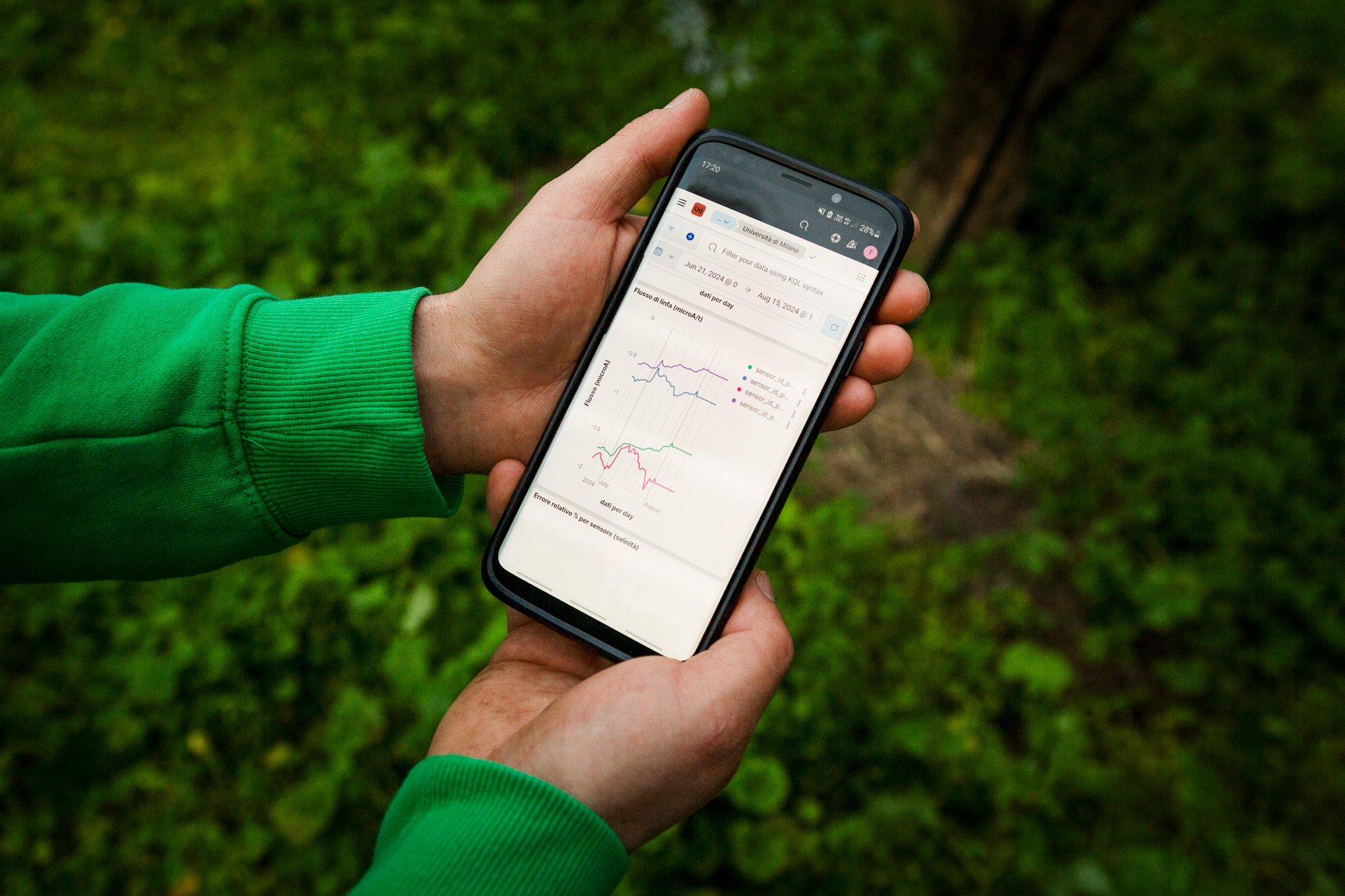
PlantVoice precision agriculture is built around a sensor inserted into a crop, with the Italian startup combining data from inside the plant with weather, soil and irrigation information to guide orchard operations. Tech.eu reported that the company, founded in 2023, is targeting fruit growers and has installations across parts of Europe, South Africa and South Korea; no funding amount, valuation, revenue, headcount or pricing was reported.
The company’s pitch is direct physiological monitoring as an additional input alongside environmental data and growers’ field knowledge. Its sensor head uses wood fibre and is designed to sit in a hole made in the plant, according to PlantVoice COO Giorgia Ferrari’s comments to Tech.eu.
PlantVoice’s website describes the device as a minimally invasive sensor placed in a plant stem to measure sap flows and salinity. It says the device sends readings to cloud software using artificial intelligence. The company says the system can also take in data from weather forecasts, soil conditions, irrigation records, agronomic models and connected third-party devices, including other sap probes.
How does PlantVoice precision agriculture work?
PlantVoice says it fine-tunes machine-learning models on readings from its sensors, field devices, open-source datasets and scientific research. Its intended use is to identify relationships between a crop’s physiological response and external conditions over time, rather than present each measurement in isolation.
Ferrari told Tech.eu that a physiological signal of emerging water stress, considered alongside soil moisture and a weather forecast, could help a grower assess the likely cause and plan irrigation. The company also says its platform can help users judge whether an agronomic treatment is producing a response in the plant.
That is a more specific proposition than putting another weather or soil dashboard in front of a farm manager. It also leaves open the central commercial question: whether the sensor data improves decisions enough to justify deployment. The supplied Tech.eu report does not provide PlantVoice-specific accuracy measurements, independent field-performance figures, pricing, financing, deployment scale, data-ownership terms, or regulatory and crop-safety validation.
What evidence supports plant-based crop monitoring?
Direct plant monitoring is an established subject of agricultural research, particularly for irrigation. A 2024 systematic review and meta-analysis in Agricultural Water Management assessed 124 relevant studies of plant-based and remote-sensing approaches in orchard crops after screening 496 articles.
The review found conflicting and inconclusive results on the performance of monitoring technologies. Plant-water relationships are affected by environmental conditions, canopy structure, nutrient deficiencies and disease, it said. That research context does not establish the accuracy or effectiveness of PlantVoice’s particular system.
PlantVoice focuses on higher-value perennial crops, including apples, olives, cherries, kiwifruit and citrus, Tech.eu reported. Ferrari said farms of five hectares can use the technology, while a typical customer may have five or 10 hectares or more. The report named Salvi Group, Rivoira and Zespri as companies PlantVoice works with.
According to Tech.eu, PlantVoice operates in Italy and reports installations in France, Austria, Spain, Germany, South Africa and South Korea. Its work in Angola is a dragon-fruit pilot, and it is starting conversations in New Zealand around kiwifruit. PlantVoice is also testing a sales approach in Italy involving agronomists and larger agronomy practices.
On its website, PlantVoice claims average gains of 10% in harvest quality, 20% lower irrigation use and 15% lower fertiliser and pesticide use. The supplied material includes no study design, baseline, sample, timeframe or independent validation for those figures.
This story draws on original reporting from Tech.eu.