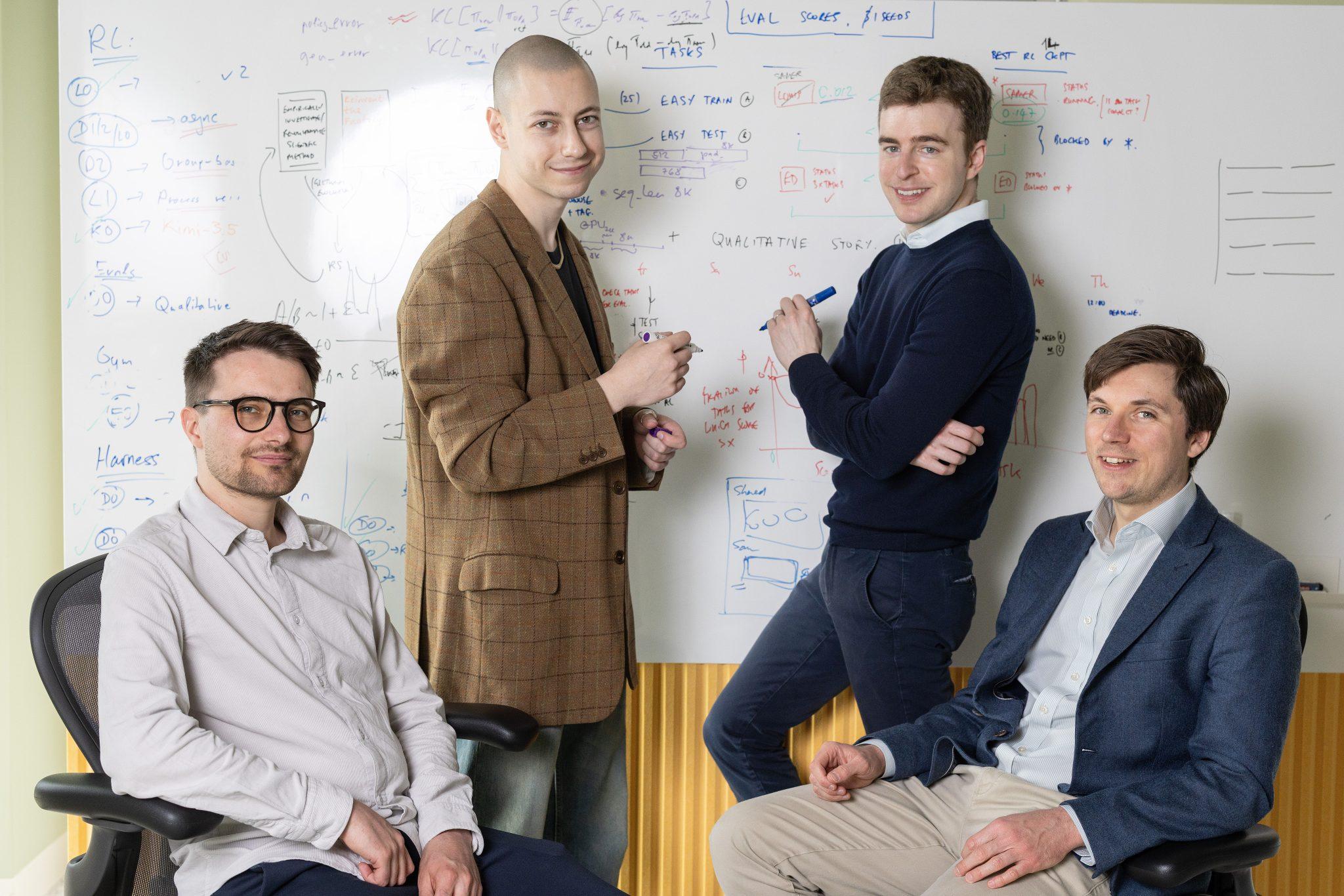
microagi taps Google Cloud and NVIDIA after $55 million seed round
The Munich robotics AI startup will use Google Cloud and NVIDIA Blackwell systems to train and deploy task-specific models for enterprise robots.
By Marcus Adeyemi · Startups Editor
· 3 min read
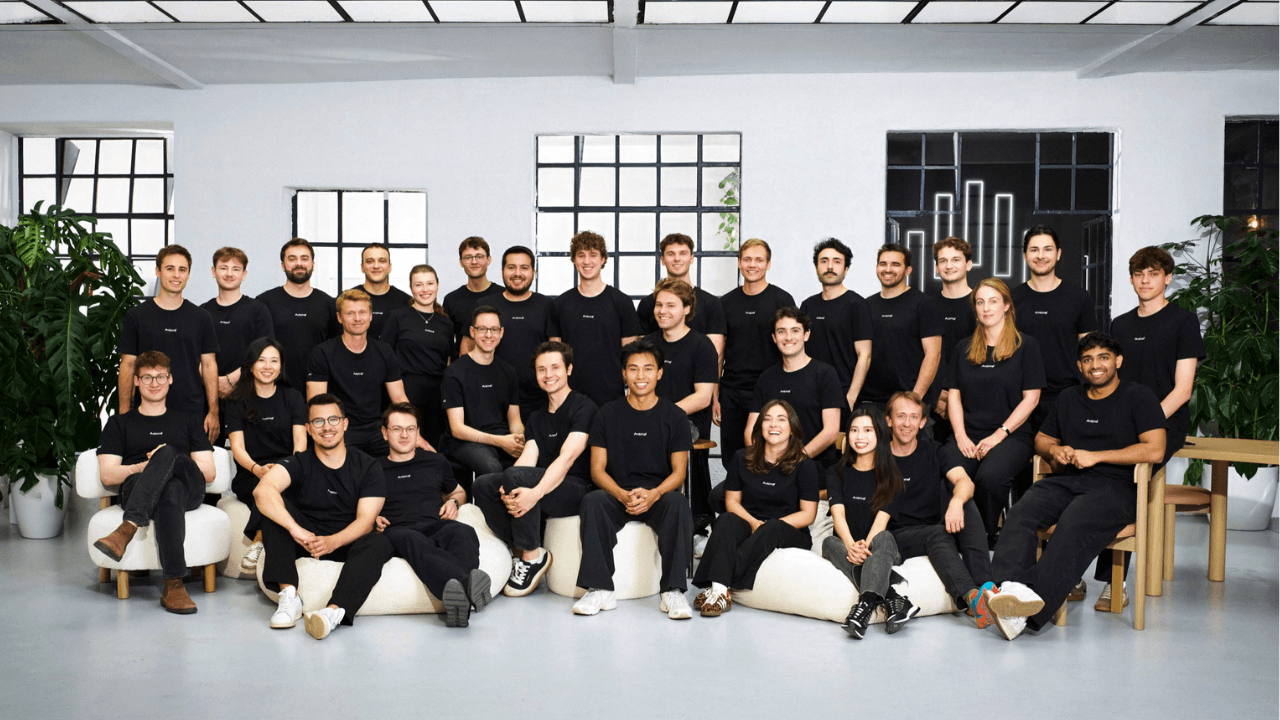
microagi has entered a collaboration with Google Cloud to expand training and deployment of robotics AI models on NVIDIA Blackwell infrastructure, a week after the Munich startup announced a $55 million seed round. The deal gives the 2025-founded company access to high-end cloud compute for embodied AI, but microagi did not disclose commercial terms, valuation, revenue or headcount.
The company said it will use Google Cloud’s AI infrastructure and NVIDIA hardware to scale model training workloads for robots that operate in physical settings. The systems named in the announcement include NVIDIA RTX PRO 6000 Blackwell Server Edition GPUs through G4 VMs and NVIDIA GB300 NVL72 rack-scale systems through A4X Max instances.
microagi’s product is Atlas, a platform that trains and adapts AI models using customer operational data for specific industrial tasks. The company says Atlas is both hardware-agnostic and model-agnostic, sitting between a customer’s existing systems and frontier AI models to reduce dependence on a single vendor.
A large seed round and a fast close
The compute partnership follows microagi’s $55 million seed financing, which the company described as the largest seed round in German history. Hummingbird led the round, with Northzone, LocalGlobe, Village Global and redalpine also participating.
CEO and co-founder Bercan Kilic said the company spent five days formally raising across its pre-seed and seed rounds: two days for the pre-seed and three for the seed. He attributed that pace to investors having watched the company before the round opened, including demonstrations to research labs, customers and robotics partners.
According to Kilic, Hummingbird had followed microagi for several months before visiting the team, then signed a term sheet within three days. The company also said Hummingbird had already been making introductions and offering strategic support before the process formally began.
Europe’s compute problem
Kilic, a former Formula 1 engineer at Red Bull Racing, frames microagi’s work partly as a European infrastructure issue. He said he became concerned that Europe was falling behind the U.S. and China as AI models advanced, particularly after the appearance of open-source vision-language-action models for robotics.
His argument is that Europe lacks three inputs needed for embodied AI: large robotics datasets, advanced compute capacity and infrastructure for training and deploying robot models. Kilic said governments may increasingly treat advanced models and compute as strategic assets, which would leave countries exposed if they lack local capacity and export controls tighten.
microagi says it wants workloads to run on European infrastructure when possible, citing European manufacturers’ sensitive production data and GDPR-related comfort. Kilic also said creating demand for European AI infrastructure could encourage more local investment in compute.
What Google Cloud and NVIDIA add
The company says Google Cloud engineers have already worked with microagi to improve cluster efficiency. Kilic claimed the work has produced roughly twice the computational efficiency with less energy used per unit of work, while noting that optimization is still continuing.
NVIDIA’s Tobias Halloran, director of EMEAI startups, said robotics is a compute-heavy AI category because it requires physical-world data, accelerated infrastructure and a platform that can turn models into machines used in commercial and industrial environments.
microagi’s plan is to sell customizable software packages for enterprise robotics. The company cited hospitality and industrial customers as examples of buyers that could procure robots configured with microagi models for defined roles.
Kilic said microagi collects robotics data, trains foundation models on large-scale infrastructure and then fine-tunes those models with each customer’s operational data. The company says customers retain ownership of their data and models, rather than having their information used to improve a shared foundation model.
The next test is deployment, not fundraising. microagi says it has customers, data and compute, and its stated focus is scaling deployments while pushing for more European AI infrastructure.
This story draws on original reporting from Tech.eu.