Greyparrot Series B raises $27 million for AI waste intelligence
Greyparrot raised a $27 million Series B led by Omar Mir to expand its AI waste tracking systems across North America and Europe.
By Ingrid Halvorsen · Venture Capital Reporter
· 3 min read
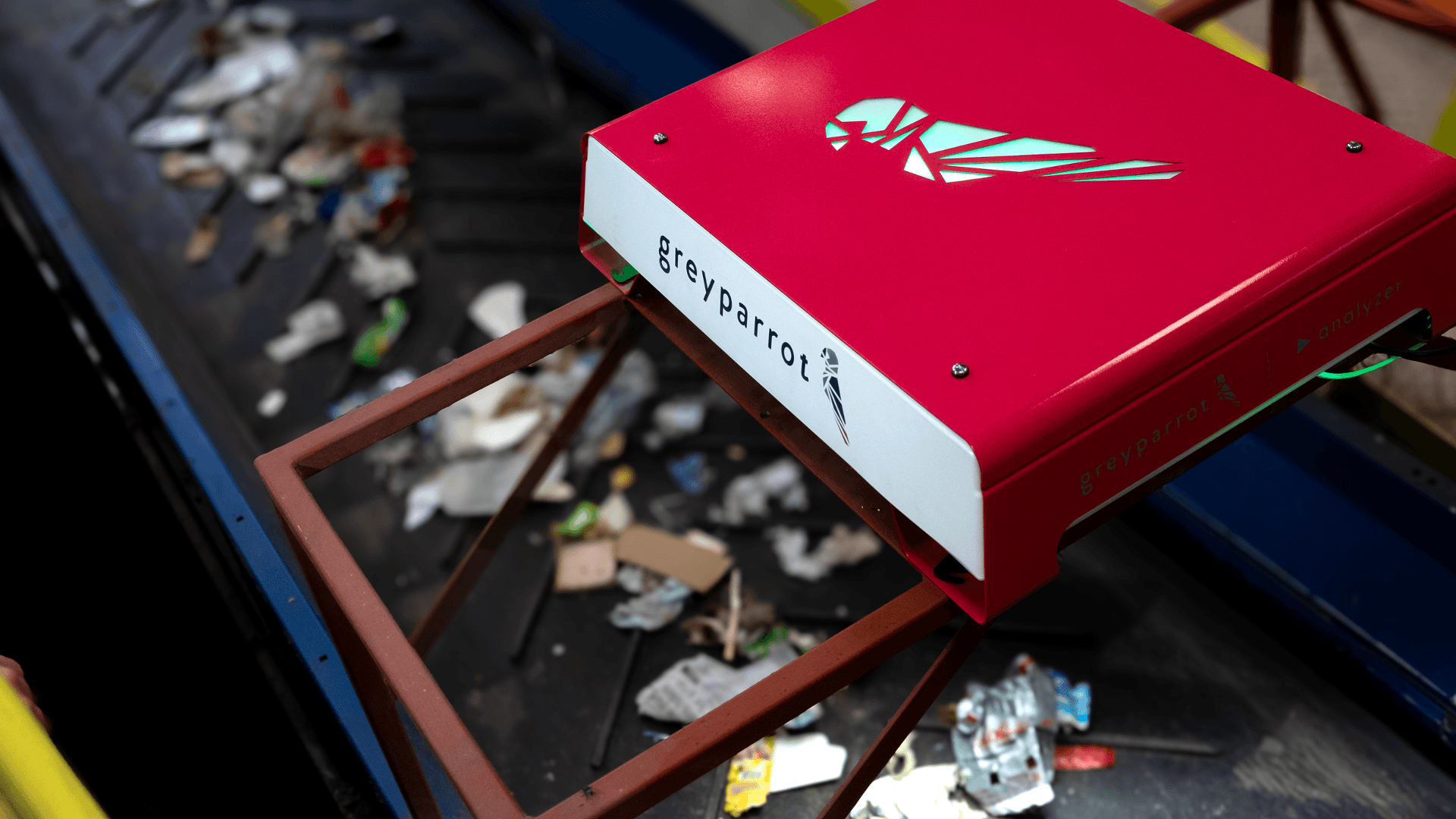
Greyparrot Series B funding has reached $27 million, giving the London AI waste intelligence company more capital to sell its camera-based analytics to recycling operators and consumer brands. The round was led by technology investor Omar Mir and brings Greyparrot’s total funding to $60 million; the company did not disclose valuation, revenue or headcount.
Greyparrot said the financing follows a usage milestone for its platform: more than one trillion waste objects detected across its network. That figure is central to the company’s pitch, since its product depends on turning high-volume sorting-line imagery into usable data for facilities, packaging companies and regulators.
Founded by Mikela Druckman, Ambarish Mitra and Nikola Sivacki, Greyparrot builds AI-enabled camera systems that sit above conveyor belts in recycling and waste facilities. Its Analyzers watch material moving through sorting lines and identify materials, products and brands in real time, according to the company.
What does Greyparrot do?
Greyparrot sells waste intelligence systems that measure what is moving through recycling plants, rather than relying only on manual sampling or downstream reporting. The company says that data helps operators recover more material, check output quality and improve sorting performance.
The company names WM, Circular Services, Veolia, Biffa and FCC among waste management customers using its technology. On the brand side, Greyparrot says Unilever, L’Oréal and Kenvue use its Deepnest platform to assess how packaging shows up after disposal and to support compliance work tied to Extended Producer Responsibility rules and the EU Packaging and Packaging Waste Regulation.
The regulatory angle is a large part of the commercial case. Governments are tightening recycling, packaging and material reporting requirements, which creates demand for more granular data on what enters and leaves waste facilities. Greyparrot’s argument is that real-time machine vision can make that reporting more reliable and more useful operationally.
In early 2026, the UK’s Environment Agency accepted AI-generated waste composition data from Greyparrot for statutory compliance reporting. Greyparrot said this was the first time such data had been used for that purpose, a useful proof point for a category that still has to persuade regulators and operators to trust automated measurement.
Druckman, Greyparrot’s co-founder and CEO, said the new funding will support expansion in North America and Europe and hiring across AI, data science and product. Mitra, also a co-founder, said waste intelligence could make discarded materials easier to measure, trade and invest in, comparing its potential role for materials to satellite data in navigation.
Greyparrot also said it plans to scale its technology to help recover more than one million tonnes of waste by 2030. The company did not provide a current recovery baseline, so that target is difficult to benchmark from the information disclosed.
The raise puts more capital behind a specific corner of industrial AI: measurement inside physical infrastructure where data has historically been sparse. For recycling operators, the near-term value is plant performance and compliance. For brands, the value is evidence about what happens to packaging after sale, a question that is becoming more expensive to answer poorly.
This story draws on original reporting from Tech.eu.