CuspAI raises $450 million at $2.6 billion valuation
The Cambridge materials AI startup added Bezos Expeditions and the UK’s Sovereign AI Fund in a Series B led by Kleiner Perkins and NEA.
By Ingrid Halvorsen · Venture Capital Reporter
· 3 min read
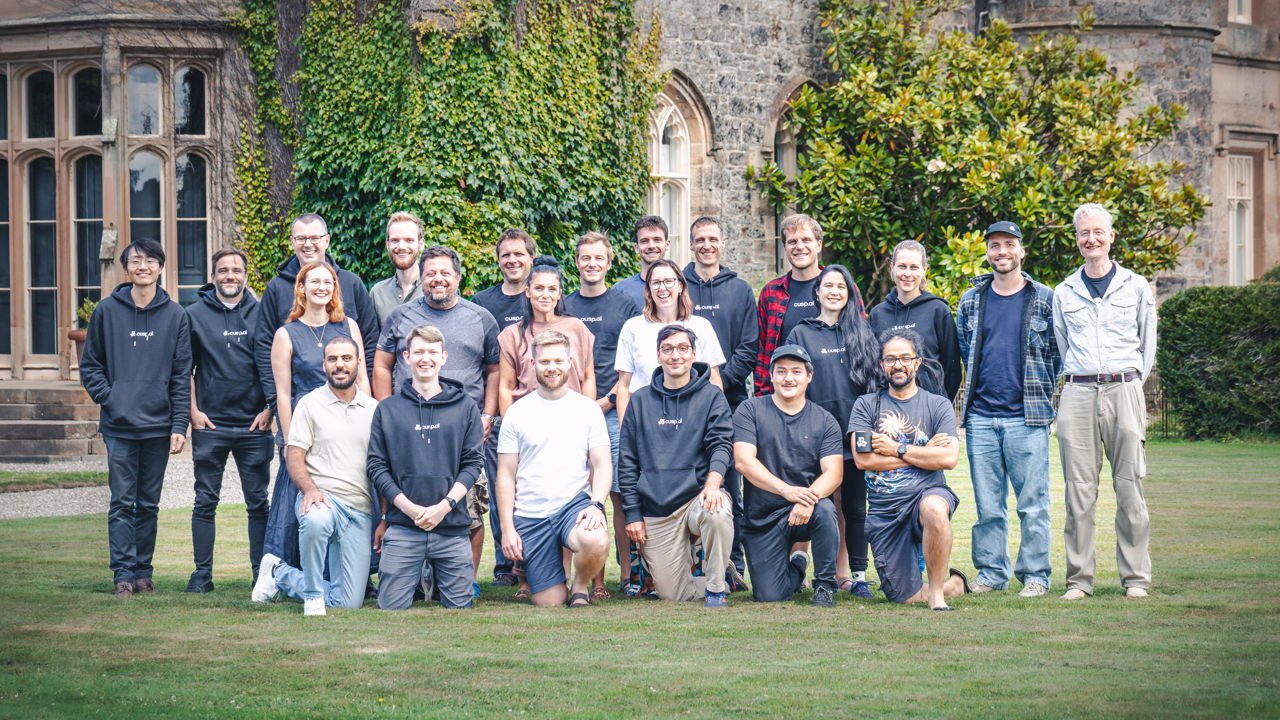
CuspAI has raised $450 million in Series B funding at a $2.6 billion valuation to expand its AI materials discovery work for sectors including clean energy, semiconductors and manufacturing. The Cambridge, UK startup is now valued at five times the $520 million price it reached in September last year, when it raised $100 million.
The round was co-led by Kleiner Perkins and NEA. Bezos Expeditions, Amazon founder Jeff Bezos’s family office, took part with what CuspAI described as “significant participation,” though the company did not disclose individual check sizes. CuspAI said it has now raised more than $670 million since it was founded two years ago.
New investors also include Glade Brook Capital Partners, Lux Capital, AMD Ventures, Tru Arrow Partners, StepStone and the UK’s Sovereign AI Fund, the government-backed vehicle created to support domestic AI companies. Sovereign AI, which launched publicly this year, typically invests between £5 million and £10 million in UK AI startups. Existing backers Temasek, Basis Set Ventures, Giant Ventures, Phoenix Court and Northzone also joined the round.
The financing gives CuspAI one of the more prominent capital stacks in the AI-for-science category, where startups are trying to sell software and models into industries that still rely heavily on slow lab cycles, specialist data and expensive validation. The company did not disclose revenue, burn rate or how much of the new funding will go into compute versus lab infrastructure and hiring.
What CuspAI is building
CuspAI says its platform is designed to help researchers and industrial customers identify and design materials with specific properties. The company describes the system as a search tool for materials: users specify what they need, such as a semiconductor material with particular characteristics or a substance that can capture carbon dioxide efficiently, and the platform proposes candidate materials.
The company says its technology is being applied in clean energy, chipmaking, manufacturing, water treatment and carbon capture. CuspAI lists ASML and Meta among its customers. It also counts AI researchers Yann LeCun and Geoffrey Hinton as advisers, names that help position the company inside the broader AI research market as well as the industrial software market.
The new capital will support expansion across the US, Asia-Pacific and Europe, according to CuspAI. The company also plans to build out what it calls an “AI Materials Foundry,” which it describes as a global network combining data, laboratories, compute and scientific expertise for materials design.
CuspAI said the founding partners of that network include Nvidia, Meta, Samsung and Hyundai, along with more than 40 other companies. The company says the aim is to develop software that helps researchers create new materials faster and at lower cost. It did not disclose commercial terms for the foundry partners or say how revenue from the network will be structured.
Kleiner Perkins chairman John Doerr said in a company statement that materials discovery has been a constraint on progress in energy, semiconductors and climate technologies, and said CuspAI’s platform is being used on problems ranging from removing persistent chemicals from drinking water to designing new chip materials.
The round also gives the UK’s Sovereign AI Fund a high-profile investment shortly after its public launch. For CuspAI, the test will be whether a fast-rising valuation can be matched by industrial adoption in markets where performance claims usually need to survive lab validation, procurement cycles and manufacturing constraints.
This story draws on original reporting from Tech.eu.