CurvLabs wearable back pain device raises $450,000 pre-seed
CurvLabs raised $450,000 to build Curv, a spinal sensor that tracks back movement through a tape-based wearable and app.
By Dominic Okoye · Staff Writer
· 3 min read
CurvLabs, a UK startup building a CurvLabs wearable back pain device, has raised $450,000 in pre-seed funding to develop Curv, a spinal sensor worn along the back. The company is trying to turn back-pain assessment from a short clinic appointment into continuous movement data, though it has not disclosed valuation, revenue, headcount or investor names.
Founder Rohan Kotecha started the company after years of treatment for non-specific back pain, a diagnosis he received at 13. According to Kotecha, he saw physiotherapists, chiropractors and osteopaths without getting a clear view of what was driving the pain outside the clinic. During a COVID-era flare-up while studying biomedical engineering at University College London, he faced an NHS treatment wait of about six months and paid for private physiotherapy instead.
Kotecha has said that physiotherapists repeatedly pointed to everyday movement as a major factor in back pain. That exposed the data gap CurvLabs is built around: clinicians might observe a patient for 30 minutes, while the rest of the week is unmeasured. At the same time, Kotecha was building an ECG for a university bioengineering project, which led him to consider whether spinal motion could be tracked continuously in a similar consumer-friendly way.
How does the CurvLabs wearable work?
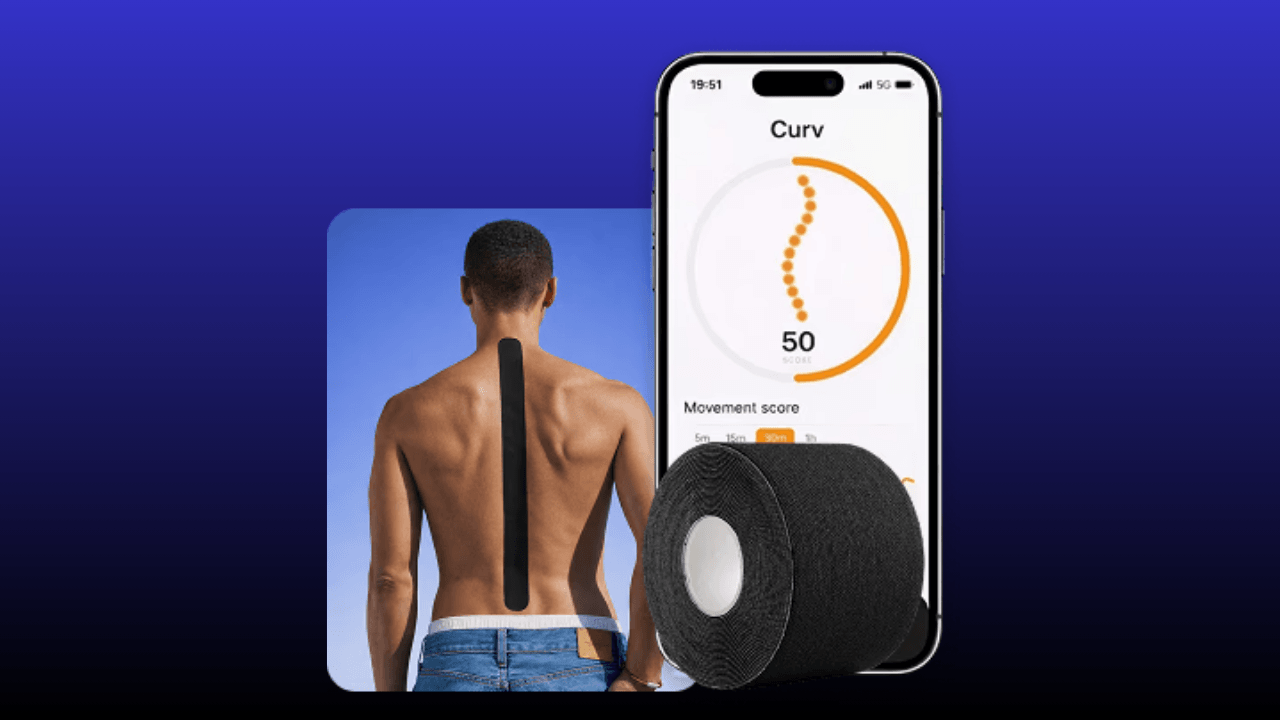
Curv is built into a strip of kinesiology tape that sticks along the spine. Sensors are embedded in the fabric, and the device connects by Bluetooth to a mobile app.
The system tracks spinal movement during the day, including range of motion, movement speed and which parts of the spine appear to move freely or remain stiff. CurvLabs says the app analyzes those signals, shows users insights at the end of the day and suggests a practical action. The device is manufactured in the UK, although Kotecha previously spent time in Shenzhen to speed up prototyping.
The company is deliberately positioning Curv away from posture-correction hardware that buzzes when a user slouches. Kotecha says the product direction came from clinical literature and conversations with physiotherapists, clinicians, researchers and academics, rather than the common consumer belief that one ideal sitting posture prevents back pain. His view, based on those discussions, is that the more useful target is helping users move more often and become more confident moving.
What data is CurvLabs trying to collect?
CurvLabs is focused on movement metrics rather than a single posture score. Kotecha says the platform looks at range of motion, variability in movement and changes over time. He has also argued that movement variability could become a useful musculoskeletal marker, comparing the idea to heart rate variability in wearables.
The company’s claims remain early. The material provided does not cite clinical trial results, regulatory status or payer adoption, all of which would matter if CurvLabs moves from consumer back-pain tracking into clinical decision support.
CurvLabs found its first users through Reddit, including the r/backpain community. Kotecha says those customers have shaped the product, with the company asking what is useful in daily life rather than building hardware around a technical demo. Early buyers have tended to be adults from Kotecha’s age group through their mid-thirties, many of them desk workers who already use wearables but lack back-specific data.
The $450,000 pre-seed funding came after Kotecha cold-messaged hardware investors on Twitter, according to the company. He says the first investor he contacted agreed to back CurvLabs.
Kotecha’s longer-term pitch is broader than back pain. He says CurvLabs could apply its patch-based sensing approach to other parts of the body and is interested in testing whether ergonomic products, such as office chairs, actually encourage healthier movement. For now, the company’s measurable business is narrower: a spinal wearable, early users from online pain communities and a small pre-seed round to keep building.
This story draws on original reporting from Tech.eu.