AI physical environments need redesigned workflows, deeptech leaders say
A Nebius-sponsored Sifted discussion argues physical-world AI needs scientific constraints, engineering and validation, alongside a growing energy cost.
By Dominic Okoye · Staff Writer
· 3 min read
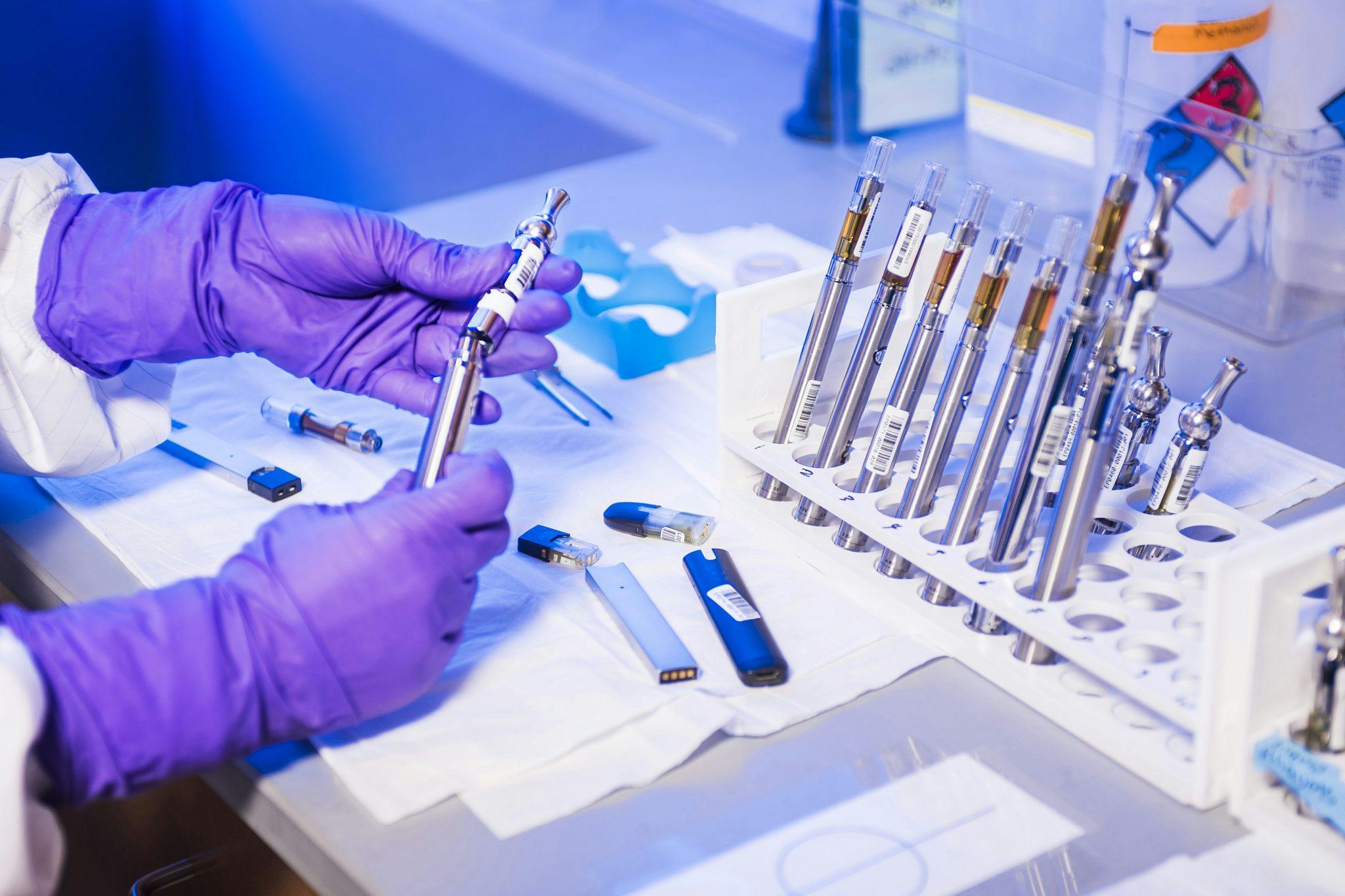
Sifted has published a Nebius-sponsored discussion on AI physical environments, bringing together leaders from CuspAI, DaltonTx and Multiverse Computing to argue that materials, drug discovery and industrial systems require more than an AI layer added to existing work. The feature disclosed no financing, revenue, headcount or independently measured deployment results for the companies, leaving the discussion focused on their views of the category’s requirements and limits.
The commercial proposition is familiar: use models to speed discovery in fields where experiments are costly and slow. Chad Edwards, CuspAI’s cofounder and chief executive, said his company applies AI to generating and analysing material properties for climate and energy-transition applications. Anthony Bradley, DaltonTx’s cofounder and chief scientific officer, pointed to antibody design and drug discovery. Those are research-stage use cases in which useful outputs still need to survive laboratory and real-world validation.
Why is AI harder to deploy in physical environments?
Software can be written, run and evaluated quickly. Materials, biology and industrial equipment impose slower feedback cycles because teams must run experiments, test results and establish whether a proposed outcome works outside a model. Sifted’s participants said models in those fields need to reflect physical feasibility, rather than only identify correlations in past data.
Bradley said teams need scientific domain knowledge, AI capability and engineering capacity. He also warned that models are better at combining observations already represented in their data than producing reliable results beyond that range. That distinction puts a limit on claims that AI can independently conduct scientific discovery.
For operators, the implication is procedural. Bradley argued that companies will need to design workflows around machine intelligence instead of bolting tools onto established processes. Iraia Ibarzabal, Multiverse Computing’s chief growth officer, said a system that works in a lab does not necessarily work in a deployed setting, where infrastructure can become a constraint.
What does deployment look like beyond the lab?
Edwards described AI as assistance for researchers doing literature review, data curation and iterative testing, rather than a replacement for expert judgment. Ibarzabal said smaller models that can run on a device without continual cloud connectivity could make AI usable in disconnected, regulated or resource-limited settings, including industrial equipment and defence. That is a prediction from a company executive, not evidence of widespread deployment.
The test for startups in this segment is therefore less a model demonstration than a validated physical outcome: a material that can be made and used, a drug candidate that survives the development process, or an industrial system that operates reliably in its intended environment.
AI’s infrastructure bill remains part of the equation
Physical-world use cases do not remove AI’s own resource demands. The World Resources Institute says training and running AI at scale require substantial energy and water. Citing the International Energy Agency, WRI says a typical AI-focused data centre uses electricity comparable to 100,000 households, while larger facilities being built consume 20 times as much. Any claimed climate or industrial benefit must be weighed against those operating costs and against the risk that automation weakens human judgment when oversight is poorly designed.
The Sifted discussion identifies a credible set of deployment conditions: constrained data and models, domain experts, capable engineering, redesigned processes and continuing validation. It does not establish that any one of the participating companies has cleared them at scale.
This story draws on original reporting from Sifted.