Trump wind power court losses limit key restrictions, but investment barriers remain
The administration dropped its appeal over a nationwide wind freeze, while courts reopened projects, yet permitting and policy risks persist.
By Dominic Okoye · Staff Writer
· 3 min read
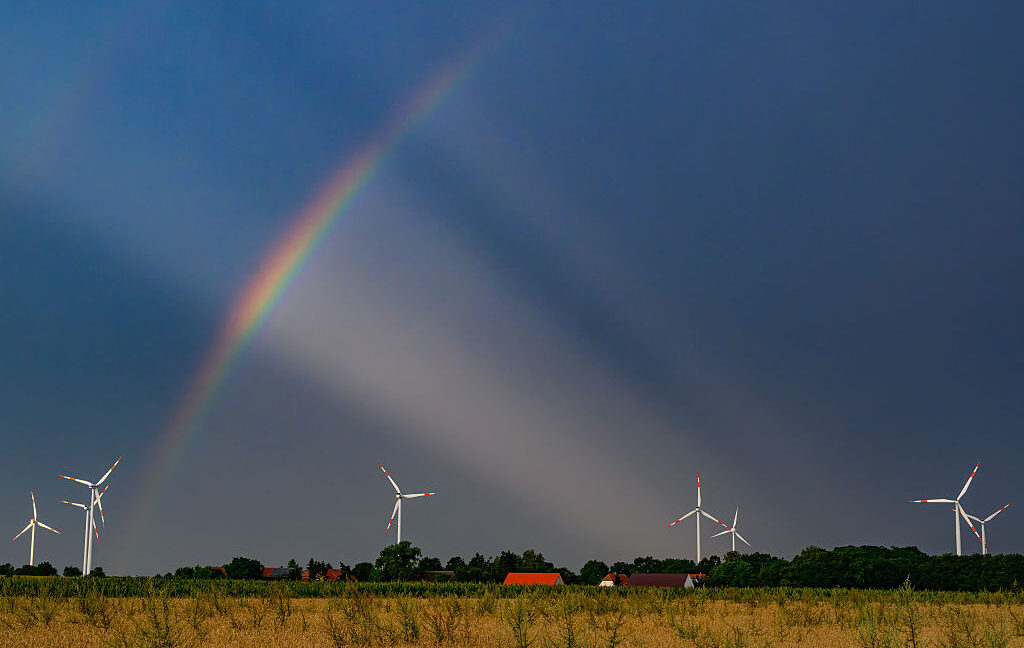
Trump wind power court losses have constrained several of the administration’s attempts to halt U.S. projects: the Justice Department voluntarily dismissed its appeal of a ruling that struck down the January 2025 freeze on wind leasing and permitting, according to Gizmodo. The withdrawal left the nationwide freeze unenforceable, but it did not remove the broader policy, permitting and financing risks now facing the sector.
The appeal dismissal followed a lawsuit brought by attorneys general from 17 states and Washington, D.C., led by New York. The district court found the executive order was arbitrary and capricious and contrary to law, Gizmodo reported. The Justice Department appealed in February and sought voluntary dismissal on June 10.
That is a meaningful legal retreat, particularly for developers whose business models depend on a stable federal approval process. It is not a final verdict on the administration’s wider campaign against wind. Existing projects have won important court relief, while the pipeline for future projects still faces an adverse federal environment.
What wind projects have resumed construction?
Federal judges in January allowed construction to restart on four East Coast offshore projects that had been stopped by the Interior Department in December: Vineyard Wind, Coastal Virginia Offshore Wind, Empire Wind 1 and Revolution Wind. The Guardian reported that the four projects together account for nearly 5 gigawatts of capacity, described as enough to supply 3.5 million homes.
The Interior Department had paused five large offshore projects under construction, citing national-security concerns. Courts did not accept the government’s showing in several cases. Politico reported that Judge Carl Nichols found the government had not answered several arguments from Empire Wind’s developer and that its security concerns did not outweigh the project’s harm. In the Coastal Virginia Offshore Wind case, Judge Jamar Walker said the evidence did not establish a security risk sufficiently imminent to require a stop-work order. Sunrise Wind was still pursuing its own challenge when January and February coverage was published.
The onshore picture is similarly unsettled. Ars Technica reported that a U.S. District Court in Oregon ordered the government to restart a legally required review process involving potential turbine interference with Defense Department radar. According to the publication, the Pentagon had stopped participating in that process in August 2025, first declining to approve negotiated agreements and later declining to negotiate them. The court held that national-security claims did not allow the department to leave a process required by law.
Why do the court wins not settle the outlook for wind?
Legal decisions can restore specific approvals and block particular administrative actions, but they do not guarantee capital will return to a project category with high upfront costs and long development timelines. Analysts told Politico that the stop-work orders could leave developers and financiers wary of a sector exposed to election-driven policy reversals.
The forecast shift illustrates the commercial cost. BloombergNEF projected 6.1 GW of U.S. offshore-wind capacity by 2035, compared with its pre-election projection of 39 GW, according to the Guardian. A BloombergNEF specialist told the paper that new offshore projects were not expected to start construction without a fundamental change in policy and regulation.
The scorecard is therefore mixed. The administration has lost in court over the broad leasing-and-permitting freeze, several offshore construction stoppages and the Pentagon’s onshore review process. It retains ways to slow the next generation of development through permitting obstacles, reduced incentives and the uncertainty those moves create.
This story draws on original reporting from Ars Technica Policy.