FCC chair moves to scrap national TV station ownership cap
Brendan Carr wants to replace the 39% broadcast ownership limit with deal-by-deal reviews, a shift critics say the FCC lacks authority to make.
By Dominic Okoye · Staff Writer
· 3 min read
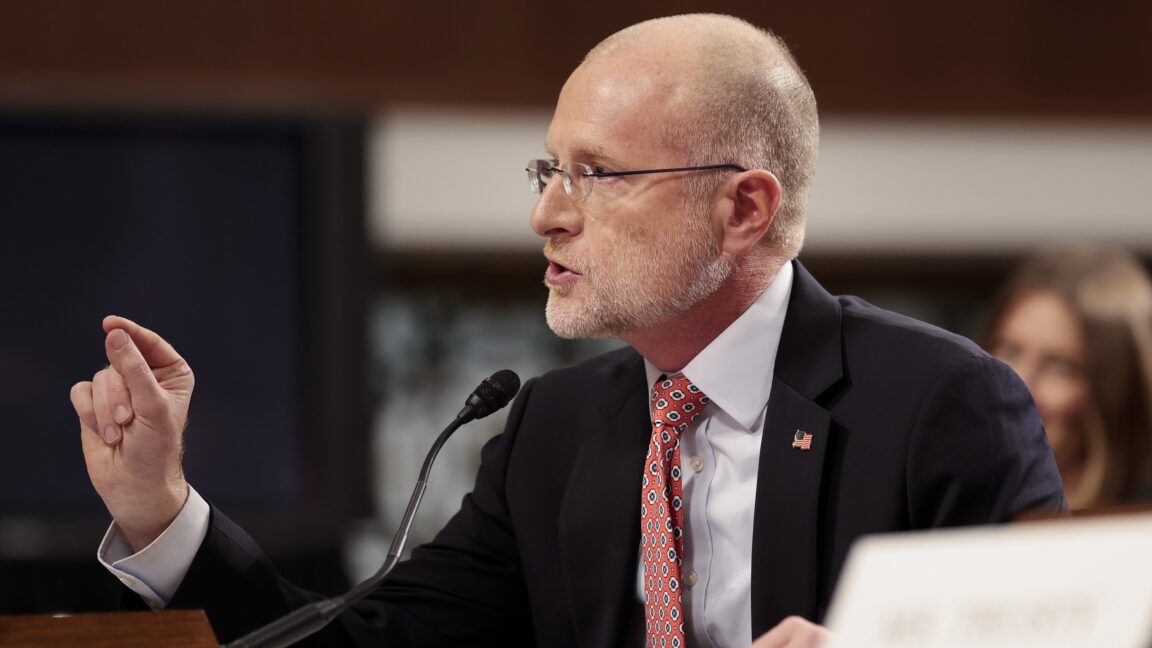
The Federal Communications Commission is set to vote on eliminating the 39% national cap on TV station ownership, a change that would make it easier for large broadcast groups to consolidate local stations. FCC Chairman Brendan Carr said the agency should replace the cap with case-by-case merger reviews, putting the rule on the agenda for the commission’s August 6 meeting.
The National Television Ownership Rule limits a single broadcast station owner from reaching more than 39% of U.S. television households. Carr’s proposal would allow deals above that threshold if the FCC concludes they advance localism, viewpoint diversity and competition, according to a release from the chairman’s office. The plan does not set a new numerical cap.
Carr argued in a Breitbart op-ed that local broadcasters need more scale to compete with national media and digital platforms. He said trust in national media has declined, particularly among Republicans, and claimed many local stations have become outlets for programming produced in New York and Hollywood. Carr said moving away from a national cap would shift attention back to local reporting.
Legal fight likely over congressional limit
The proposal is likely to draw lawsuits because Congress wrote the 39% threshold into law after an earlier FCC attempt to raise it. In 2003, the commission moved to lift the cap to 45%. Congress responded in 2004 by amending the Telecommunications Act of 1996 to require enforcement of a 39% national ownership cap.
Commissioner Anna Gomez, the FCC’s only Democrat, said Carr’s plan is unlawful because only Congress can change or remove the statutory cap. Gomez said the move would let large broadcasters buy broader control of public airwaves and warned it would damage local newsrooms, community reporting and access to emergency information.
The dispute follows the FCC’s March decision to grant Nexstar Media Group a waiver for its acquisition of Tegna. That deal allowed Nexstar to reach more than half of U.S. TV households under the FCC’s ownership calculations. Public Knowledge, Free Press, the United Church of Christ Media Justice Ministry and the Communications Workers of America previously argued in an FCC filing that the agency has no authority to waive the congressional cap.
The FCC under Carr has argued that Congress directed the agency to implement the cap through rulemaking, which the agency says gives it discretion to change or waive its own rules. That position is the core issue that opponents are expected to challenge if the commission votes to repeal the rule.
Nexstar deal provides the test case
Nexstar completed its Tegna acquisition on March 19. A federal judge later ordered the companies to stop integrating assets and operations while an antitrust case brought by DirecTV continues. Nexstar is appealing that order.
After the Tegna deal, Nexstar’s reach is 54.5% of households when calculated with the UHF discount, which counts only half the households reached by UHF stations. Without that discount, Nexstar’s reach rose from 70% to 80% after buying Tegna.
Nexstar supports Carr’s proposal. The company said broadcasters are competing against companies such as YouTube, Amazon and CNN without similar ownership limits, and said changing the rules would support investment in local journalism. The National Association of Broadcasters also backed the plan, saying rules that apply only to broadcasters no longer match the media market.
For broadcast operators, the vote would be a direct path to more consolidation if the FCC’s legal theory survives. For the broader media and advertising market, the immediate question is whether a regulator can convert a congressional cap into a discretionary merger review process without Congress acting first.
This story draws on original reporting from Ars Technica.